Company Cars & Benefits
Company car tax rises draw fleet criticism after Budget
Fleet specialists warn that higher benefit-in-kind rates and weaker purchase allowances will add pressure to electric and plug-in hybrid company cars.

By Marcus Bell, Lifestyle & Motoring Editor ·
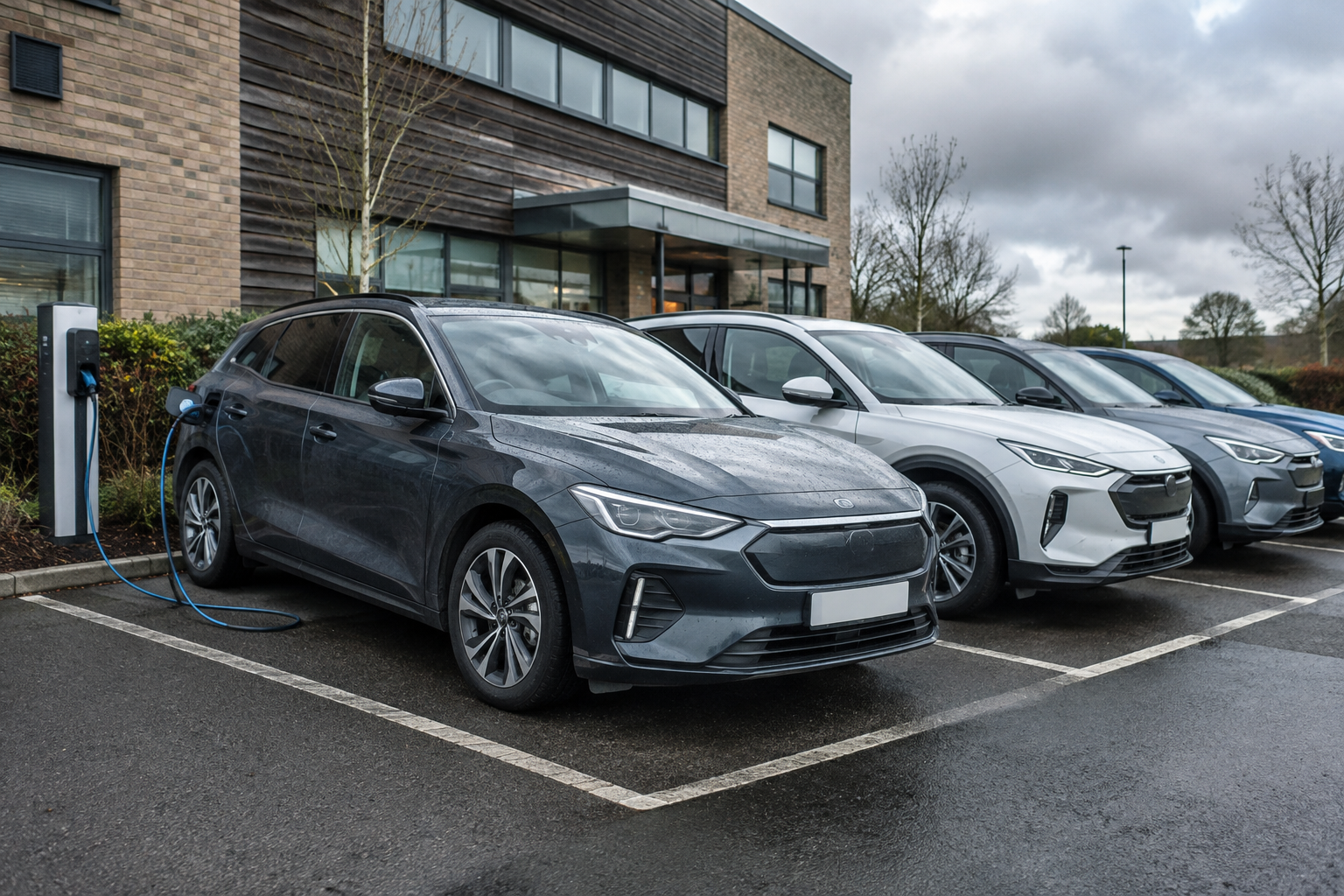
UK company car drivers face higher tax bills after the Autumn Budget confirmed another increase in benefit-in-kind rates from April 2030, while businesses buying plug-in hybrids will receive less generous purchase allowances.
Fleet specialists welcomed the longer planning horizon but said the measures left affordability concerns unresolved, particularly for employees considering used electric cars through salary sacrifice, as reported by Autocar.
What happened
The Budget set company car tax rates for the 2030/31 tax year, adding one percentage point across all bands from April 2030. The announcement answers an immediate procurement question: drivers are already ordering vehicles that will remain in use when those rates take effect.
Electric cars will move from a 4% benefit-in-kind rate in 2026/27 to 10% in 2030/31. Although their tax treatment remains more favourable than that of plug-in hybrids, they face the steepest increases over that period.
For a driver paying income tax at 20%, a Volkswagen ID 3 Style with a 79kWh battery illustrates the effect. Its monthly benefit-in-kind bill rises from £27 to £67 between those tax years, an additional £40 a month.
The change is larger for a Volkswagen Golf eHybrid with an 88-mile electric range. Its benefit-in-kind percentage increases from 7% at present to 20% in 2030/31, with the monthly tax bill in the reported example moving from £44 to £133.
The Budget also changes the relief available when businesses buy cars. Capital allowances let companies offset qualifying investment against gross profits, reducing the amount on which corporation tax is charged.
Zero-emission electric and hydrogen cars qualify for a 100% allowance. Vehicles producing between 1g/km and 50g/km of CO2 fall within the main-rate allowance, while those above that emissions threshold receive 6%.
For the lower-emission bracket, the main rate moves from 18% to 14% in April 2026 and then to 12% in April 2027. That reduces the tax relief available to businesses purchasing qualifying plug-in hybrids, separately from the tax charged to their drivers.
Leased vehicles retain different treatment. Businesses can continue to offset 100% of monthly rental costs for cars emitting no more than 50g/km of CO2, leaving that relief unchanged while purchase allowances become less generous.
The background
Benefit-in-kind is the tax company car drivers pay for being able to use an employer-provided vehicle privately. It also applies to cars supplied through salary sacrifice arrangements, so the Budget affects both conventional company fleets and employee benefit schemes.
The vehicle benefit is treated as additional earnings and taxed at the employee’s income tax rate, typically 20% or 40%. The benefit-in-kind percentage therefore determines the taxable value, rather than being the income tax rate itself.
Since 2002, that value has been calculated using a percentage of the car’s list price. There are 27 bands, currently spanning 4% to 37%, with higher prices and greater CO2 emissions generally producing larger tax bills.
The incentive has helped shape the company car market. The latest HMRC figures show that three quarters of drivers paying company car benefit-in-kind have vehicles emitting less than 50g/km of CO2. The sector had sought further support through calls for changes to electric company car taxation.
For plug-in hybrids, an important earlier change came in the 2024 Budget. It removed the distinction that rewarded longer electric range among vehicles emitting 1–50g/km, putting them into a single 18% band before subsequent increases.
That means a longer electric range no longer secures the same tax advantage within that emissions group. The Golf example shows the consequence for a vehicle capable of covering 88 miles on electricity, rather than a hybrid with only limited electric capability.
What people are saying
Dave Bushnell, director of consultancy and strategy at Fleet Operations, regarded the additional tax visibility as helpful for rebuilding confidence. However, he said the Chancellor had not addressed the cost of making used electric company cars available to employees.
His concern centres on the valuation method: drivers are taxed against a vehicle’s original list price even after it has lost a substantial part of its market value. Buying a cheaper second-hand car therefore does not automatically produce a correspondingly smaller taxable benefit.
Bushnell argued that changing this basis could widen access to electric cars through salary sacrifice, increase second-hand demand and help residual values. Those concerns sit alongside warnings about resale-value gaps in the luxury electric car market.
Jon Lawes, managing director at Novuna Vehicle Solutions, pointed to global competitive pressure on manufacturers and strain on residual values. He said the transition needed to remain affordable for customers and predictable enough for businesses to plan investment.
Lawes identified certainty over electric vehicle taxation, charging costs and future sales targets as important to sustaining demand and supporting the UK motor industry. Charging expenditure remains another part of fleet budgets, with reductions of up to 30% in public charging costs offered under a separate fleet initiative.
What happens next
Employers also face changes to approved mileage payments for staff using their own cars on business, commonly described as a grey fleet. These rates cover depreciation, wear and tear and other operating expenses as well as fuel.
The temporary increase from 45p to 55p per mile for the first 10,000 business miles, introduced in June, will become permanent. For mileage beyond that threshold, the approved rate rises from 25p to 35p.
The Treasury expects the mileage changes to support three million employees who drive their own vehicles for work. They are the first adjustments in 15 years, adding a separate reimbursement consideration for employers alongside their company car purchasing and leasing decisions.
Timeline
2002
Company car taxable benefits begin using a percentage of vehicle list price.
2024 Budget
Longer electric range incentives are removed for plug-in hybrids emitting 1–50g/km.
April 2026
The main capital allowance rate falls from 18% to 14%.
April 2027
The main capital allowance rate falls to 12%.
April 2030
All company car benefit-in-kind bands rise by one percentage point.
Why this matters
For employers, the Budget affects both the employee benefit package and the cost of operating a fleet. Higher benefit-in-kind bills change what drivers pay, while reduced purchase allowances weaken relief for qualifying plug-in hybrids without changing rental deductions. Businesses using employees’ own cars also have revised mileage rates to consider. The longer tax timetable gives directors more visibility over vehicles already being ordered, but leaves the industry’s concerns about used electric car affordability unresolved.
Frequently asked questions
- How much will electric company car tax rise?
- Electric car benefit-in-kind rates rise from 4% in 2026/27 to 10% in 2030/31. The amount drivers pay also depends on the vehicle’s list price and their income tax rate.
- What does the Budget mean for plug-in hybrid company cars?
- All benefit-in-kind bands rise by one percentage point in April 2030. A Volkswagen Golf eHybrid moves from 7% at present to 20% in 2030/31, with its monthly tax bill rising from £44 to £133 in the reported example.
- Do salary sacrifice cars attract benefit-in-kind tax?
- Yes. Drivers using company cars privately through salary sacrifice pay benefit-in-kind tax. The taxable benefit is calculated from a percentage of the vehicle’s list price and charged at the employee’s income tax rate.
- Why are fleet specialists calling for used electric car tax changes?
- Used electric company cars are taxed using their original list price, despite depreciation. Fleet Operations argues that changing this could make salary sacrifice more accessible, strengthen second-hand demand and support residual values.
- Are capital allowances changing for plug-in hybrids?
- The main allowance for cars emitting 1–50g/km of CO2 falls from 18% to 14% in April 2026 and to 12% in April 2027. Zero-emission cars qualify for a 100% allowance.
- What are the new approved business mileage rates?
- The 55p rate for the first 10,000 business miles, temporarily introduced in June, becomes permanent. The rate for subsequent mileage rises from 25p to 35p. These payments cover employees using their own cars for work.
In this story
Follow-up coverage
- Company Cars & Benefits
UK government weighs cut to 2030 electric vehicle sales target
- Company Cars & Benefits
Volkswagen caps charging at 80% for 5,000 UK cars over fire risk
- Company Cars & Benefits
Geely targets 46,000 UK sales as fleet team doubles
- Cars for Business Owners
BMW launches £54,925 i3 with up to 566 miles of range
- Cars for Business Owners
Hyundai Ioniq 6 starts at £33,240 after grant-backed price cut
Topics: company car tax · electric company car tax 2030 · plug-in hybrid benefit-in-kind · salary sacrifice electric cars · company car capital allowances · approved mileage rates · All Company Cars & Benefits news →
Original reporting: Autocar. This article is an independent write-up by British Business Echo.
Latest from the newsdesk
- E-commerce
Meta launches Muse shopping agent with major UK retailers
- Funding & Business Finance
British Business Bank takes £43m Oxford Science Enterprises stake
- Business Mistakes / Lessons Learned
Next business data accessed in supplier cyberattack
- Business Growth
UK pork producers secure Vietnam access and Philippines deal
- Business Regulation
HSE tools help small firms check health and safety duties
Related stories
Range Rover Electric offers £19,000 company car tax saving
The £154,070 electric SUV carries a higher purchase price than the V8, but lower benefit-in-kind rates cut bills for drivers and employers.
Cubic3 survey exposes gaps in EV charging expense checks
Almost half of surveyed fleets rely on drivers to report home charging costs, while 48% have received expense claims they could not verify.
Safer Charging warns of unchecked private EV chargers
The maintenance firm says ageing home and workplace chargers risk going unchecked, while ministers rule out extending public-network regulations.

Ayvens and Fellten offer fleet chargers to bypass grid delays
The partners will use battery-backed charging units to help workplaces with limited power supply and cut reliance on costly public networks.