Cars for Business Owners
Skoda Octavia comparison exposes diesel’s shrinking cost advantage
Higher diesel prices weaken the Octavia’s fuel-economy advantage, although towing performance and monthly finance payments complicate the choice.

By Marcus Bell, Lifestyle & Motoring Editor ·
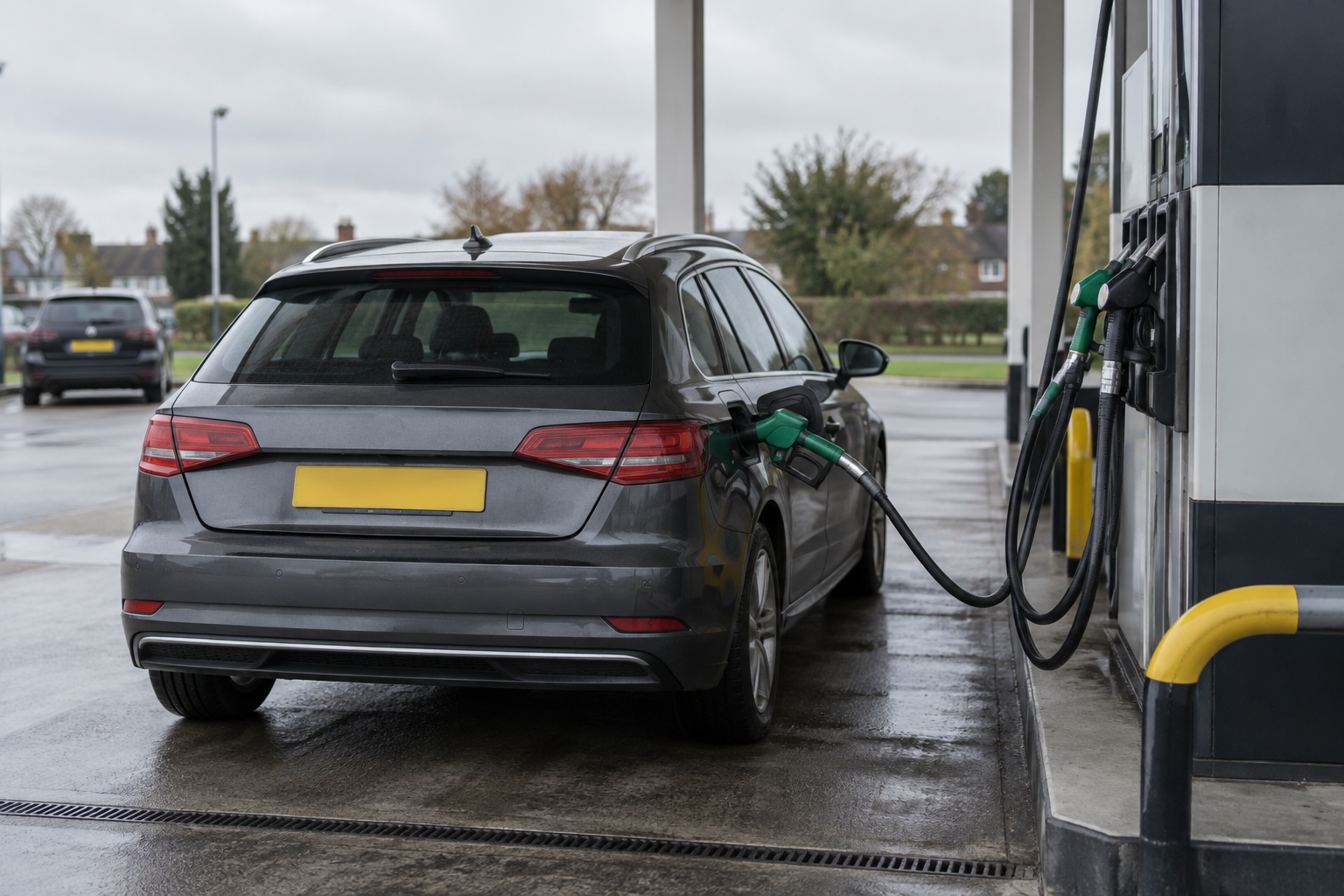
Skoda’s £38,645 Octavia diesel estate offers little fuel-cost advantage over its £37,265 mild-hybrid petrol counterpart at the UK pump prices used in a new comparison, despite its better fuel economy.
The assessment by Autocar compares two automatic Sportline estates: the 2.0 TDI 150PS DSG and the 1.5 TSI e-Tec 150PS DSG. It highlights a purchasing decision that looks different when measured by fuel consumption, monthly finance payments or towing requirements.
What happened
The diesel’s stated economy is 60.1mpg, against 54.3mpg for the petrol mild hybrid. That gives the diesel an efficiency advantage, but not enough to overcome the difference between the fuel prices used in the assessment.
Those prices are about £1.99 a litre for diesel and £1.7398 for petrol. For owners reviewing transport expenditure, the comparison reinforces the distinction between fuel economy and fuel spending, also relevant to businesses facing higher annual van fuel costs.
Finance produces a different result from the list-price comparison. On the four-year personal contract purchase agreements examined, the diesel costs £361 a month, while the petrol costs £363.
The lower diesel instalment comes with a slightly higher deposit and a substantially larger final balloon payment. The comparison does not provide those amounts, so the monthly figures alone do not establish which agreement costs less overall.
The background
Ten years before the comparison, petrol and diesel both cost around £1.12 a litre. With little difference at the pump, buyers could more directly weigh a diesel’s lower consumption against its higher purchase price.
The company-car market has also changed. Lower benefit-in-kind tax rates encourage drivers towards electric vehicles, weakening demand from a group that previously bought diesel enthusiastically. The assessment links that shift to fewer diesel cars being built.
Company-car taxation is a separate consideration from purchase support such as the Electric Car Grant for eligible UK electric vehicles. For a business owner, the relevant comparison therefore extends beyond the price of petrol and diesel.
Used diesel sales slowed during the summer covered by the assessment. No sales totals or percentage decline are supplied, limiting how precisely that change can be measured.
What people are saying
The assessment presents reliability perceptions as another obstacle for diesel. It contrasts the relative simplicity of older engines with the view that modern diesels are less dependable, although it supplies no breakdown statistics to quantify that concern.
Its strongest argument for the diesel Octavia is performance under load. The engine produces 266lb ft of torque, compared with 184lb ft from the petrol version.
That difference supports a case for buyers towing a caravan or boat, or regularly travelling long distances with four occupants and luggage. For businesses considering cleaner fleet options as fuel costs rise, those operating requirements remain part of the vehicle-selection decision.
What happens next
The assessment expects large diesel estates and SUVs with substantial towing capacity to be best placed to avoid the heaviest depreciation. That is a forecast rather than a reported resale-price result, and no timescale or percentage change is given.
Why this matters
For business owners choosing a car, the Octavia comparison shows why fuel economy and monthly instalments cannot settle the purchase decision alone. Higher diesel pump prices erode the benefit of lower consumption, while the cheaper diesel PCP instalment depends on a larger deposit and final payment. Towing requirements may still favour diesel, but company-car tax incentives and uncertainty over used demand introduce separate considerations for directors weighing ownership costs and eventual resale.
Frequently asked questions
- Is the Skoda Octavia diesel cheaper than the petrol?
- The diesel has a higher list price: £38,645 against £37,265 for the mild-hybrid petrol. Its monthly PCP payment is slightly lower in the comparison, but its deposit and final balloon payment are higher.
- What fuel economy does the Skoda Octavia diesel achieve?
- The 2.0 TDI 150PS DSG Sportline estate has stated fuel economy of 60.1mpg. The comparable 1.5 TSI e-Tec 150PS DSG Sportline petrol mild hybrid is rated at 54.3mpg.
- Why do higher diesel prices matter for running costs?
- Better fuel economy does not automatically mean lower fuel spending. The comparison uses diesel at about £1.99 a litre and petrol at £1.7398, enough to offset the Octavia diesel’s consumption advantage.
- Why might someone still buy a diesel Octavia?
- The diesel produces 266lb ft of torque, compared with 184lb ft for the petrol. The assessment identifies towing and regular long-distance journeys with passengers and luggage as reasons to choose it.
- How much is the Skoda Octavia diesel on PCP?
- The four-year PCP examined costs £361 a month for the diesel, against £363 for the petrol. The diesel requires a slightly higher deposit and a much larger final balloon payment; those amounts are not supplied.
- Why are company-car drivers moving away from diesel?
- Lower benefit-in-kind tax rates incentivise company-car drivers to choose electric vehicles. The assessment links the loss of this historically important customer group to fewer diesel cars being built.
- Which diesel cars could hold their value best?
- The assessment expects large estates and SUVs with substantial towing capacity to be better protected from the heaviest depreciation. It provides no forecast percentages or timescale.
In this story
Follow-up coverage
Topics: Skoda Octavia diesel costs · Skoda Octavia diesel vs petrol · Skoda Octavia fuel economy · diesel vs petrol running costs · Skoda Octavia PCP payments · diesel company car alternatives · All Cars for Business Owners news →
Original reporting: Autocar. This article is an independent write-up by British Business Echo.
Latest from the newsdesk
- E-commerce
Meta launches Muse shopping agent with major UK retailers
- Funding & Business Finance
British Business Bank takes £43m Oxford Science Enterprises stake
- Business Mistakes / Lessons Learned
Next business data accessed in supplier cyberattack
- Business Growth
UK pork producers secure Vietnam access and Philippines deal
- Business Regulation
HSE tools help small firms check health and safety duties
Related stories
BMW i3 M Sport priced from £54,925 as range reaches 519 miles
BMW’s electric executive saloon pairs long-range capability with low company-car tax, but options and wheel choice affect the buying calculation.
Renault Twingo to cost £14,745 after UK electric car grant
A £3,750 government grant brings the electric Renault Twingo's starting price level with the petrol Dacia Sandero.
BMW launches £54,925 i3 with up to 566 miles of range
The electric 3 Series arrives with a large battery and 400kW peak charging, while cheaper versions are set to follow.
Electric Car Grant cuts eligible UK EV prices by up to £3,750
The £650m scheme reduces the cost of eligible electric cars, with battery choice and production emissions determining the discount.