Economic Changes Affecting SMEs
BRC-KPMG: UK retail sales rise 1.5% as big purchases wait
Food sales supported October growth, but furniture and white goods struggled as shoppers waited for November discounts.

By Eleanor Whitcombe, Editor ·
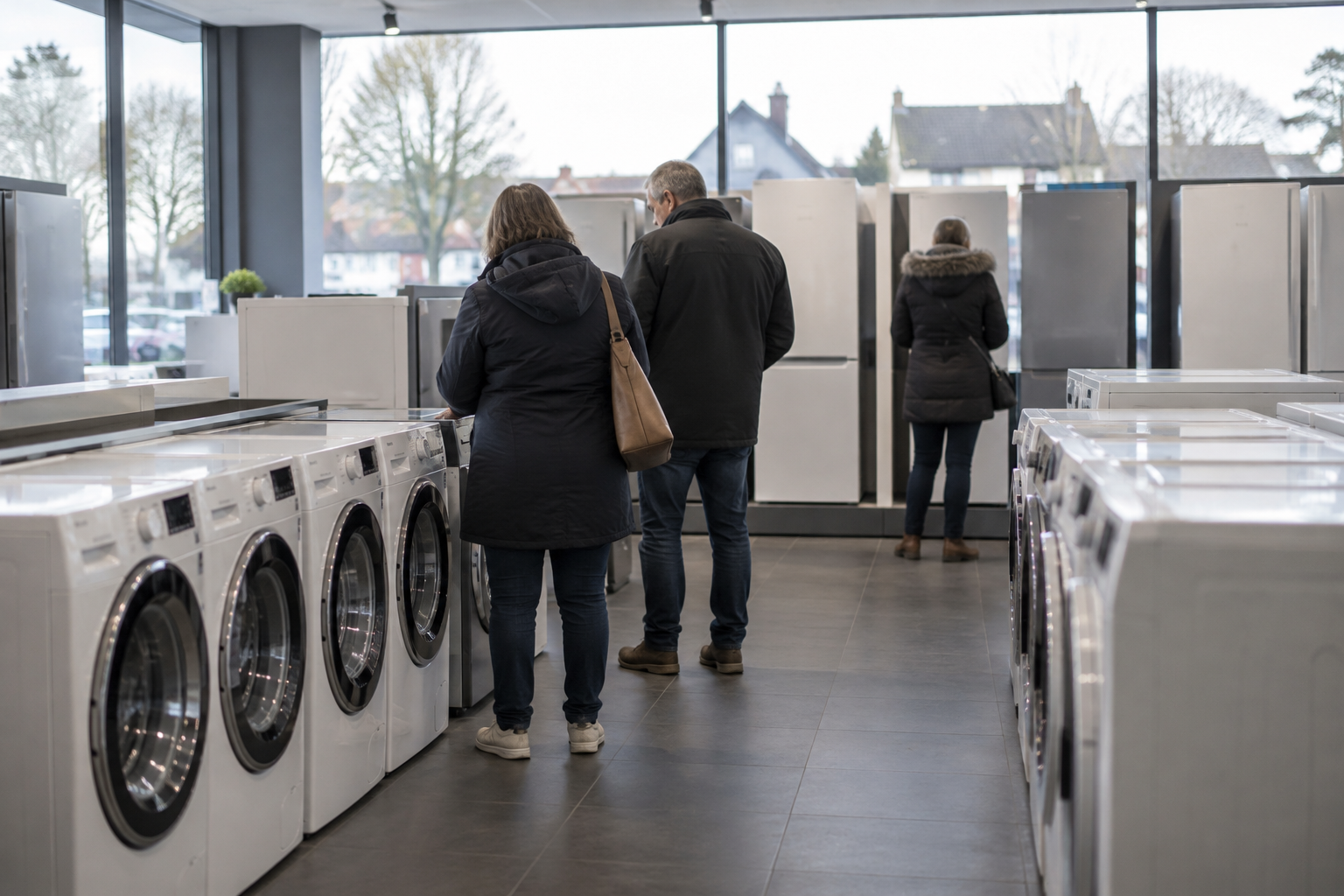
UK retail sales increased by 1.5% in October 2026, according to BRC-KPMG figures, as households postponed furniture and white goods purchases ahead of Black Friday and Christmas.
The figures cover the four weeks to 31 October. Food sales grew by 3.2%, but non-food sales showed no growth, leaving retailers reliant on the coming promotional period to convert deferred purchases into revenue.
What happened
The sales figures, reported by Retail Gazette, showed a marked difference between physical shops and online trading. In-store non-food sales fell by 1.1%, while online non-food sales increased by 1.8%.
Online transactions accounted for 38.6% of non-food sales, against 38.2% a year earlier. That shift towards digital shopping comes alongside forecasts for UK Christmas online spending, a separate measure of expectations for the festive trading period.
British Retail Consortium chief executive Helen Dickinson identified furniture and white goods as particularly weak categories. She attributed their performance to customers waiting for November offers rather than committing to large purchases in October.
The background
Overall sales growth was slightly slower than the 1.6% recorded a year earlier, although it exceeded the three-month average of 1.2%. October therefore represented an improvement on the recent average without matching the previous year's pace.
The comparison was weaker for physical non-food retail. Its 1.1% decline followed growth of 0.1% in October last year, showing that the channel had moved backwards rather than simply grown more slowly.
Seasonal occasions provided some support. Dickinson said Halloween falling on a Saturday helped sales of snacks, costumes and decorations. The event's contribution to trading is also reflected in separate reporting on Halloween footfall growth.
What people are saying
Dickinson attributed some of the improvement in online sales to wet weather. Her assessment pointed to weather affecting where customers shopped, alongside the timing of discounts influencing when they bought.
Linda Ellett, KPMG UK's head of consumer, retail and leisure, said lower temperatures helped clothing, footwear and duvet sales. Those categories benefited from an immediate seasonal need despite the broader weakness in non-food spending.
Ellett also identified higher household costs and uncertainty ahead of the Budget as constraints on growth. For retailers, she said stronger promotional and festive sales were needed to help offset their own cost increases.
IGD chief executive Sarah Bradbury said half term supported grocery spending alongside Halloween. She suggested that households stocking up after the government's Be Ready campaign might also have contributed, rather than presenting that as a confirmed driver.
Bradbury nevertheless said shoppers remained downbeat about their finances. That caution provides context for forecasts of lower UK Black Friday spending, with discount-led demand not necessarily signalling greater household spending capacity.
What happens next
Dickinson said retailers hoped delayed purchases would feed through into stronger November and December trading. The expected release of that demand remained a hope rather than an outcome established by the October figures.
Bradbury expected grocery promotions to sustain spending during the festive period, but warned that January would be difficult for many households. Her outlook puts a limit on how far a Christmas improvement could be read as a lasting recovery in consumer finances.
Why this matters
For UK retail owners and directors, October's figures show why overall sales growth offers only limited reassurance. Food spending increased, but non-food sales were flat and physical shops lost ground to online trading. Businesses facing higher costs are looking to November and December for purchases postponed by customers. With IGD also warning of a difficult January, a stronger festive period would not by itself establish a sustained improvement in household demand.
Frequently asked questions
- How much did UK retail sales grow in October 2026?
- BRC-KPMG figures showed UK retail sales rose by 1.5% in the four weeks to 31 October 2026. That was below the previous October's 1.6% growth but above the three-month average of 1.2%.
- Why were shoppers delaying purchases before Black Friday?
- British Retail Consortium chief executive Helen Dickinson said customers were waiting for November deals, particularly on furniture and white goods. KPMG's Linda Ellett also cited higher household costs and uncertainty ahead of the Budget.
- Did online retail sales rise in October?
- Online non-food sales increased by 1.8%. Online transactions represented 38.6% of non-food sales, compared with 38.2% a year earlier.
- How did UK shops perform compared with online retailers?
- In-store non-food sales fell by 1.1%, while online non-food sales grew by 1.8%. Helen Dickinson said wet weather helped online trading.
- Which retail categories performed better in October?
- Food sales rose by 3.2%. KPMG's Linda Ellett said colder weather supported clothing, footwear and duvets, while Helen Dickinson said Halloween helped snacks, costumes and decorations.
- What is the outlook for Christmas and January spending?
- Retailers hoped delayed purchases would support November and December sales. IGD chief executive Sarah Bradbury expected grocery promotions to help festive spending but warned that January would be difficult for many households.
In this story
Follow-up coverage
- SME / Owner-Managed Business
MoneySuperMarket: nearly 2m small firms skip Black Friday
- Economic Changes Affecting SMEs
UK retail sales rise 0.7% after government stockpiling push
- Economic Changes Affecting SMEs
BRC consumer confidence falls as Gen Z finances weaken
- Economic Changes Affecting SMEs
Ikea shelves UK projects as costs threaten further expansion
- Profitability
Dr Martens UK sales fall 21.3% as festive trading looms
Topics: UK retail sales · BRC KPMG retail sales October 2026 · Black Friday spending · UK non-food sales · online retail sales · Christmas retail outlook · All Economic Changes Affecting SMEs news →
Original reporting: Retail Gazette. This article is an independent write-up by British Business Echo.
Latest from the newsdesk
- E-commerce
Meta launches Muse shopping agent with major UK retailers
- Funding & Business Finance
British Business Bank takes £43m Oxford Science Enterprises stake
- Business Mistakes / Lessons Learned
Next business data accessed in supplier cyberattack
- Business Growth
UK pork producers secure Vietnam access and Philippines deal
- Business Regulation
HSE tools help small firms check health and safety duties
Related stories
VoucherCodes forecasts £9.8bn Black Friday spending
UK spending is forecast to rise 3%, broadly matching inflation, as more shoppers plan Christmas purchases around Black Friday discounts.
BDO: Online sales drive 4.6% October retail growth
Online discretionary sales rose 10.1% in October, but BDO warned that colder weather and promotions may explain the rebound.
UK retail sales fall 0.4% as Budget uncertainty weighs
September’s decline exceeded forecasts as households cut discretionary spending and retailers pressed for relief on business rates and employment taxes.

UK inflation reaches 3.6% as Bank weighs another rate rise
October inflation reaches a one-year high, leaving the Bank of England to weigh energy pressures against a soft jobs market.