Economic Changes Affecting SMEs
Sensormatic records 29% Halloween footfall rise
Retail parks recorded the strongest annual increase in visits, as retailers looked to carry Halloween demand into Christmas trading.

By Eleanor Whitcombe, Editor ·
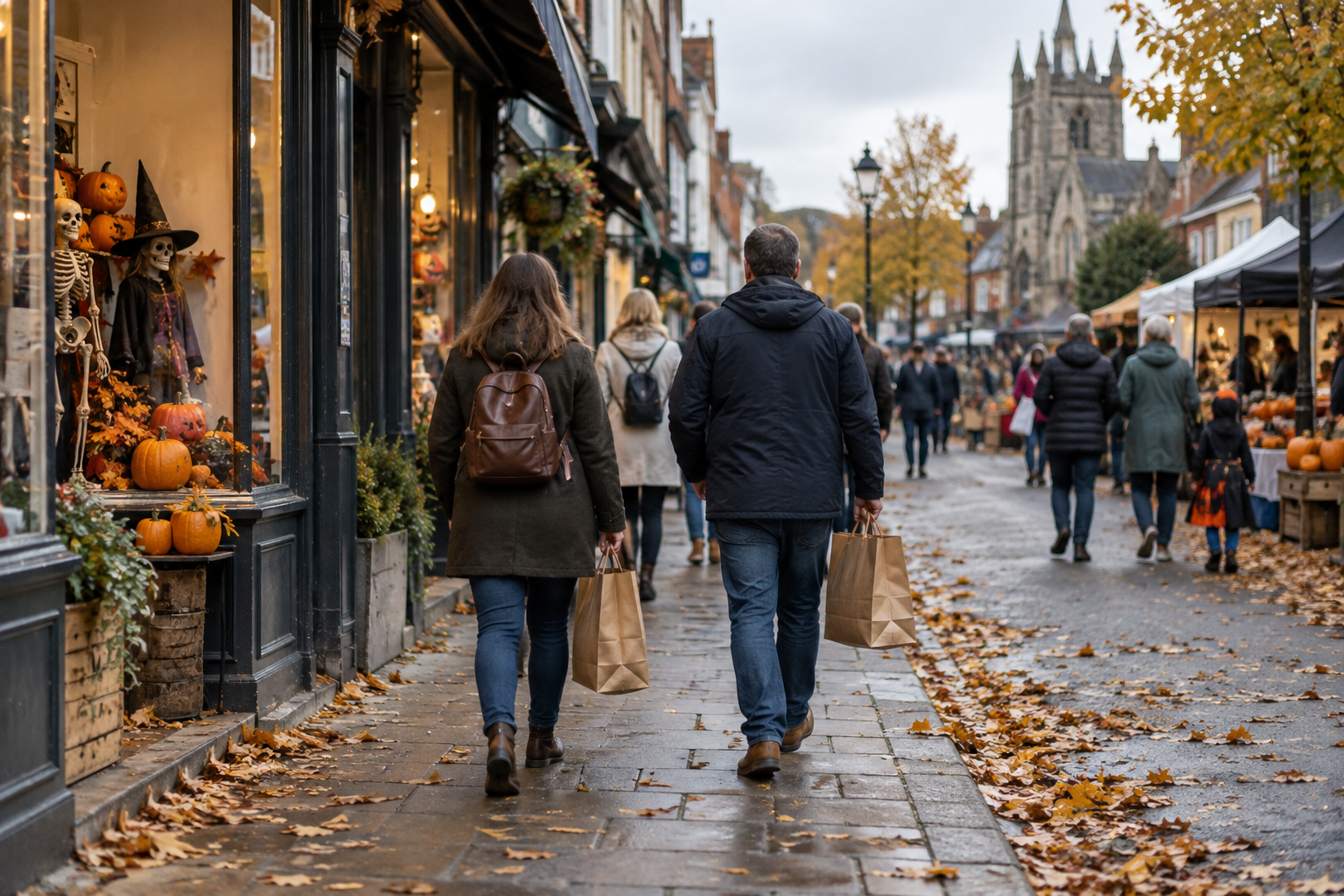
UK shopper visits rose 29% year on year on 31 October as Halloween fell on a Saturday, according to Sensormatic Solutions, with retail parks recording the strongest growth.
The figures, reported by InternetRetailing, also showed a 13% week-on-week increase in high street traffic. Consumer spending on Halloween was forecast to exceed £700m, although that estimate is separate from the measured increase in visits.
What happened
Sensormatic’s ShopperTrak Analytics platform recorded annual footfall growth across all three retail settings covered by the report. Retail parks led with a 32% increase, followed by high streets at 30% and shopping centres at 26%.
The 29% headline figure covers the overall annual rise in shopper traffic; the high street category recorded its own, slightly higher, increase. Retail parks outpaced shopping centres by six percentage points.
Visits on Halloween were also 36% above the daily average for the preceding two weeks. That comparison shows the scale of the single-day uplift against recent trading, rather than against the same date a year earlier.
For store operators, a sharp concentration of visits has implications for staffing and shop-floor supervision. The increase also makes Halloween retail theft a relevant consideration when planning cover for seasonal events.
The background
ShopperTrak Analytics captures 40 billion store visits worldwide each year. That is the platform’s global annual coverage, not the number of UK visits behind the Halloween figures.
The previous Halloween brought a 4.6% increase in sales, according to BRC-Sensormatic figures cited in the report. That measure concerns spending rather than footfall, so it is not a direct comparison with the latest 29% increase in visits.
Separately, BDO’s High Street Sales Tracker recorded October sales growth of 4.6% year on year. Its findings on October retail growth and online sales provide a broader monthly spending context for the single-day Halloween surge.
BDO attributed part of October’s improvement to purchases being pushed back by a month after a prolonged heatwave delayed autumn seasonal spending. The monthly gain therefore reflected a shift in the timing of demand as well as trading during October itself.
What people are saying
Andy Sumpter, head of consulting and analytics at Sensormatic Solutions, said retailers would want to carry the Halloween uplift into the Golden Quarter, the crucial final stretch of the retail year.
With consumer confidence under pressure, Sumpter identified Black Friday weekend as an important test of shoppers’ willingness to spend. He also described it as a potentially decisive opening to the main festive shopping period.
His assessment looks beyond the number of people entering stores: the next test for retailers is whether the seasonal increase in visits continues into Christmas shopping. The Halloween traffic figures alone do not establish the value of purchases made by those visitors.
What happens next
Sensormatic’s Christmas 2026: UK Shopper Insights report forecasts that Saturday 28 November 2026, the day after Black Friday, will attract the highest number of store visits during peak trading.
Boxing Day, 26 December 2026, is forecast to rank second. The third-busiest day is expected to be 19 December 2026, the final Saturday before Christmas, commonly known as Super Saturday.
That forecast places the largest expected traffic peak before December, with another major demand point after Christmas Day. For retailers planning staffing and stock availability, the projected busy periods span both pre-Christmas purchasing and post-Christmas trading.
Timeline
31 October
Halloween shopper visits rose 29% year on year, according to Sensormatic.
28 November 2026
Sensormatic forecasts the busiest store-visit day of peak trading.
19 December 2026
The final Saturday before Christmas is forecast to rank third for peak-trading visits.
26 December 2026
Boxing Day is forecast to be the second-busiest day for peak-trading visits.
Why this matters
For UK retailers, the Halloween uplift provides a concrete reason to plan staffing and stock around individual seasonal dates, rather than monthly averages alone. Growth varied by location, with retail parks ahead of high streets and shopping centres. However, visits are not a measure of sales. Directors must distinguish traffic gains from spending when assessing performance, while Sensormatic’s November and December forecasts identify the next expected pressure points for store operations.
Frequently asked questions
- How much did Halloween footfall increase?
- Sensormatic Solutions recorded a 29% year-on-year increase in shopper visits on 31 October. Visits were also 36% above the daily average for the preceding two weeks.
- Which retail locations had the biggest Halloween footfall rise?
- Retail parks recorded the strongest annual growth at 32%. High streets followed at 30%, while shopping centre visits increased 26%.
- How much did high street footfall rise at Halloween?
- High street shopper traffic increased 30% year on year and 13% week on week, according to Sensormatic’s ShopperTrak Analytics data.
- How much were UK shoppers expected to spend on Halloween?
- Consumer spending on Halloween was forecast to exceed £700m. The figure was a spending forecast, separate from Sensormatic’s measured footfall increases.
- Did October retail sales increase?
- BDO’s High Street Sales Tracker recorded October sales growth of 4.6% year on year. BDO attributed part of the improvement to autumn purchases delayed by a prolonged heatwave.
- What is forecast to be the busiest Christmas shopping day in 2026?
- Sensormatic forecasts that 28 November 2026, the Saturday after Black Friday, will attract the most peak-trading store visits. Boxing Day is expected to rank second, followed by 19 December.
- Does higher Halloween footfall mean higher sales?
- The Halloween figures measure visits, not purchases. They do not establish sales growth for the day. The £700m spending estimate is a separate forecast, while BDO’s 4.6% sales increase covers October.
In this story
Follow-up coverage
- Economic Changes Affecting SMEs
BRC-KPMG: UK retail sales rise 1.5% as big purchases wait
- Business Growth
Hush opens first three standalone stores in South East
- Economic Changes Affecting SMEs
RMT plans eight days of Tube strikes over four-day week
- Insolvency & Restructuring
Poundland rescue crisis threatens jobs and suppliers
Topics: Halloween footfall · Sensormatic Halloween retail data · UK high street footfall · Halloween consumer spending · retail park footfall · Christmas 2026 shopping forecast · Black Friday 2026 retail footfall · All Economic Changes Affecting SMEs news →
Original reporting: InternetRetailing. This article is an independent write-up by British Business Echo.
Latest from the newsdesk
- E-commerce
Meta launches Muse shopping agent with major UK retailers
- Funding & Business Finance
British Business Bank takes £43m Oxford Science Enterprises stake
- Business Mistakes / Lessons Learned
Next business data accessed in supplier cyberattack
- Business Growth
UK pork producers secure Vietnam access and Philippines deal
- Business Regulation
HSE tools help small firms check health and safety duties
Related stories

UK retail sales rise 0.7% after government stockpiling push
Emergency food purchases helped lift October sales, but analysts warn the increase may not signal stronger demand before Christmas.
BRC consumer confidence falls as Gen Z finances weaken
Retailers call for lower youth employment costs as November polling shows weaker confidence in the economy and household finances.

UK inflation reaches 3.6% as Bank weighs another rate rise
October inflation reaches a one-year high, leaving the Bank of England to weigh energy pressures against a soft jobs market.
Ikea shelves UK projects as costs threaten further expansion
The furniture retailer could direct investment to lower-tax European markets after shelving British projects amid rising costs.