Interest Rates
Bank of England rate bets lift UK gilt yields above 5%
Two-year government bond yields pass 5% as traders price in further rate rises, increasing pressure on the Treasury’s borrowing bill.

By Priya Nair, Finance & Tax Reporter ·
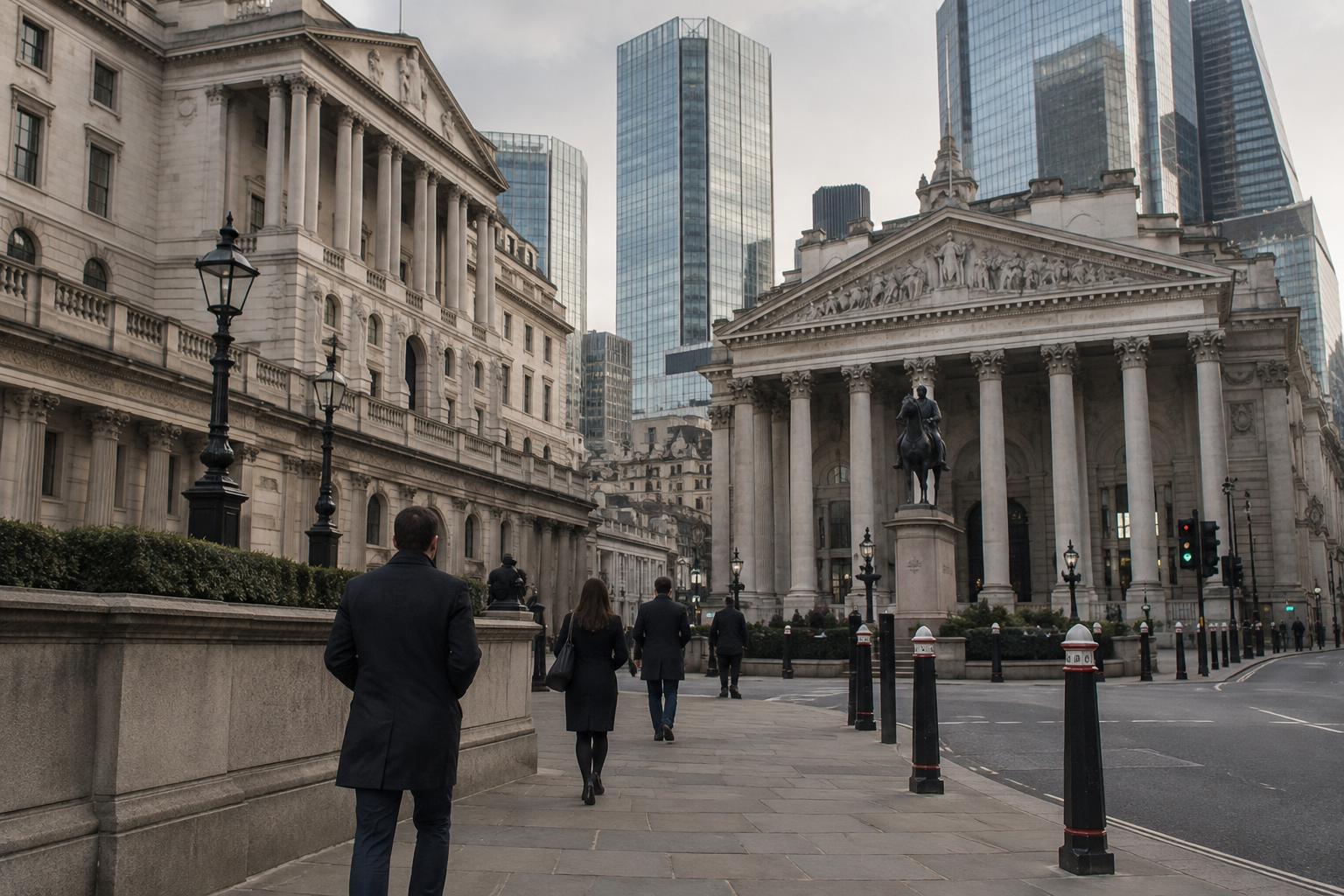
UK government borrowing costs rose on Monday as the two-year gilt yield increased four basis points to more than 5%, its highest level since 2023, amid expectations of further Bank of England interest rate rises.
The move followed warnings from senior rate-setters that more action would be needed to contain inflation. As reported by City AM, investors now see a path that could take Bank Rate to 4.75% in the early months of 2027.
What happened
Selling spread across government bonds with both short and long maturities. It followed the gilt market’s weakest week in three months, extending the pressure on the cost of government finance.
Since Tuesday, the two-year yield has risen by more than 30 basis points — more than 0.3 percentage points. That increase coincided with fading hopes of an immediate ceasefire following the US midterm elections.
The yield on 10-year gilts has increased by 25 basis points over the same period. Those longer-term bonds reflect investors’ assessment of the UK’s inflation and public finance outlook, rather than only the next few interest rate decisions.
Traders assign an 84% probability to another rate increase at the Monetary Policy Committee’s meeting next month. Such a decision would be its second consecutive increase.
The background
The Bank raised interest rates earlier this month, its first increase in three years. The committee acted because it feared the energy shock caused by the continuing Middle East conflict could spread more widely through the UK economy.
Eight months into the war, there has been limited evidence of businesses passing higher costs to customers or employees seeking compensating pay increases. These are the second-round effects that policymakers are watching for as they assess energy cost pressures facing high street businesses.
However, stronger economic releases and indications that the labour market is recovering have increased the committee’s concern. That combination has reduced confidence that the initial energy shock can pass without further monetary tightening.
The prospective increases would amount to the Bank’s second substantial tightening cycle in less than five years.
What people are saying
Chief economist Huw Pill said on Saturday that interest rates would probably need to rise both before and after the turn of the year. Pill is among the more hawkish members of the nine-person Monetary Policy Committee.
He also argued that the Bank had delayed too long before making this month’s increase. His position puts the timing of intervention, as well as the eventual level of rates, at the centre of the policy debate.
Fellow committee member Megan Greene favoured taking early action against inflation. She said the greater policy risk was failing to bring price pressures under control after inflation had remained above target for most of roughly five-and-a-half years.
Those positions sit alongside calls for the Bank to take rates to 5%, although that is above the 4.75% level implied by the sequence of increases described in current market pricing.
What happens next
Beyond next month’s meeting, traders have fully priced in a third increase by March. They put an 84% probability on a fourth tightening decision by the end of April. These are market expectations rather than commitments from the committee.
Higher gilt yields also increase the financing pressure on the Treasury following last month’s Budget. At his first fiscal statement, Chancellor John Healey announced plans to borrow through the bond market to support a £20.4bn package for public financial institutions, including the British Business Bank.
Why this matters
For business owners and directors, the market shift points towards further monetary tightening rather than near-term relief from higher interest rates. Policymakers are watching whether energy costs feed into customer prices and wage demands, making those business decisions central to the outlook. The rise in government financing costs also comes as the Treasury plans a £20.4bn borrowing-funded package for public financial institutions, including the British Business Bank.
Frequently asked questions
- Why have UK gilt yields risen above 5%?
- Investors have increased their bets on further Bank of England rate rises following hawkish comments from policymakers. Fading ceasefire hopes after the US midterms have also accompanied the sell-off in government bonds.
- Which UK government bond yield has passed 5%?
- The two-year gilt yield passed 5% on Monday after rising four basis points. It was the first time that yield had exceeded the threshold since 2023.
- Will the Bank of England raise interest rates next month?
- Traders assign an 84% probability to an increase at next month’s Monetary Policy Committee meeting. That is a market expectation, not a confirmed decision.
- How high could Bank of England interest rates go?
- The sequence of increases anticipated by traders could take Bank Rate to 4.75% in early 2027. Markets have priced in a third increase by March and see an 84% chance of a fourth by the end of April.
- What did Huw Pill say about interest rates?
- Huw Pill said rates would probably need to rise before and after the new year. He also argued that the Bank had waited too long before raising rates earlier this month.
- Why is the Bank worried about the Middle East conflict?
- Policymakers fear the conflict’s energy shock could spread through the economy as businesses raise prices and workers seek higher pay. Evidence of those effects has been limited, but stronger economic data has heightened concern.
- What do higher gilt yields mean for government borrowing?
- Higher yields increase government financing costs. The rise adds pressure after Chancellor John Healey announced bond-funded support worth £20.4bn for public financial institutions, including the British Business Bank.
In this story
Follow-up coverage
Topics: UK gilt yields · Bank of England interest rates · two-year gilt yield above 5% · UK government borrowing costs · Bank Rate forecast 2027 · Huw Pill interest rates · All Interest Rates news →
Original reporting: City AM. This article is an independent write-up by British Business Echo.
Latest from the newsdesk
- E-commerce
Meta launches Muse shopping agent with major UK retailers
- Funding & Business Finance
British Business Bank takes £43m Oxford Science Enterprises stake
- Business Mistakes / Lessons Learned
Next business data accessed in supplier cyberattack
- Business Growth
UK pork producers secure Vietnam access and Philippines deal
- Business Regulation
HSE tools help small firms check health and safety duties
Related stories
Bank of England urged to raise rates to 5% over inflation fears
Niesr warns inflation could remain above target until 2030, with higher rates also threatening growth and the government's spending plans.
Bank of England raises rates to 4% as inflation risks grow
All rate-setters backed tighter policy as the Bank forecast inflation of 4.9% next year and warned that another increase could follow.

UK inflation rises to 3.5% as November rate rise looms
September inflation exceeded forecasts as diesel prices climbed, adding pressure ahead of the Budget and November’s interest rate decision.

Andrew Bailey warns energy costs are squeezing business margins
The Bank of England governor says firms are absorbing higher energy costs, but warns their ability to protect customers from price rises is weakening.