Interest Rates
Bank of England faces December rate rise pressure as jobs grow
Unemployment has fallen to 4.6%, strengthening the case for another rate rise, although declining vacancies point to continued caution among employers.

By Priya Nair, Finance & Tax Reporter ·
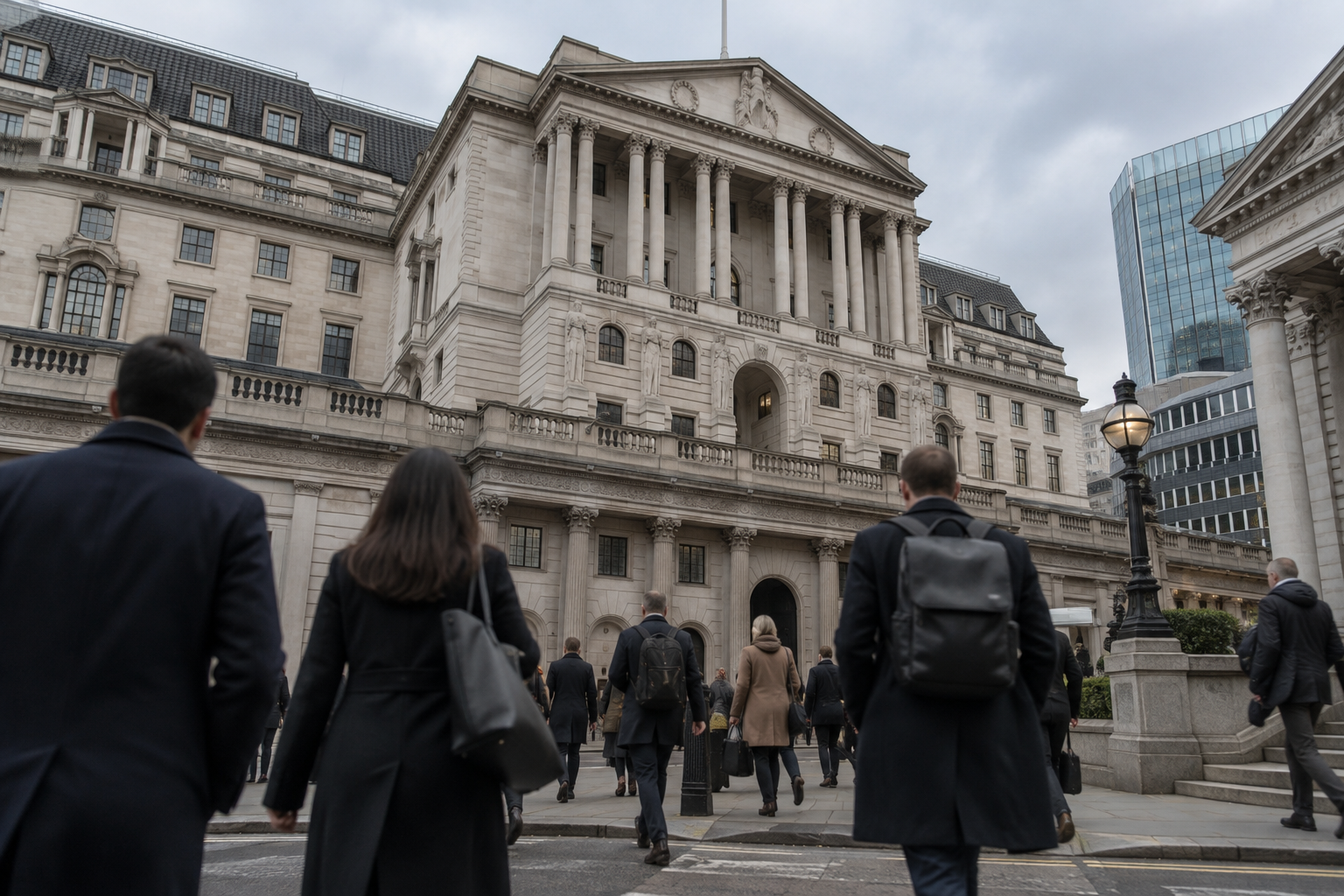
The Bank of England faces growing pressure to raise UK interest rates again in December after unemployment fell to 4.6% and full-time employment increased by 22,000, despite a further decline in vacancies.
The Office for National Statistics figures put unemployment in the three months to September at its lowest since April 2025. Economists said the stronger employment picture increased the likelihood of a second consecutive rate rise, as reported by City AM.
What happened
Full-time employment rose by 22,000 month-on-month, while the ONS revised upwards its estimate of the increase in payrolled staff during August. Together, the figures suggest employers have retained more capacity to take on workers than earlier estimates indicated.
Pay growth excluding bonuses eased from 3.7% to 3.5%. That was consistent with the Bank's expectations, according to Deutsche Bank, but left policymakers assessing whether wage pressures were slowing sufficiently alongside the improvement in employment.
The recruitment figures offered a more cautious signal. Vacancies fell by 22,000 to 690,000, with smaller employers recording the largest reductions in available posts.
ONS officials said those businesses identified a higher tax burden and energy costs as reasons for reducing recruitment. The fall in openings therefore sits alongside rising employment, rather than showing an improvement across every measure of labour demand.
The background
The Bank's return to interest rate increases this month marked its first rise in three years. Before that decision, members of the Monetary Policy Committee had repeatedly cited weakness in the jobs market as a reason to keep rates unchanged.
The latest employment release follows a succession of stronger signals from the labour market and better-than-expected GDP figures. That combination has weakened one of the arguments previously used to support holding borrowing costs steady.
The war in Iran has made the employment outlook particularly important to the rate debate. Economists are assessing whether an energy shock will feed through into wages and other prices, allowing inflationary pressure to persist beyond the initial increase in fuel costs.
The Bank expects inflation to reach as high as 4.9% early next year, reflecting a forecast 27% increase in energy bills. Its inflation target is 2%; that target applies to overall price growth, rather than directly to wages.
What people are saying
Schroders said the employment figures strengthened the argument for a further increase in rates. Its concern is that a firmer labour market makes it harder to discount the risk of energy-driven inflation becoming embedded through subsequent wage and price increases.
Deutsche Bank's assessment was that there was less spare capacity in the labour market than previously assumed. Its view distinguished between wage growth, which matched the Bank's expectations, and employment conditions, which appeared tighter.
Jefferies economist Modupe Adegbembo took a more restrained view, describing the labour market as “stable rather than strong”. She argued that the gradual pace of cooling did not support the four increases in interest rates priced into markets over the following year.
Quilter investment strategist Kit Reese said the final rate decision of the year would be difficult. In his assessment, inflation remaining too high could leave policymakers with little room to avoid another increase, despite the meeting's proximity to Christmas.
What happens next
The ONS is due to publish October inflation figures on Wednesday. That release will provide the next reading on price pressures before the Bank's December meeting, scheduled for a week before Christmas.
Traders have increased their expectations of another rise next month. Swaps pricing implies three increases before June and four by November 2027, illustrating the extent of market expectations for higher UK rates, rather than a commitment by the Bank to deliver them.
Timeline
August
The estimated increase in payrolled staff was subsequently revised upwards by the ONS.
Three months to September
Unemployment fell to 4.6%, its lowest level since April 2025.
December
The Bank holds its final rate-setting meeting of the year, a week before Christmas.
November 2027
Swaps markets imply four interest rate increases by this point.
Why this matters
For UK business owners and directors, the figures complicate borrowing and staffing decisions. Another rate increase would add pressure to financing costs while smaller employers already cite taxes and energy bills as reasons to reduce recruitment. Slower wage growth offers some relief, but lower unemployment suggests less spare labour capacity than previously assumed. The October inflation release and December rate decision will help businesses assess whether tighter financial conditions are likely to accompany the forecast increase in energy bills.
Frequently asked questions
- Why could the Bank of England raise interest rates in December?
- Lower unemployment and rising employment have strengthened the case for another increase. Economists are concerned that a firmer labour market could help an energy price shock feed into wages and other prices.
- What is the UK unemployment rate?
- The ONS reported unemployment of 4.6% in the three months to September, the lowest proportion since April 2025.
- Is UK wage growth slowing?
- Pay growth excluding bonuses eased to 3.5%, compared with 3.7% the previous month. Deutsche Bank said the wage figures matched the Bank of England's expectations.
- Why are UK job vacancies falling?
- Vacancies declined by 22,000 to 690,000. Smaller employers recorded the biggest reductions, with ONS officials reporting that businesses cited higher taxes and energy costs as reasons to curb hiring.
- How many interest rate rises do markets expect?
- Swaps markets imply three increases before June and four by November 2027. Those expectations are market pricing, not an announced Bank of England programme.
- How high does the Bank of England expect inflation to go?
- The Bank expects inflation to reach as high as 4.9% early next year, reflecting a predicted 27% rise in energy bills.
- When is the next UK inflation announcement?
- The ONS is due to release October inflation figures on Wednesday, ahead of the Bank of England's December interest rate meeting.
In this story
Follow-up coverage
Topics: Bank of England December rate rise · UK interest rate outlook · UK unemployment 4.6% · UK wage growth · UK job vacancies · Bank of England inflation forecast · All Interest Rates news →
Original reporting: City AM. This article is an independent write-up by British Business Echo.
Latest from the newsdesk
- E-commerce
Meta launches Muse shopping agent with major UK retailers
- Funding & Business Finance
British Business Bank takes £43m Oxford Science Enterprises stake
- Business Mistakes / Lessons Learned
Next business data accessed in supplier cyberattack
- Business Growth
UK pork producers secure Vietnam access and Philippines deal
- Business Regulation
HSE tools help small firms check health and safety duties
Related stories
Bank of England rate bets lift UK gilt yields above 5%
Two-year government bond yields pass 5% as traders price in further rate rises, increasing pressure on the Treasury’s borrowing bill.
Bank of England urged to raise rates to 5% over inflation fears
Niesr warns inflation could remain above target until 2030, with higher rates also threatening growth and the government's spending plans.
Bank of England raises rates to 4% as inflation risks grow
All rate-setters backed tighter policy as the Bank forecast inflation of 4.9% next year and warned that another increase could follow.