Economic Changes Affecting SMEs
Oxford Street to ban traffic on 1km shopping stretch
Buses, taxis and bicycles will be excluded from part of the London shopping street from Monday, with public-space improvements to follow.

By Eleanor Whitcombe, Editor ·
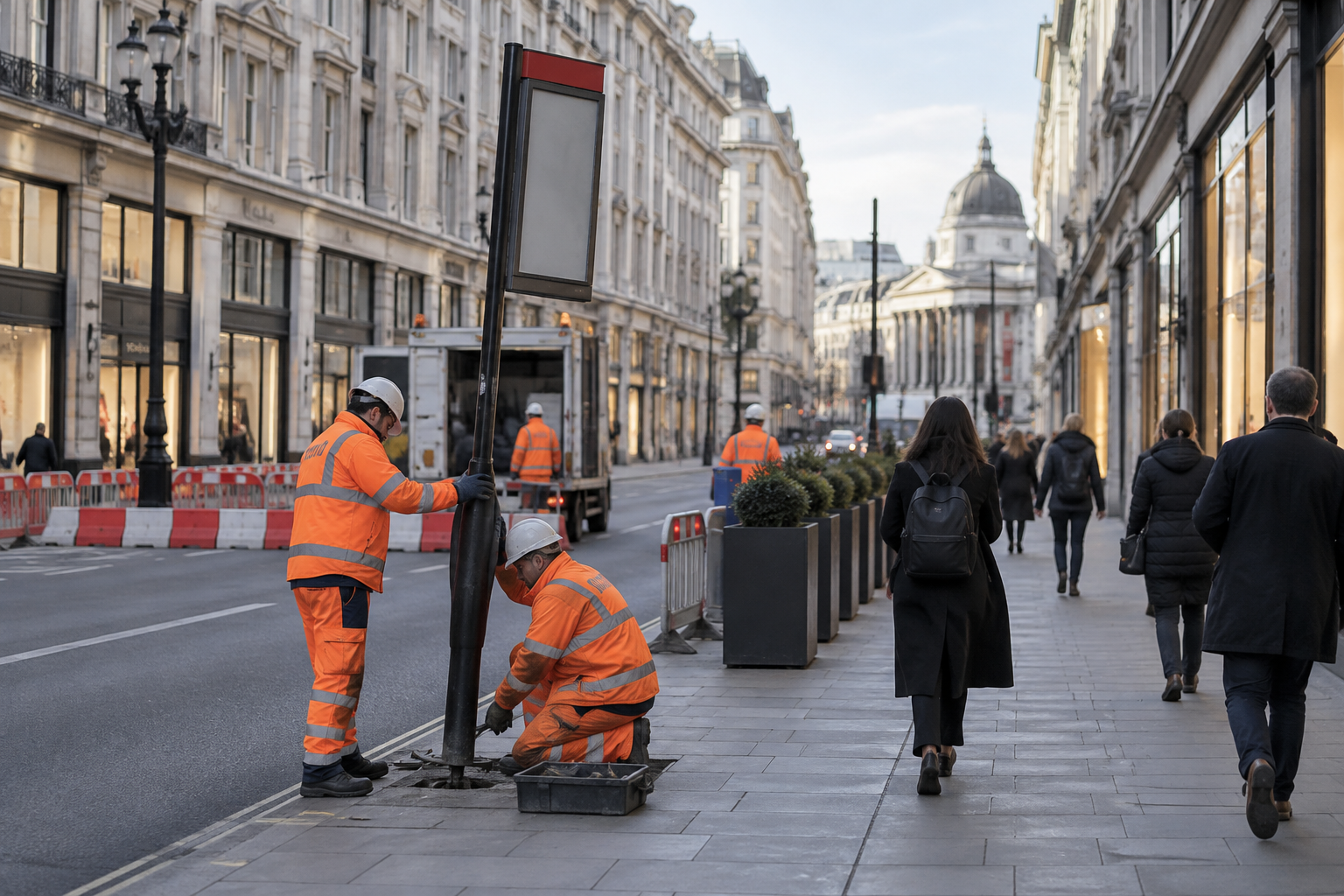
London mayor Sadiq Khan’s plan to pedestrianise a 1km section of Oxford Street is due to take effect on Monday, changing access to one of the capital’s principal shopping destinations.
The restrictions will cover the section between Orchard Street and Great Portland Street. Buses, taxis and bicycles will all be excluded, as reported by Monocle.
What happened
Crews are scheduled to remove bus stops and traffic signals that are no longer needed on Sunday night, preparing the road for pedestrian-only access the following morning.
The opening will not mark the completion of the wider public-space scheme. The street will initially operate without the full package of seating, planting and plazas planned for the area.
The background
Proposals to remove traffic from Oxford Street date back to the 1960s. Residents, businesses and local councils have resisted earlier attempts at different stages, preventing previous plans from proceeding.
Sadiq Khan established a development corporation in January, securing the planning powers needed to advance the project. The scheduled change follows roughly 10 months later.
The access overhaul comes alongside other pressures on Oxford Street businesses. Separately, HMV plans to close its flagship following a proposal to double its rent, illustrating a property-cost challenge distinct from the question of how shoppers reach the street.
There is also a cautionary precedent for the scheme. Some British town centres pedestrianised during the 1960s subsequently suffered declining footfall and problems with crime. Removing traffic alone does not establish that a shopping district will attract more customers.
What people are saying
Nabeel Khan, chief executive of the new development corporation, presents Monday as the beginning of a process of testing and review rather than a finished transformation. His stated aim is a lively street serving both London residents and visitors.
He argues that the economic health of Oxford Street and the wider West End is central to the project. In his assessment, evidence supports the view that easier pedestrian access and longer visits translate into higher retail spending.
That expectation sits against a difficult consumer backdrop: UK retail sales have fallen 0.4% amid Budget uncertainty. The Oxford Street account provides no quantified forecast for additional sales from the scheme.
What happens next
New seating, plazas and planting are expected to take several months to install. The physical improvements will therefore follow the traffic restrictions rather than arrive with them.
Security will be another test of the new layout, particularly protection against pickpocketing and phone theft. The business case depends partly on creating a public space that customers want to use, not simply an area without vehicles.
The project also sits within a broader debate about town-centre trading conditions, reflected in UKHospitality’s call for licensing reform in its high-street blueprint. On Oxford Street, the immediate task is to establish how the pedestrian-only arrangement works while the remaining improvements are delivered.
Timeline
January
Sadiq Khan establishes a development corporation with planning powers to advance the scheme.
Sunday night
Crews are scheduled to remove bus stops and redundant traffic signals.
Monday
The 1km stretch is due to become pedestrian-only.
Why this matters
For businesses on Oxford Street, the scheme changes customer access immediately while the improvements intended to encourage longer visits arrive over several months. Retailers face a transition rather than a completed redevelopment on Monday. The corporation expects pedestrianisation to support spending, but has provided no quantified uplift. For directors assessing the trading impact, customer numbers, time spent in the area and security will be more useful measures than the removal of traffic alone.
Frequently asked questions
- Which part of Oxford Street is being pedestrianised?
- The scheme covers a 1km stretch between Orchard Street and Great Portland Street in central London.
- When does Oxford Street pedestrianisation start?
- The traffic restrictions are scheduled to begin on Monday, following the removal of bus stops and redundant traffic signals on Sunday night.
- Will buses, taxis and bikes be allowed on Oxford Street?
- Buses, taxis and bicycles will all be excluded from the pedestrianised section between Orchard Street and Great Portland Street.
- Who is responsible for the Oxford Street pedestrianisation scheme?
- London mayor Sadiq Khan established a development corporation in January with the planning powers to advance the scheme. Nabeel Khan is its chief executive.
- Will pedestrianisation increase Oxford Street shop sales?
- Nabeel Khan argues that easier access and longer visits support higher retail spending. No quantified sales forecast is provided, and the outcome will depend partly on the street’s appeal and security.
- Will Oxford Street's new seating and planting be ready on Monday?
- No. Seating, plazas and planting are expected to take several months to install after the pedestrian-only restrictions begin.
In this story
Follow-up coverage
Topics: Oxford Street pedestrianisation · Oxford Street traffic ban · Oxford Street pedestrian zone · Oxford Street buses and taxis · Sadiq Khan Oxford Street · Oxford Street retail sales · All Economic Changes Affecting SMEs news →
Original reporting: Monocle. This article is an independent write-up by British Business Echo.
Latest from the newsdesk
- E-commerce
Meta launches Muse shopping agent with major UK retailers
- Funding & Business Finance
British Business Bank takes £43m Oxford Science Enterprises stake
- Business Mistakes / Lessons Learned
Next business data accessed in supplier cyberattack
- Business Growth
UK pork producers secure Vietnam access and Philippines deal
- Business Regulation
HSE tools help small firms check health and safety duties
Related stories

UK retail sales rise 0.7% after government stockpiling push
Emergency food purchases helped lift October sales, but analysts warn the increase may not signal stronger demand before Christmas.
BRC consumer confidence falls as Gen Z finances weaken
Retailers call for lower youth employment costs as November polling shows weaker confidence in the economy and household finances.

UK inflation reaches 3.6% as Bank weighs another rate rise
October inflation reaches a one-year high, leaving the Bank of England to weigh energy pressures against a soft jobs market.

Ikea shelves UK projects as costs threaten further expansion
The furniture retailer could direct investment to lower-tax European markets after shelving British projects amid rising costs.