Business Growth
UK exporters face customs and cashflow checks for growth
Small firms weighing overseas sales must assess customs requirements, payment risks and delivery capacity before committing to new markets.

By Eleanor Whitcombe, Editor ·
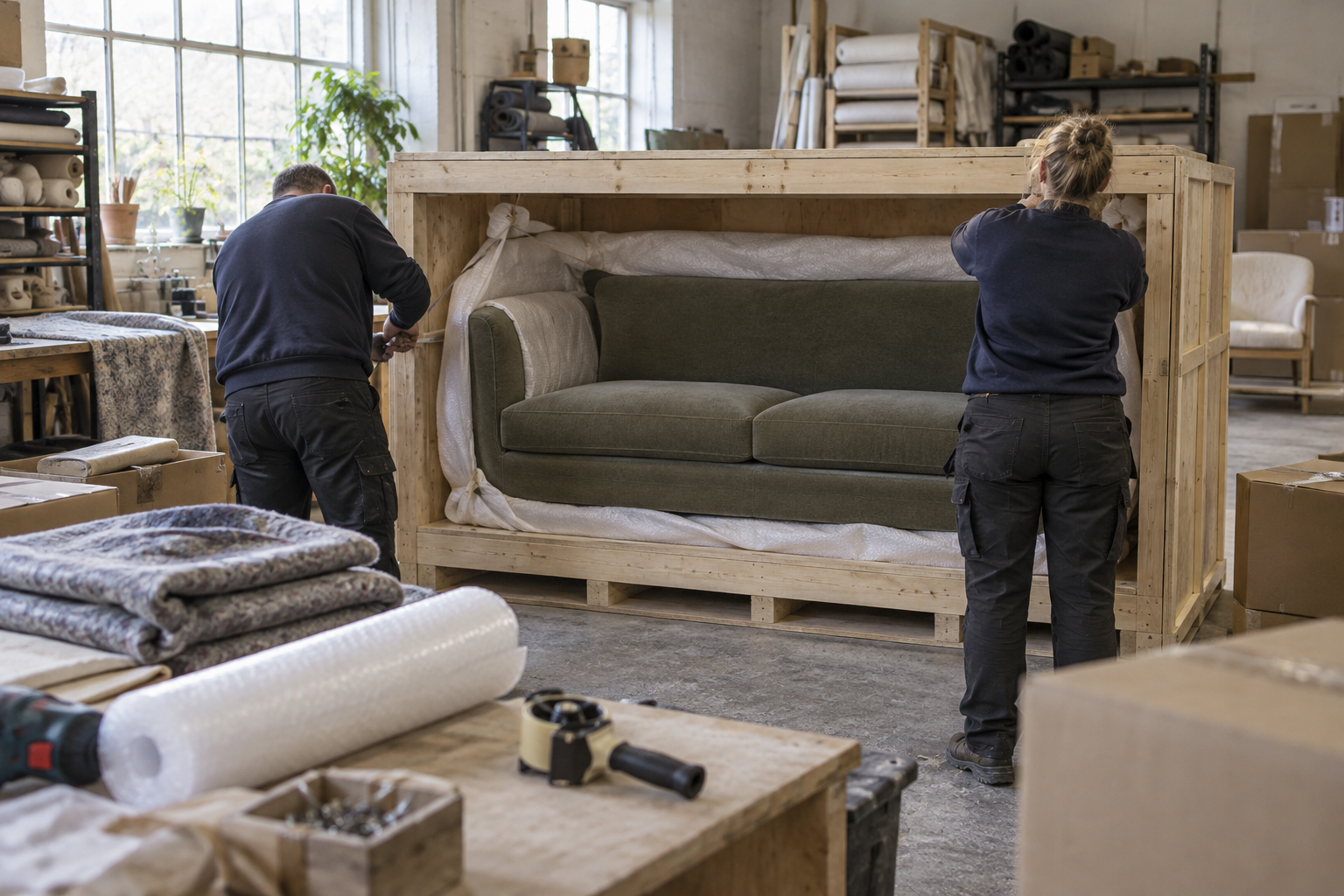
UK small businesses planning to sell goods overseas are being urged to assess customs requirements, financial exposure and delivery capacity before committing resources to international growth.
A guide published by SmallBusiness.co.uk on 15 October 2026 brings together export procedures and business case studies, including a furniture manufacturer which reported that overseas customers generated half its sales in June 2018. That figure is a historical example, rather than a current measure of export performance.
What happened
The guidance identifies registration and declarations as early operational requirements. Businesses generally need an Economic Operators Registration and Identification number, known as an EORI, when moving goods between Great Britain or the Isle of Man and other countries, including EU members.
Movements between Northern Ireland and countries outside the EU also require an EORI. The number is needed when registering for an export licence, while the relevant registration depends on the territories involved in the shipment.
Applications require business information including a Unique Taxpayer Reference, the trading start date and Standard Industrial Classification code. VAT details are needed where applicable, while individuals and sole traders must supply their National Insurance number.
An EORI is normally issued immediately, although an application requiring HMRC checks can take up to five days. Businesses preparing their first shipment therefore need to allow for registration rather than assume it can always be completed at dispatch.
Customs declarations are handled through the Customs Declaration Service. Businesses can appoint a representative to manage the process, with the service also covering account details, payments and information about specialist software.
The guide states that records for traded goods must be retained for four years and made available to HMRC when requested. VAT-registered businesses also need the relevant accounts and records of goods movements.
The background
Full EU customs controls have applied to exports from Great Britain to the EU since 1 January 2022, according to the guide. It explains that declarations are required for all exported goods and that consignments must be presented to customs, with information entered into HMRC systems to establish whether additional checks are necessary.
The commercial assessment starts before that paperwork. Firms are advised to examine their UK sales performance, establish whether overseas demand exists and identify both British competitors already exporting and local rivals in the proposed market.
Capacity is another consideration: market development requires funding, while additional orders may require more staff. Export objectives should be measurable, with businesses also assessing local trading practices, cultural differences and the frequency of any necessary visits.
These firm-level decisions sit alongside wider efforts to develop international business. The UK-India trade mission involving £1bn of deals and 500 UK technology jobs provides a separate example of overseas commercial activity, although individual exporters still need to establish demand for their own products.
The guide's furniture case study traces David Robinson's entry into the sector to 2002, when he began selling second-hand Chesterfield sofas at the age of 23. His early export work included sending a 19th-century Chesterfield to an American university.
A second example concerns Sean Hammon, founder of clothing brand Oxcloth, which targets muscular and athletic men. He launched the business in November 2016 with ten shirt styles and four chinos, following experience in his family's international beauty business and in manufacturing.
What people are saying
Robinson describes freight disruption as a recurring challenge rather than an exceptional event. His experience includes furniture being taken off ships, consignments delayed by airport closures, quarantine holds and discrepancies in customs paperwork.
He places particular importance on choosing a dependable freight partner and understanding each destination's rules. Forwarders can provide documentation support and transport quotations; some also offer digital services for booking, payment and shipment tracking.
In the case study, Robinson says Robinson of England moved away from standalone showrooms and department-store concessions to online-only trading. Customers could still visit its workshop, while the change gave him more time to manage larger projects and maintain client relationships.
His June 2018 account put overseas sales at 50% of the business, with customers in markets including Brazil and Switzerland. The company advertised abroad as well as in the UK, and he identified efficiency as a priority alongside international sales development.
The government's position, as described in the guide, is that firms should explore overseas opportunities through support available from the Department for Business and Trade. Its services include market comparisons, export action planning and free training through the UK Export Academy.
On distribution, the guide relays government advice that exporters should actively select potential partners rather than accept approaches without scrutiny. Relevant checks include sector experience, reputation and references from existing suppliers, followed by a written agreement setting out responsibilities.
What happens next
Before accepting orders, businesses need to decide how they will limit non-payment risk. Options identified in the guide include export invoice insurance, advance payment and staged payments, with UK Export Finance signposted for further guidance. These cross-border arrangements are distinct from domestic payment-policy proposals such as the Commercial Payments Bill's proposed 60-day limit for large firms.
Currency exposure also needs to be considered when pricing contracts. Matching income and expenditure in the same currency can reduce exposure to exchange-rate movements, while multi-currency accounts offer another way to manage receipts and transaction costs.
Product checks should cover the destination country's specifications and standards, alongside any licensing requirements. The guide highlights machinery, electronics, computers and telecommunications equipment as areas requiring attention; businesses moving production overseas must also monitor manufacturing quality.
Insurance decisions extend beyond unpaid invoices. Marine insurance covers goods against loss or damage in transit, including movements by road, rail and air, while separate protection can address commercial and political risks under an export contract.
Exporters must also choose between selling directly and using a distributor. A distributor buys the goods, takes ownership and resells them at a margin; trade associations and other suppliers can help identify prospective partners.
For businesses seeking practical preparation, the British Chambers of Commerce offers training and guidance on trade documentation, while local chambers organise international trade events. Trade shows can provide access to prospective customers, workshops and export advice.
Support routes also vary by business and location. The Growth Company's Hong Kong route for Manchester start-ups is a separate example of locally targeted international market support, rather than a substitute for checking shipment requirements.
Robinson's stated ambitions in the historical case study were to enter further overseas markets and introduce additional website languages. The guide provides no completion date or subsequent results for those plans.
Timeline
2002
David Robinson begins selling second-hand Chesterfield sofas at the age of 23.
November 2016
Sean Hammon launches Oxcloth with ten shirt styles and four chinos.
June 2018
Robinson of England reports that overseas customers generate 50% of sales.
1 January 2022
Full EU customs controls apply to exports from Great Britain to the EU, according to the guide.
15 October 2026
The export guide is published, combining customs guidance with historical business case studies.
Why this matters
For small business directors, an overseas order brings obligations beyond finding a buyer. Registration, customs records, product standards and freight arrangements all require preparation, while unpaid invoices and exchange-rate movements can affect the return on a sale. Robinson of England's historical experience illustrates both the potential contribution of exports and the delivery problems involved. Assessing staffing, funding and payment protection before committing to a market can help firms judge whether they can support additional demand.
Frequently asked questions
- Do UK businesses need an EORI number to export?
- Businesses generally need an EORI number when moving goods between Great Britain or the Isle of Man and other countries. It is also required for movements between Northern Ireland and countries outside the EU.
- How long does it take to get an EORI number?
- An EORI number is normally issued immediately. If HMRC needs to check the application, the process can take up to five days.
- Where do UK exporters submit customs declarations?
- Export customs declarations are handled through the Customs Declaration Service. Businesses can appoint a customs representative to manage declarations on their behalf.
- How long must businesses keep export records?
- The guide states that businesses must retain records for traded goods for four years and make them available to HMRC when requested.
- How can small exporters reduce the risk of not getting paid?
- Options include insuring export invoices, requesting payment in advance or agreeing staged payments. UK Export Finance is identified as a source of guidance on financial risk.
- What support is available for small UK exporters?
- The Department for Business and Trade offers market comparisons, export action planning and free UK Export Academy training. The British Chambers of Commerce provides trade-documentation guidance, while freight forwarders can help with paperwork and transport arrangements.
In this story
Topics: UK exporters · exporting goods from UK · EORI number application · export customs declarations · small business export support · export payment insurance · UK Export Academy · All Business Growth news →
Original reporting: SmallBusiness.co.uk. This article is an independent write-up by British Business Echo.
Latest from the newsdesk
- Funding & Business Finance
HydroSurv secures £150,000 export loan to back Exeter jobs
- Economic Changes Affecting SMEs
UK economy grows 0.1% in August as production beats forecasts
- Logistics & Fulfilment
B&Q expands Deliveroo reach and launches TradePoint Express
- Recruitment & Employment
FSB says rates relief expansion could unlock small firm hiring
- Profitability
MoneySuperMarket puts annual van fuel cost rise at £671
Related stories

UK-India trade mission brings £1bn deals and 500 UK tech jobs
A £50m technology investment in London and Manchester leads UK job plans as businesses announce aviation, retail and healthcare deals in India.

Growth Company opens Hong Kong route for Manchester startups
Little Lions Rising reaches the first-round top 30 as a new partnership gives Greater Manchester startups access to a Hong Kong business programme.

UK-Germany tech corridor launches with £17m quantum fund
The partnership will connect British scale-ups with German industry, alongside expansion plans in London and Culham and joint quantum research funding.

BCLP calls for agritech funding and regulatory reform
Jonathan Morris calls for clearer food rules, stronger scale-up investment incentives and help for farmers buying new technology.