Business Growth
BCLP calls for agritech funding and regulatory reform
Jonathan Morris calls for clearer food rules, stronger scale-up investment incentives and help for farmers buying new technology.

By Eleanor Whitcombe, Editor ·
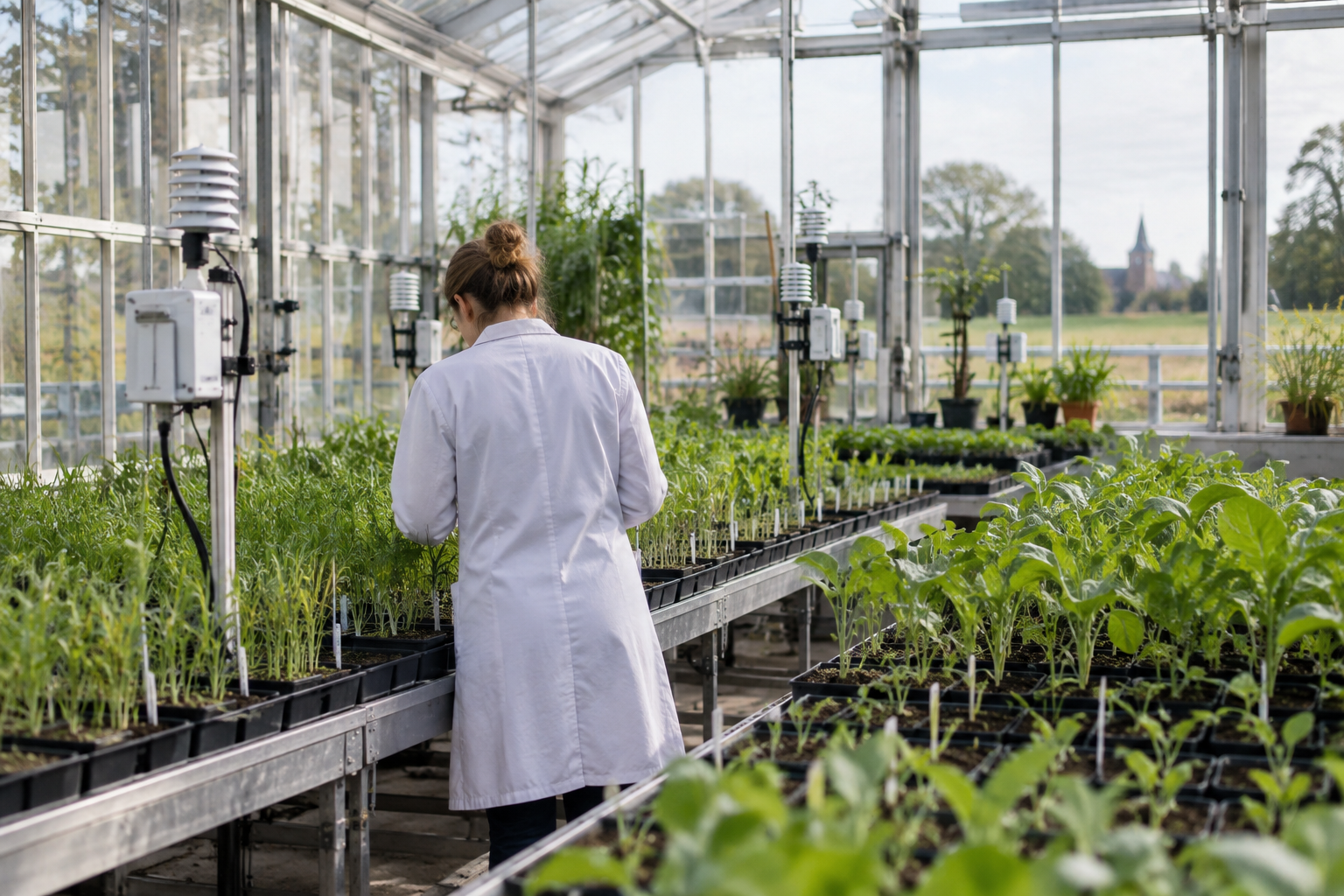
BCLP’s Jonathan Morris has called for clearer regulation and stronger investment support for Britain’s agritech sector, alongside a £13m government competition intended to help develop new farming products and services.
Writing in a commentary published by UKTN, Morris argues that research funding alone cannot resolve the sector’s commercial challenges. Businesses also face difficulties securing later-stage capital and persuading farmers and food companies to pay for unfamiliar technology.
What happened
The government’s latest Farming Innovation Programme competition, announced in partnership with Innovate UK, offers grants of £1m to £3m. The £13m allocation is intended for a limited number of projects judged to have strong potential, rather than a broad distribution of smaller awards.
Researchers, farmers and agritech businesses are the intended beneficiaries. The programme supports the development of products and services that can raise farm productivity, strengthen resilience and make agricultural operations more sustainable.
Morris places that funding against growing concern about food security and supply-chain exposure. His assessment is that Britain retains a significant role in agricultural and food technology, despite having fewer major agribusiness and food companies, and a smaller capital pool, than the US.
The immediate backdrop to his comments is the World Agri-Tech Innovation and Future Food-Tech summits in London. Both brought startups, investors and advisers together for presentations, panel discussions and individual meetings, although Morris says the level of business completed was difficult to establish afterwards.
That distinction matters to his assessment of the sector: activity at industry events does not, by itself, demonstrate that companies have secured investment or customers. His argument centres on the support needed to turn research and early commercial promise into viable businesses.
The background
Morris acknowledges that enthusiasm for agritech and foodtech has weakened over roughly five years. High-profile failures in vertical and indoor farming, as well as novel foods, have contributed to doubts about the commercial prospects of these technologies.
Many businesses attempting to bring products to market remain startups or early-stage ventures. Investors consequently face a substantial risk of losing their money, while the development of new technology is unlikely to follow a steady path from research to commercial success.
Britain nevertheless has an established research base. Norwich has developed into a significant European centre for agritech, agricultural biotechnology and sustainable food production, with Norwich Research Park bringing together research, university and healthcare expertise.
The park combines four independent research institutes with a university and an NHS foundation trust. Its work includes agricultural and crop biotechnology, addressing food shortages, climate change and improvements in human and animal health.
London also has a Food & Food Tech Innovation Hub in King’s Cross. The shared workspace is supported by Forward Fooding and hosted within The Mills Fabrica, adding a commercial collaboration setting alongside the research-led activity in Norwich.
Other foodtech hubs operate in Cambridge, Wales and West London. Morris points to this network as evidence that the UK’s contribution extends beyond individual startups, encompassing places where businesses can develop technology and connect with potential partners.
What people are saying
Morris identifies regulation as one of the largest remaining obstacles. The Food Standards Agency has developed sandbox frameworks and more streamlined guidance for novel foods, including cell-based proteins, but he says questions remain about the approval route companies will face.
In particular, his commentary raises uncertainty over whether the UK-EU Sanitary and Phytosanitary agreement will require UK foodtech businesses to obtain pre-approval from the European Food Safety Authority. He presents this as an unresolved issue, rather than an established requirement.
On finance, Morris draws a distinction between Britain’s ability to back young businesses and its willingness to fund their subsequent growth. He describes the UK as relatively successful in early-stage investment, supported by tax arrangements including the Enterprise Investment Scheme.
Later funding rounds are more difficult, in his assessment. Capital from overseas, especially the US, can therefore be critical for companies that need further investment to commercialise their products and expand.
The purchasing decision creates a separate barrier. Farmers and other prospective customers must consider both how to finance new equipment or services and whether the benefits will justify the expenditure. Morris argues that this can make adoption difficult even where a technology has potential.
What happens next
Morris wants government action on three fronts: regulatory clarity, enhanced tax incentives for investment in later-stage businesses, and greater financial assistance for farmers and other customers buying agritech and foodtech products.
Those proposals address different stages of commercial development. Clearer approval requirements would tackle uncertainty for novel-food businesses; investment incentives would target the scale-up funding gap; and customer assistance would address the cost of adopting new technology.
The £13m competition provides a separate route for selected projects to develop products and services. Morris’s commentary does not give an application deadline, name successful applicants or specify when awards will be made, and the wider reforms he advocates remain recommendations rather than announced policy.
Why this matters
For agritech founders and directors, the £13m competition offers development funding but does not resolve the separate challenges of securing scale-up capital and winning paying customers. Farmers considering new technology also face financing decisions and uncertainty over returns. Morris’s proposals connect these issues: research support needs to sit alongside workable approval rules, access to later-stage investment and customers able to afford adoption. His recommendations are not yet government commitments.
Frequently asked questions
- What is the £13m Farming Innovation Programme competition?
- The government competition, announced with Innovate UK, offers grants of £1m to £3m to selected projects developing products and services that improve farm productivity, resilience and sustainability.
- What does BCLP want the government to do for agritech?
- BCLP’s Jonathan Morris advocates clearer regulation, stronger tax incentives for investment in later-stage companies and greater financial help for farmers and other customers purchasing agritech and foodtech products.
- Why do UK agritech companies struggle to raise funding?
- Jonathan Morris says the UK is relatively successful at funding early-stage businesses but more cautious about later rounds. He argues that overseas capital, particularly from the US, can be critical for further growth.
- Where are the UK’s agritech and foodtech hubs?
- Morris highlights Norwich Research Park and a Food & Food Tech Innovation Hub in King’s Cross, supported by Forward Fooding and hosted within The Mills Fabrica. He also identifies hubs in Cambridge, Wales and West London.
- Do UK foodtech companies need EU approval?
- Morris raises uncertainty over whether the UK-EU Sanitary and Phytosanitary agreement will require European Food Safety Authority pre-approval. His commentary does not establish that such approval is required.
- Why are farmers cautious about adopting agritech?
- Potential buyers must establish how to finance new technology and whether its benefits justify the cost. Morris identifies these concerns as a barrier to adoption by farmers and other businesses.
- When is the £13m farming competition deadline?
- Morris’s commentary does not specify an application deadline or award timetable for the £13m Farming Innovation Programme competition.
In this story
Topics: UK agritech funding · Farming Innovation Programme £13m · agritech grants UK · foodtech regulation UK · Jonathan Morris BCLP · Norwich Research Park · agritech scale-up investment · All Business Growth news →
Original reporting: UKTN. This article is an independent write-up by British Business Echo.
Latest from the newsdesk
- Banking & Lending
Volkswagen finance arm posts loss after £725m redress provision
- AI in Business
HSBC weighs cuts to up to 70% of UK wealth adviser roles
- Funding & Business Finance
Konsileo secures £5m to support broker and platform growth
- Business Regulation
UK T+1 settlement: firms face December readiness milestones
- Mergers & Acquisitions
Brave Bison makes final £53.4m offer for System1
Related stories

Stripe & Stare broadens marketing after sales reach £15m
Growth director Andrew Boddy sets out plans for broader advertising, international expansion and physical retail after sales nearly quadruple.

ASCEND opens 25 funded places for Greater Manchester founders
Greater Manchester founders can apply for a funded year of coaching, mentoring and investor-readiness support starting in April 2027.