Business Growth
UK-Germany tech corridor launches with £17m quantum fund
The partnership will connect British scale-ups with German industry, alongside expansion plans in London and Culham and joint quantum research funding.

By Eleanor Whitcombe, Editor ·
The UK and Germany have agreed to establish an Industrial Tech Corridor linking technology businesses with industrial customers and investors, alongside about £17m for joint quantum research. The announcement coincided with the Prime Minister’s visit to Berlin on 8 October.
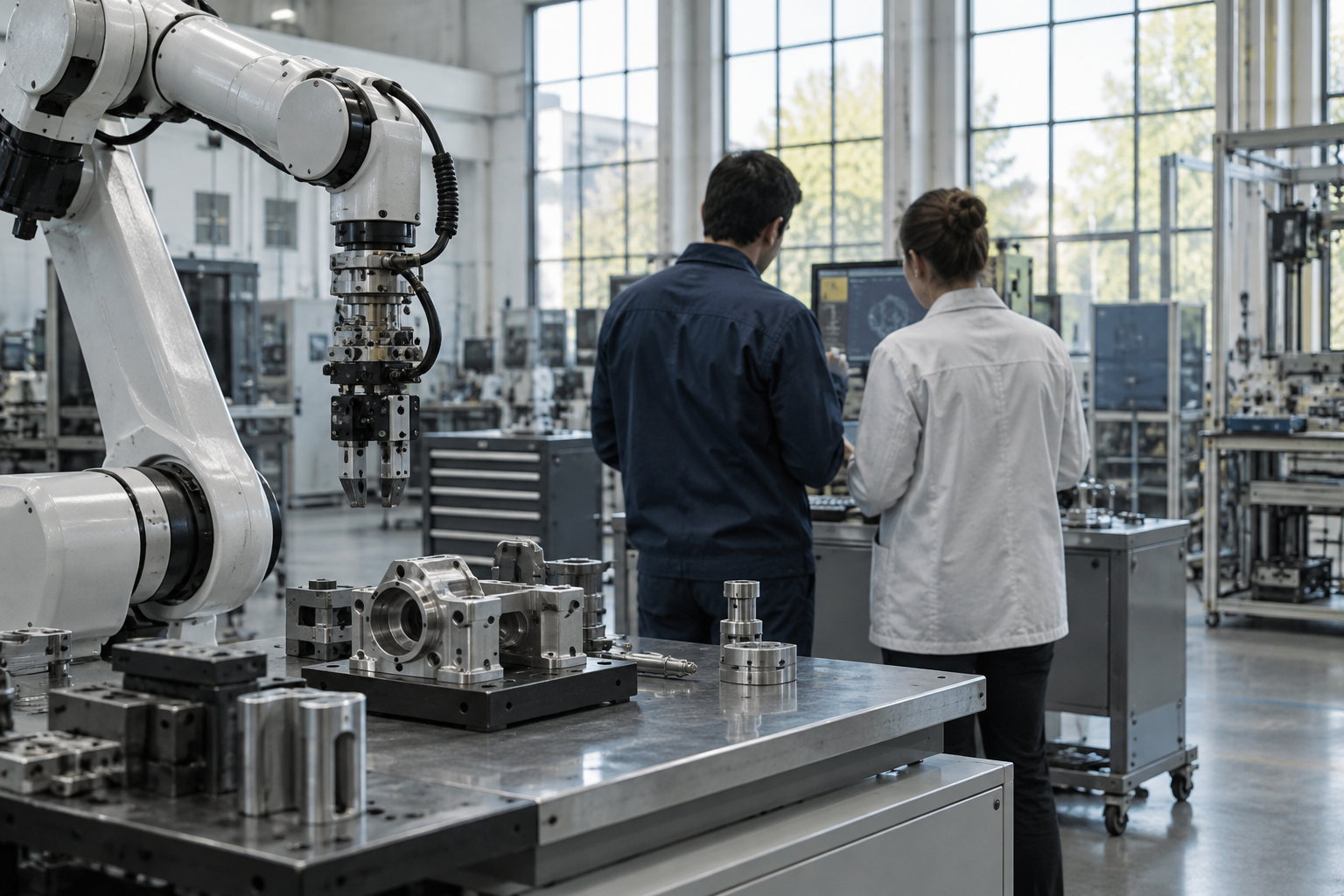
Munich-based robotics research business MicroAGI will expand in London, creating 180 highly paid jobs, while fusion energy company Proxima Fusion plans to grow its operation at Culham. The agreements and company commitments were set out by GOV.UK Business.
What happened
The corridor is intended to help businesses in both countries secure commercial partnerships, attract investment and introduce technologies such as artificial intelligence into industrial operations. German businesses backing the initiative include Allianz, Bosch, RWE and Siemens.
Once fully operational, it will bring high-growth technology companies together with large industrial businesses and investors. For British scale-ups, the intended route to growth is through access to potential customers and partners, rather than research collaboration alone.
The separate quantum funding will support joint projects spanning computing, financial services and sensors. The announcement identifies medical applications among the opportunities, pointing to the use of quantum sensors in research into conditions including epilepsy and dementia.
The UK contribution will come from the Office for Quantum’s budget and be delivered through Innovate UK. The announcement gives a combined funding figure for the two countries but does not specify the size of each country’s contribution.
UK AI software company Quantexa is also committing to establish a dedicated sovereign unit in Germany. The company says the operation will support deployment of its technology in both markets; the announcement does not attach a job figure or investment value to that commitment.
Beyond individual company growth, the partnership is intended to encourage wider adoption of quantum technology and strengthen European manufacturing and supply chains. Those are stated objectives of the programme, rather than outcomes already secured.
The background
The corridor is a flagship initiative under the Kensington Treaty, the bilateral friendship agreement between Britain and Germany. It also builds on the countries’ existing Strategic Science and Technology Partnership, extending that relationship into connections between industry leaders, technology businesses and innovators.
Germany is the UK’s second-largest trading partner. The government puts its contribution to the UK economy at about £155bn, providing the commercial backdrop to the effort to deepen technology links.
A separate joint research funding call worth £2.4m was launched the previous month. It covers clean energy, life sciences and engineering biology, with teams from both countries able to work together on bids of up to £350,000.
That earlier programme is aimed at developing ideas that could become new products and services. It is distinct from the quantum allocation announced alongside the corridor and gives the bilateral partnership a broader research base than AI and computing alone.
The government cites the potential for quantum computing to add more than £200bn and around 100,000 jobs to the UK economy by 2045. These are long-term estimates for the technology’s economic contribution, not forecasts of the return from the £17m fund.
Earlier in the year, the UK committed to becoming the first country to build large-scale quantum computers domestically by the early 2030s. Joint work with Germany therefore sits alongside a national ambition to develop computing capability within Britain.
What people are saying
Jonathan Reynolds, identified in the announcement as Secretary of State for Business, Innovation, Science and Trade, said the agreements would combine the strengths of British and German businesses and researchers. He linked the partnership to increased investment, employment and innovation.
Germany’s digital transformation minister, Dr Karsten Wildberger, focused on international expansion for AI companies. He said the corridor would help scale-ups enter advanced European AI markets while supporting greater digital sovereignty.
Bosch chief digital officer Dr Tanja Rueckert said connections between scale-ups and established industrial businesses could shorten the path from technology development to practical use. Allianz management board member Sirma Boshnakova similarly emphasised combining innovators’ ideas with the reach and experience of larger companies to improve customer services.
Isembard founder and chief executive Alexander Fitzgerald said demand for components in defence, aerospace and energy was exceeding what European factories could supply. He said the company wanted to bring its AI-based production technology and factory network to German partners to help rebuild manufacturing capacity.
For AI infrastructure business Nscale, the opportunity centres on computing capacity. Philippe Sachs, its president for Europe, the Middle East and Africa, said German industry needed secure AI computing and described the corridor as a route to partnerships with major industrial businesses.
Energy group RWE stressed the importance of reliable, affordable and secure electricity to industrial competitiveness. As an investor in both countries, it said it wanted to contribute energy and infrastructure expertise to support the partnership.
MicroAGI said it was joining the corridor’s founding cohort to bring AI and robotics into industrial operations. Its stated aim is to combine the two countries’ industrial experience and AI expertise to improve productivity and competitiveness.
Vodafone Group chief executive Margherita Della Valle highlighted the connectivity needed to support cross-border technology growth, including current 5G Standalone services and future 6G networks. Cloud business Codesphere, meanwhile, argued that closer markets and reciprocal purchasing could help European technology companies expand internationally.
Celonis co-founder and co-chief executive Bastian Nominacher said the corridor would connect technology development with industrial demand under a shared regulatory and security framework. He described the UK as a strategic growth market and pointed to the company’s expanding public-sector presence.
What happens next
Proxima Fusion’s Culham expansion could quadruple its workforce at the site by 2028. That is a potential increase rather than a confirmed recruitment total, and the announcement does not provide the current headcount from which it would grow.
The company is developing what it describes as Europe’s first commercial fusion power plant. Co-founder and chief executive Francesco Sciortino said the Culham team’s expansion reflected the importance of British fusion engineering expertise to that work and its long-term commitment to the UK.
For businesses seeking to use the corridor, operational details remain important. The announcement does not set out a full launch timetable, an application process for companies or deadlines for the new quantum funding. It also gives no delivery schedule for MicroAGI’s London recruitment or Quantexa’s German unit, leaving those company commitments without published completion dates.
Timeline
8 October
The UK and Germany announce the Industrial Tech Corridor and about £17m for joint quantum research.
2028
Proxima Fusion’s Culham expansion could quadruple its workforce at the site by this year.
Early 2030s
The UK aims to build large-scale quantum computers domestically.
2045
Government estimates put quantum computing’s potential UK contribution above £200bn, with around 100,000 jobs.
Why this matters
For UK technology founders and directors, the corridor offers a prospective route to industrial customers and investors in Germany, the country’s second-largest trading partner. The quantum allocation adds research support, while the London and Culham expansion plans give the announcement specific employment implications. Businesses assessing the opportunity still lack application details and a full operating timetable, so the commercial value will depend on how the planned connections translate into contracts, investment and technology deployment.
Frequently asked questions
- What is the UK-Germany Industrial Tech Corridor?
- It is a bilateral initiative intended to connect high-growth technology businesses with industrial partners and investors. It aims to help companies secure customers, attract investment and adopt technologies including AI.
- How much is the UK-Germany quantum research fund?
- The two countries will share about £17m for joint quantum research. The UK contribution will come from the Office for Quantum’s budget through Innovate UK; individual national contributions were not specified.
- Which companies are backing the UK-Germany tech corridor?
- German businesses backing the corridor include Allianz, Bosch, RWE and Siemens. Other companies setting out commitments or support include MicroAGI, Proxima Fusion and Quantexa.
- How many UK jobs will MicroAGI create?
- MicroAGI plans to create 180 highly paid jobs by expanding its London presence. The robotics research company is headquartered in Munich. No recruitment completion date was given.
- What is Proxima Fusion planning at Culham?
- Proxima Fusion plans to expand its Culham operation, with the potential to quadruple its workforce there by 2028. The announcement does not state the site’s existing headcount.
- What will the quantum funding support?
- The funding will support joint research in areas including quantum computing, financial services applications and sensors. The announcement also highlights potential medical research applications involving conditions such as epilepsy and dementia.
- How can businesses apply to the UK-Germany tech corridor?
- The announcement does not provide a company application process or a timetable for full operation. It also does not set out application deadlines for the new quantum research funding.
- What is Quantexa doing in Germany?
- Quantexa is committing to establish a dedicated sovereign unit in Germany to support deployment of its AI technology in both countries. No investment value, job total or completion date was announced.
In this story
Topics: UK-Germany tech corridor · UK Germany quantum research funding · Industrial Tech Corridor · MicroAGI London jobs · Proxima Fusion Culham expansion · Quantexa Germany sovereign AI · All Business Growth news →
Original reporting: GOV.UK Business. This article is an independent write-up by British Business Echo.
Latest from the newsdesk
- Banking & Lending
Volkswagen finance arm posts loss after £725m redress provision
- AI in Business
HSBC weighs cuts to up to 70% of UK wealth adviser roles
- Funding & Business Finance
Konsileo secures £5m to support broker and platform growth
- Business Regulation
UK T+1 settlement: firms face December readiness milestones
- Mergers & Acquisitions
Brave Bison makes final £53.4m offer for System1
Related stories

BCLP calls for agritech funding and regulatory reform
Jonathan Morris calls for clearer food rules, stronger scale-up investment incentives and help for farmers buying new technology.

Stripe & Stare broadens marketing after sales reach £15m
Growth director Andrew Boddy sets out plans for broader advertising, international expansion and physical retail after sales nearly quadruple.

ASCEND opens 25 funded places for Greater Manchester founders
Greater Manchester founders can apply for a funded year of coaching, mentoring and investor-readiness support starting in April 2027.