Business Regulation
UK-EU food checks deal could end £200 shipment certificates
Small producers and delis could benefit from fewer border checks, but changes are not expected until early 2028.

By Eleanor Whitcombe, Editor ·
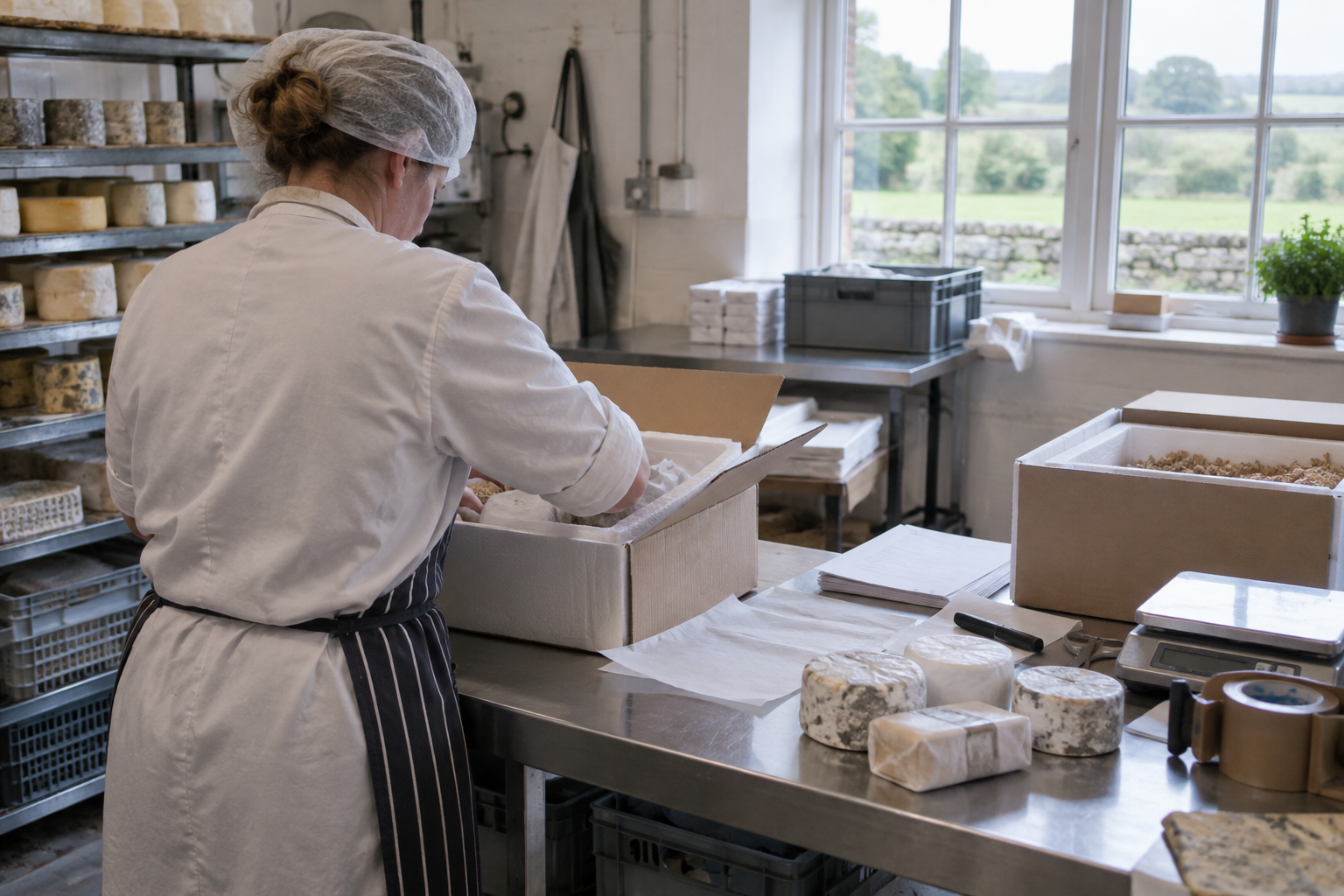
The UK and EU have reached an agreement to remove most checks on food, animal and plant products moving between their markets, potentially ending shipment certificates costing up to £200. The deal is due to be formalised at a summit on 20 November, with implementation not expected until the first quarter of 2028.
Small exporters and independent delis stand to benefit because the existing charges apply to individual consignments rather than being spread across a business’s sales. However, firms will continue to face the current requirements until the replacement arrangements take effect, according to Startups.co.uk.
What happened
The proposed sanitary and phytosanitary agreement, known as an SPS deal, would remove certificates and controls for most movements of animals, animal products, plants and plant products. The draft statement covers trade between Great Britain, the Crown Dependencies and the EU.
Its scope includes products such as cheese, sausages and flowers. For producers, the central change would be the removal of export health certification on covered shipments; for delis, reduced border administration could make smaller European orders commercially viable again.
The proposal is not described as abolishing every check. The draft refers to most movements, making the final scope important for businesses deciding which products and trading routes could benefit.
Northern Ireland retailers would also cease having to apply labels identifying products that cannot be sold in the EU. That would remove a separate requirement affecting shops supplying the Northern Ireland market.
The food agreement sits within a broader package that includes Britain contributing to the EU budget in connection with rejoining the single electricity market. No figure for that contribution is given in the report, and it is separate from the shipment charges facing food businesses.
The background
The certification burden followed Britain’s departure from the single market in January 2021. Animal-product exporters have needed veterinary checks and signed health documentation before consignments can enter the EU, while plant shipments have faced phytosanitary requirements.
Export health certificates can cost up to £200. The reported costs also include £25 phytosanitary certificates, inspection fees and port charges, although the requirements depend on the goods being shipped.
These fixed costs create a particular problem for businesses handling low-value orders. A small consignment can attract certification expenditure that is disproportionate to its selling price, limiting the commercial case for serving individual European customers.
Cheesemaker Simon Spurrell reported losing 20% of sales immediately in 2021 after discovering that retail orders required a £180 certificate. His affected products included gift packs priced at £30, putting the certification cost alone at six times the value of a pack.
The impact has also reached British retailers buying from Europe. Panzer’s, the north London deli and food market, has lost 37 EU suppliers since Britain left the single market, illustrating the reduction in sourcing options alongside the direct cost of border paperwork.
The agreement was substantially settled in May and published by the government to give food producers time to prepare. The Department for Environment, Food and Rural Affairs initially anticipated implementation in May 2027, but has since told industry leaders that the timetable may extend into 2028.
What people are saying
The draft joint statement sets out the UK and EU’s intention to make most covered trade possible without today’s certificates or controls. It therefore points to a substantial reduction in administration, rather than a lower tariff for obtaining the same documents.
Critics of the arrangement argue that Britain would have to follow European requirements without controlling how those rules develop. The practical concern for smaller producers is the potential for changes to the ingredients, additives or agricultural inputs they can use.
Marks & Spencer has criticised the Northern Ireland labelling requirement. Its removal would address an objection from a major retailer as well as changing the handling requirements for smaller shops.
What happens next
EU ambassadors are due to consider the draft before the 20 November summit, where UK and EU leaders are expected to issue the statement. Formalising the agreement would not itself switch off border requirements: implementation remains a separate stage.
The principal technical task is aligning UK food rules with EU requirements and maintaining that alignment as European rules change. Although Britain has retained many of the same standards since Brexit, differences remain, including rules covering some fungicides used on crops in wet conditions.
Those differences mean that producers must consider their inputs and suppliers as well as their export paperwork. Businesses using crops treated with chemicals outside EU approvals would need to establish how the alignment requirements affect them.
For current budgeting, the relevant costs remain certificates, inspections and port charges on each consignment. Recording those separately would allow businesses to distinguish potential savings under the agreement from other transport and trading expenses that the reported deal does not address.
Pricing changes, renewed EU sales plans and larger purchasing commitments would therefore depend on the final terms and implementation date. The first-quarter 2028 expectation gives businesses a planning horizon, but not an immediate reduction in the cost of their next shipment.
Timeline
January 2021
Britain left the single market, bringing new certification requirements for food and plant trade.
May
The food agreement was substantially settled and published to help producers prepare.
20 November
UK and EU leaders are expected to formalise the agreement at a summit.
May 2027
Defra’s original anticipated implementation date, since pushed back.
First quarter of 2028
The reported expected start for changes to food, animal and plant checks.
Why this matters
For small food businesses, removing a fixed charge from each shipment could change whether European orders are worth accepting. A £180 certificate against a £30 gift pack shows why the burden falls particularly heavily on low-value trade. Delis could also regain access to smaller suppliers. However, the expected 2028 start means directors must budget for existing charges while checking how alignment with EU food rules could affect ingredients, agricultural inputs and supplier arrangements.
Frequently asked questions
- What is the UK-EU food checks deal?
- The proposed sanitary and phytosanitary agreement would remove certificates and controls for most movements of animals, animal products, plants and plant products between Great Britain, the Crown Dependencies and the EU.
- When will Brexit food checks be removed?
- Changes are not expected until the first quarter of 2028. The agreement is due to be formalised at a summit on 20 November, but businesses must continue following existing requirements until implementation.
- How much do export health certificates cost?
- Export health certificates can cost up to £200 per shipment. The reported border costs also include £25 phytosanitary certificates, inspection fees and port charges, depending on the products being moved.
- How could the deal help small food exporters?
- Removing per-shipment certification could make low-value orders more viable. Cheesemaker Simon Spurrell reported needing a £180 certificate for retail orders that included £30 gift packs after Britain left the single market.
- Will independent delis benefit from fewer EU food checks?
- Reduced paperwork could make smaller European orders commercially viable again. Panzer’s, the north London deli and food market, has lost 37 EU suppliers since Britain left the single market.
- Why is the food checks deal taking until 2028?
- Implementation requires technical work to align UK food rules with EU requirements. Differences remain in areas including certain crop fungicides. Defra previously anticipated May 2027 but has told industry leaders implementation may extend into 2028.
- Will Northern Ireland food labels change?
- Under the reported agreement, Northern Ireland retailers would no longer need labels identifying products that cannot be sold in the EU. Marks & Spencer has criticised the existing requirement.
In this story
Follow-up coverage
Topics: UK-EU food checks deal · Brexit food checks 2028 · export health certificate costs · UK EU SPS agreement · small food exporters EU · Northern Ireland food labelling · All Business Regulation news →
Original reporting: Startups.co.uk. This article is an independent write-up by British Business Echo.
Latest from the newsdesk
- E-commerce
Meta launches Muse shopping agent with major UK retailers
- Funding & Business Finance
British Business Bank takes £43m Oxford Science Enterprises stake
- Business Mistakes / Lessons Learned
Next business data accessed in supplier cyberattack
- Business Growth
UK pork producers secure Vietnam access and Philippines deal
- SME / Owner-Managed Business
MoneySuperMarket: nearly 2m small firms skip Black Friday
Related stories

HSE tools help small firms check health and safety duties
Risk assessments, staff training and insurance form part of employers’ duties, with a paperwork exemption for firms employing fewer than five people.
TRA proposes higher duties on Chinese excavator imports
Proposed duties of 40.18% to 80.16% would apply to Chinese excavators, with Caterpillar Group exempt from the increase.
B&M sues Morrisons over staff moves and alleged product copying
The discounter alleges eight staff moves helped Morrisons copy seasonal and homeware products. The supermarket rejects the claim.
South Korea steel plate duties set at 7.04% to 23.07%
The UK has imposed anti-dumping duties on South Korean hot-rolled steel plate, limiting the measure to products up to 2,100mm wide.