Business Growth
Rory Sutherland’s automation warning gains fresh relevance
A surge in interest in the Ogilvy executive puts his thinking on marketing, customer behaviour and the hidden value of staff in focus.

By Eleanor Whitcombe, Editor ·
Rory Sutherland, the Welsh advertising executive and president emeritus of Ogilvy Consulting, has attracted 26,325 reads of his Wikipedia biography in 24 hours — 3.2 times the previous day’s total.
For UK business owners considering automation, one of his best-known ideas addresses a practical question: whether a cheaper way of completing a task also preserves the less obvious value provided by the person doing it. The readership figures do not establish what prompted the increase in interest.
What happened
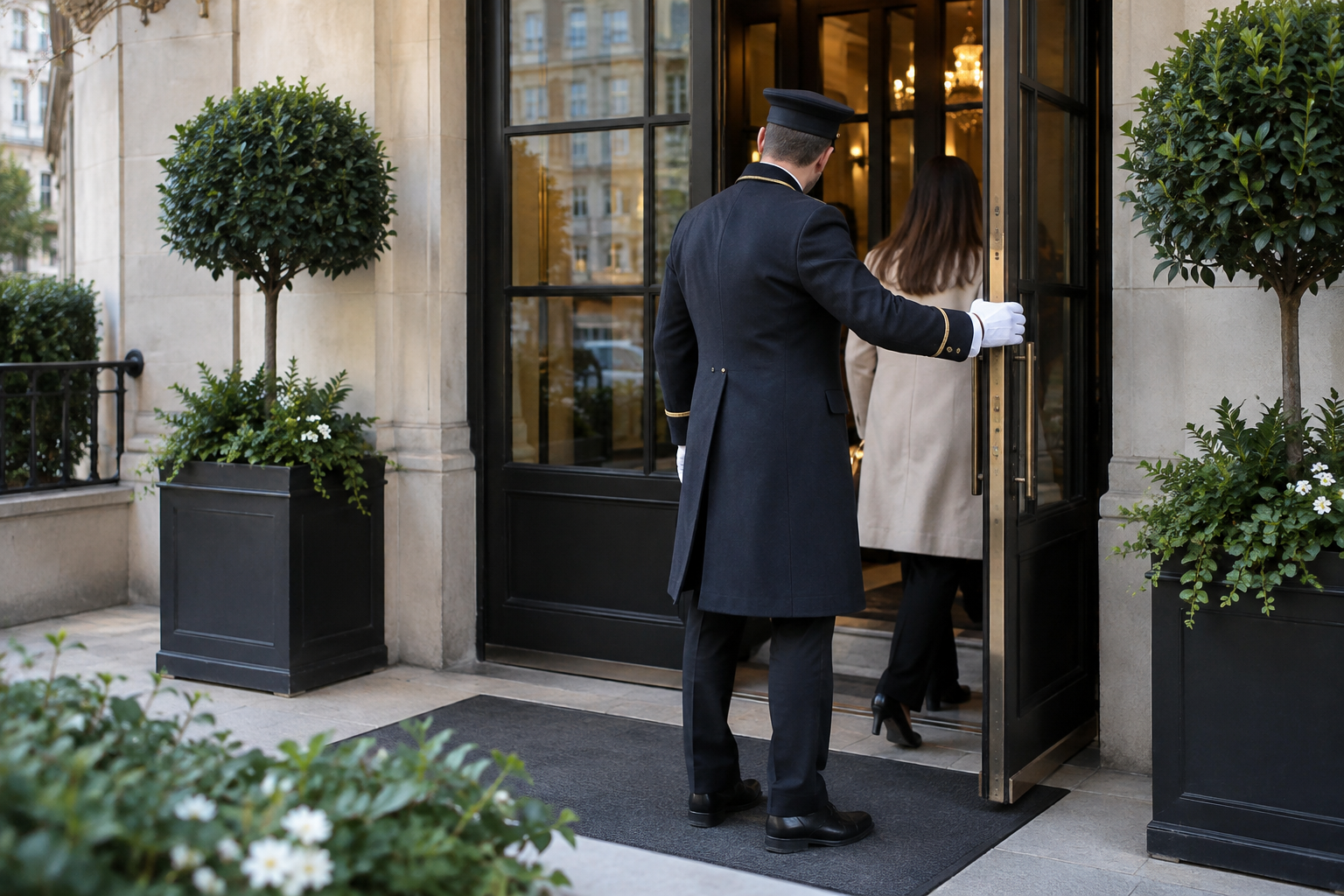
Sutherland developed the idea he calls the “doorman fallacy” in his 2019 book, Alchemy. It describes a mistake in assessing jobs: treating their most visible task as their entire contribution to a business.
His example concerns a hotel considering whether to replace a doorman with an automatic door. On a narrow assessment, both perform the same function by allowing guests to enter and leave, making automation appear an economical substitute.
But the employee also recognises guests, contributes to security and communicates something about the hotel’s standing. Those functions disappear from the calculation if management measures the role solely by the opening and closing of a door.
In Sutherland’s illustration, retaining a doorman can help establish the hotel as a premium business and support higher prices. Removing the position could therefore reduce revenue by more than the saving in employment costs. This is a conceptual example, not a reported outcome from a named hotel.
The background
Sutherland joined Ogilvy & Mather in 1988 as a graduate trainee planner, having been drawn towards advertising by British television campaigns of the 1980s. He briefly worked in account management before moving into copywriting.
He became creative director in 2001. His work at the agency included the American Express and Dove soap accounts, giving him experience across financial services and consumer products.
Between 2008 and 2012, he served as president of the Institute of Practitioners in Advertising. In 2012, he established a behavioural science practice within the Ogilvy Group, bringing psychology and economics into the development of marketing techniques.
His route into the industry began outside a specialist business education. Born in Llanbadoc, near Usk in Monmouthshire, on 12 November 1965, he attended Monmouth School before beginning classics at Christ’s College, Cambridge, in 1984.
What people are saying
In Alchemy, Sutherland argues that successful marketing ideas can depend on factors that do not appear rational. That position places customer perception, rather than a narrowly functional assessment of a product or service, at the centre of his argument.
The behavioural science practice he founded seeks to develop marketing approaches informed by psychology and economics, rather than relying on conventional advertising to shape what customers want. Its stated purpose extends his thinking beyond individual campaigns into the reasons people make decisions.
His publishing career began with The Wiki Man in 2011. He subsequently wrote regularly under the same title for The Spectator, where he has a fortnightly column.
In 2021, he co-authored Transport for Humans: Are we nearly there yet? with transport behavioural scientist Pete Dyson. The book added transport to the subjects covered in his published work.
What happens next
The available account sets out no forthcoming launch, investment, appointment or publication deadline. The rise in readership should therefore not be treated as evidence of a new commercial announcement.
Sutherland has also developed an audience on TikTok. A fan initially uploaded extracts from his talks, interviews and podcast appearances; Sutherland and Ogilvy later took over management of the account.
Timeline
1984
Sutherland began studying classics at Christ’s College, Cambridge.
1988
He joined Ogilvy & Mather as a graduate trainee planner.
2001
He became creative director.
2008
He began his presidency of the Institute of Practitioners in Advertising.
2011
His first book, The Wiki Man, was published.
2012
He founded the Ogilvy Group’s behavioural science practice.
2019
Alchemy was published, introducing the doorman fallacy.
2021
Transport for Humans, co-authored with Pete Dyson, was published.
Why this matters
For UK owners and directors, Sutherland’s doorman example offers a specific caution when assessing automation or staffing savings. A role may contribute to customer recognition, security and pricing power as well as completing its obvious task. The practical question is whether a proposed saving preserves those benefits. His argument does not establish that automation is uneconomic; it highlights why comparing the cost of a worker with a machine can leave part of the business case unexamined.
Frequently asked questions
- Who is Rory Sutherland?
- Rory Sutherland is a Welsh advertising executive and president emeritus of Ogilvy Consulting. He joined Ogilvy & Mather in 1988 and has written books on marketing, behaviour and transport.
- What is Rory Sutherland’s doorman fallacy?
- The doorman fallacy describes the mistake of judging a job only by its most visible task. Sutherland’s hotel example shows how replacing a doorman with automation can overlook guest recognition, security and the role’s contribution to premium pricing.
- What does Rory Sutherland say about automation?
- His doorman example warns that automating a visible task can remove less obvious business benefits. A hotel might save on staffing but lose value associated with service, security and its premium positioning.
- What is Rory Sutherland’s book Alchemy about?
- Published in 2019, Alchemy argues that strong marketing ideas can rest on apparently irrational foundations. It includes Sutherland’s doorman fallacy, which examines the hidden value of work.
- When did Rory Sutherland start working at Ogilvy?
- Sutherland joined Ogilvy & Mather as a graduate trainee planner in 1988. He moved briefly into account management, then copywriting, and became creative director in 2001.
- Why is Rory Sutherland on TikTok?
- A fan began sharing clips from Sutherland’s talks, interviews and podcast appearances. Sutherland and Ogilvy subsequently took over running the account.
In this story
Topics: Rory Sutherland · Rory Sutherland doorman fallacy · Rory Sutherland Alchemy · Rory Sutherland automation · Ogilvy behavioural science · Rory Sutherland TikTok · All Business Growth news →
Original reporting: Wikipedia. This article is an independent write-up by British Business Echo.
Latest from the newsdesk
- Company Cars & Benefits
BVRLA seeks electric company car tax changes in Budget
- Cars for Business Owners
Electric Car Grant cuts eligible UK EV prices by up to £3,750
- E-commerce
Red Helix warns retailers over supplier cyber risk
- Turnarounds
THG raises profit forecast to £103m as shares rally
- Business Regulation
Live Nation dominance prompts MPs’ call for CMA inquiry
Related stories

UK exporters face customs and cashflow checks for growth
Small firms weighing overseas sales must assess customs requirements, payment risks and delivery capacity before committing to new markets.

UK-India trade mission brings £1bn deals and 500 UK tech jobs
A £50m technology investment in London and Manchester leads UK job plans as businesses announce aviation, retail and healthcare deals in India.

Growth Company opens Hong Kong route for Manchester startups
Little Lions Rising reaches the first-round top 30 as a new partnership gives Greater Manchester startups access to a Hong Kong business programme.
UK-Germany tech corridor launches with £17m quantum fund
The partnership will connect British scale-ups with German industry, alongside expansion plans in London and Culham and joint quantum research funding.