Business Regulation
OPSS clarifies safety rules for e-bike conversion kits
New guidance explains existing duties for UK conversion kit suppliers, including product information, safety markings and restrictions on road use.

By Eleanor Whitcombe, Editor ·
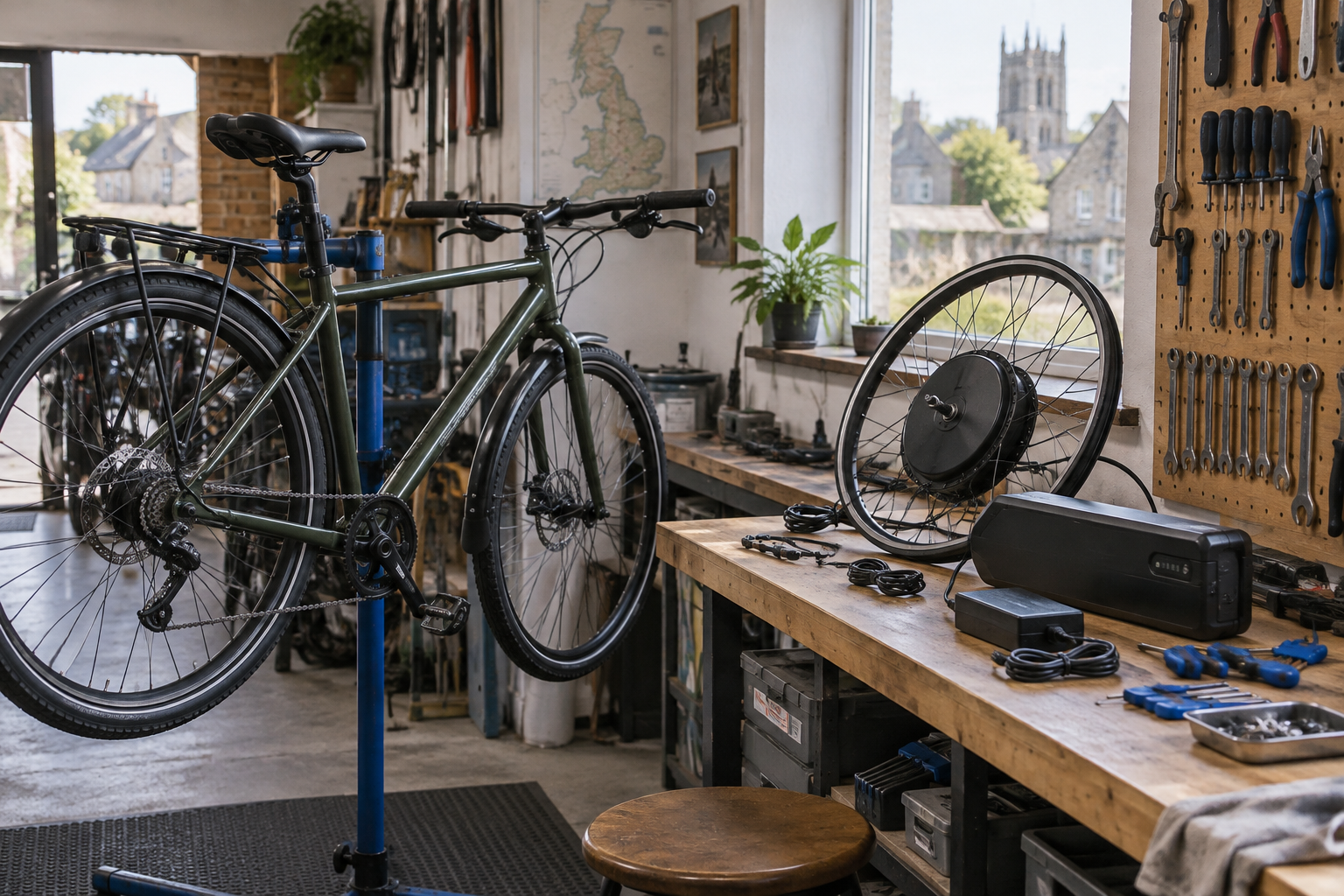
The Office for Product Safety and Standards (OPSS) has published guidance for UK manufacturers and suppliers of e-bike conversion kits, explaining how existing safety law applies as the government addresses fire risks associated with unsafe e-bikes and related products.
The guidance introduces no additional legal duties. As reported by GOV.UK Business, it explains how businesses can meet the Supply of Machinery (Safety) Regulations 2008 and helps enforcement authorities identify kits that breach those requirements.
What happened
Every type of e-bike conversion kit containing an electric motor falls within the guidance. That includes kits sold without a battery, a charger or either component: their absence does not put a motor-equipped kit outside its scope.
For manufacturers and suppliers, the document identifies safety issues to consider before making kits available to consumers. Its purpose is to help businesses demonstrate that their products can be used safely, rather than simply establish which components are included in a sale.
The requirements covered include providing the necessary product information and user instructions, alongside affixing product markings. These are existing obligations under the machinery regulations, not voluntary additions introduced by the publication.
Enforcement authorities can also use the guidance when assessing compliance and taking action against conversion kits that fail to meet the regulations. The document therefore addresses both businesses bringing products to market and the authorities responsible for checking them.
The background
The conversion kit guidance sits alongside the government's statutory guidelines for lithium-ion e-bike batteries, published in 2024. Those battery guidelines have legal effect and specify the safety mechanisms batteries need to contain to qualify as safe products.
The two documents address different aspects of the equipment: the latest guidance explains the application of machinery safety rules to conversion kits, while the earlier guidelines deal specifically with battery safeguards.
The publication also aligns with the government's Buy Safe, Be Safe campaign. That campaign provides consumer advice on using, storing and charging both e-bikes and bicycles fitted with conversion kits, extending the safety focus beyond manufacture and supply.
The detail
Conversion kits capable of enabling travel above the 15.5mph legal road limit identified in Department for Transport legislation are also covered. The guidance distinguishes between a product being safely manufactured and the resulting vehicle being lawful to ride on public roads.
When combined with a pedal bicycle, such higher-speed kits cannot legally be used on the road unless the vehicle is registered and insured, and the rider has a driving licence and an appropriate helmet. Meeting product safety requirements alone does not remove those conditions.
That distinction is relevant to the information suppliers give customers: the scope of the safety guidance includes higher-speed products, but inclusion does not amount to permission for unrestricted road use.
What happens next
The publication is separate from the government's Product Safety Framework consultation, which closed on 23 June 2026. Businesses should not treat the conversion kit guidance as an outcome of that exercise or as a change arising from it.
Consultation responses are being analysed, with a government response due to be published in due course. The source gives no publication date for that response.
Why this matters
For UK manufacturers and suppliers, the guidance provides a clearer basis for checking conversion kits against existing safety duties, including kits sold without batteries or chargers. Product information, instructions and markings remain part of compliance, while safe manufacture does not establish that a converted bicycle is legal on the road. Enforcement authorities also gain guidance for assessing products, making the distinction between supply requirements and road-use conditions important for directors overseeing compliance.
Frequently asked questions
- What is the new e-bike conversion kit guidance?
- OPSS has published guidance explaining how existing product safety requirements apply to e-bike conversion kits supplied in the UK. It covers safety considerations, product information, user instructions and product markings.
- Does the e-bike conversion kit guidance introduce new laws?
- No. The guidance explains existing obligations under the Supply of Machinery (Safety) Regulations 2008. It also supports enforcement authorities in identifying and taking action against non-compliant kits.
- Are conversion kits without a battery covered?
- Yes. Every variation of e-bike conversion kit containing an electric motor is covered, whether or not a battery or charger is included.
- Are e-bike conversion kits that exceed 15.5mph road legal?
- The guidance says bicycles fitted with such kits cannot legally be used on the road unless the vehicle is registered and insured, and the rider has a driving licence and an appropriate helmet.
- What information must e-bike conversion kit suppliers provide?
- The guidance reminds suppliers of existing requirements to provide necessary product information and instructions for users, and to affix product markings.
- How does the guidance relate to e-bike battery safety rules?
- It complements the government's statutory lithium-ion e-bike battery guidelines, published in 2024. Those guidelines have legal effect and specify the safety mechanisms batteries must contain to be considered safe products.
- Is the guidance part of the Product Safety Framework consultation?
- No. The publication is separate from that consultation, which closed on 23 June 2026. Consultation feedback is being analysed and a government response will follow in due course.
In this story
Follow-up coverage
Topics: e-bike conversion kit guidance · OPSS e-bike safety · UK e-bike conversion kit rules · e-bike conversion kit legal requirements · e-bike 15.5mph road limit · electric bike battery safety · All Business Regulation news →
Original reporting: GOV.UK Business. This article is an independent write-up by British Business Echo.
Latest from the newsdesk
- E-commerce
Meta launches Muse shopping agent with major UK retailers
- Funding & Business Finance
British Business Bank takes £43m Oxford Science Enterprises stake
- Business Mistakes / Lessons Learned
Next business data accessed in supplier cyberattack
- Business Growth
UK pork producers secure Vietnam access and Philippines deal
- SME / Owner-Managed Business
MoneySuperMarket: nearly 2m small firms skip Black Friday
Related stories

TRA proposes higher duties on Chinese excavator imports
Proposed duties of 40.18% to 80.16% would apply to Chinese excavators, with Caterpillar Group exempt from the increase.

B&M sues Morrisons over staff moves and alleged product copying
The discounter alleges eight staff moves helped Morrisons copy seasonal and homeware products. The supermarket rejects the claim.

South Korea steel plate duties set at 7.04% to 23.07%
The UK has imposed anti-dumping duties on South Korean hot-rolled steel plate, limiting the measure to products up to 2,100mm wide.

Viagogo faces CMA warning over hidden ticket fees
The watchdog suspects Viagogo misled UK ticket buyers through late-added charges, in the first notice of its kind under new enforcement powers.