Business Regulation
IPO launches fake beauty warning after 40% fail safety tests
Tests on 50 seized cosmetics found mercury, lead and methanol, as the IPO warns salons and consumers about counterfeit beauty products.

By Eleanor Whitcombe, Editor ·
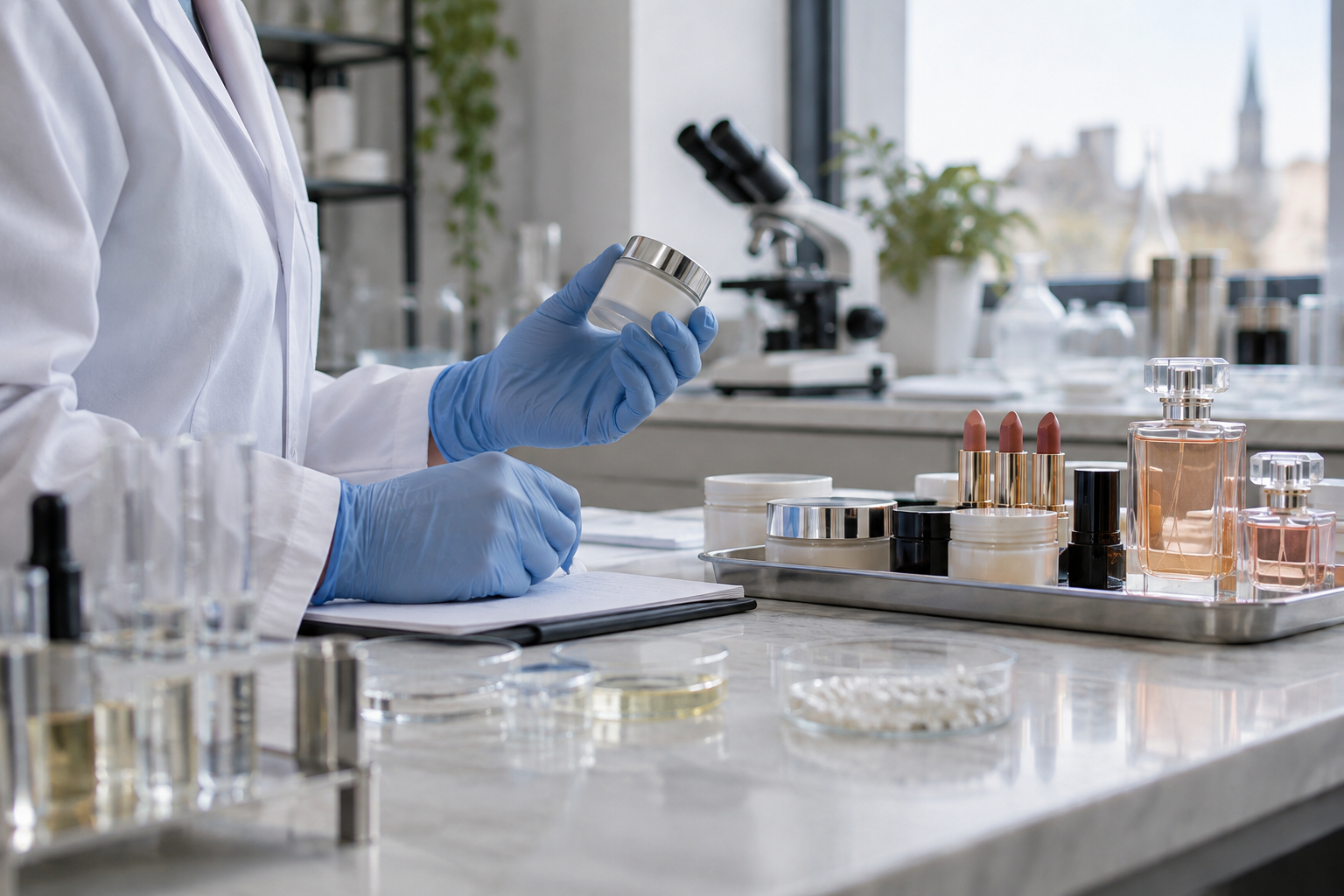
The Intellectual Property Office has launched a UK campaign against counterfeit beauty products after 20 of 50 seized cosmetics tested by Trading Standards failed on safety grounds, with mercury, lead and methanol among the substances detected.
The Face the Fakes initiative also brings sourcing guidance for salons, beauty professionals and smaller businesses. It comes as IPO research shows that 20% of beauty buyers aged 18 to 24 knowingly bought counterfeits in 2025, compared with 6% in 2023.
What happened
The testing covered a cross-section of seized skincare, make-up and fragrances. The findings, announced by GOV.UK Business, concern those 50 products rather than a representative sample of all cosmetics available in the UK.
One fake skin-lightening cream contained mercury at a concentration of 1.32%, equivalent to 13,200 parts per million. Mercury is prohibited in this type of cosmetic, and repeated exposure through the skin can harm the kidneys and nervous system without producing immediately apparent symptoms.
Investigators also detected elevated lead levels in counterfeit lipsticks, eyeshadows and contour products. One contour kit contained 40 milligrams per kilogram. Lead can accumulate in the body and damage the brain, nervous system and kidneys, with particular risks during pregnancy and for children.
A counterfeit fragrance contained about 80% methanol. The toxic alcohol can enter the body through skin contact or inhalation and cause serious poisoning, including nervous system damage and potentially permanent loss of sight.
Nicotine, which is prohibited in cosmetics, was found in another fake perfume. A counterfeit skin-lightening cream also contained 8.1% hydroquinone, a substance banned in cosmetic skin-lightening products in the UK.
Hydroquinone can irritate the skin and, after repeated use, cause uneven pigmentation. Its effects can include ochronosis, a blue-black skin discolouration that may be permanent.
The safety concerns extend beyond the ingredients themselves. Counterfeit cosmetics may be produced in unhygienic surroundings, creating a contamination risk, while buyers have no reliable assurance about either their composition or manufacturing conditions.
The background
Cosmetics, skincare and perfumes now feature among the ten counterfeit product categories most frequently investigated by Trading Standards. Recent enforcement activity has included seizures in Manchester and Bolton.
In July, the Police Intellectual Property Crime Unit and Greater Manchester Police recovered 1,666 counterfeit hair products from a Manchester warehouse. The seizure included extensions, shampoos and conditioners. The campaign announcement did not specify the year of that operation.
That action followed a Bolton raid in which Trading Standards officers seized counterfeit goods valued at £2 million. Perfume and cosmetics were among the goods recovered, alongside clothing and vapes.
The IPO's latest Counterfeit Goods Tracker provides evidence of changing purchasing behaviour. Its fifth wave used fieldwork carried out in 2025, with findings published on 17 September 2026 and comparisons drawn against the 2023 survey.
The increase among young adults relates specifically to respondents who bought beauty products and acknowledged purchasing fakes. The proportion was more than three times the earlier level; it does not describe counterfeit purchasing among all 18 to 24-year-olds.
Online channels accounted for 71% of purchases by people who bought counterfeit cosmetics and toiletries. Familiar-looking branding, polished listings and favourable reviews can make it harder for shoppers to distinguish a fake from a legitimate product.
The campaign addresses product safety and sourcing rather than rules governing cosmetic procedures. Beauty operators are also facing separate regulatory proposals, including plans to restrict liquid BBL procedures to doctors.
What people are saying
Helen Barnham, head of enforcement engagement at the IPO, said counterfeiters benefit from established brands' reputations while avoiding the safety standards followed by legitimate businesses. She warned that convincing presentation can conceal hazardous contents and poor production conditions.
Independent toxicologist Rani Ghosh distinguished visible reactions, such as swelling and irritation, from internal harm that consumers may not notice. She said packaging cannot establish which chemicals a cosmetic contains or demonstrate how safely it was manufactured.
Dr Emma Meredith, director-general of the Cosmetic, Toiletry and Perfumery Association, outlined the requirements applying to legitimate UK cosmetics. Ingredients are controlled, manufacturing must be hygienic and products require a safety assessment, with legal responsibilities resting on the companies bringing them to market.
British Beauty Council chief executive Millie Kendall said counterfeiters draw on the creativity and reputation of beauty businesses without matching their care or standards. The council is supporting the campaign alongside other participants in the industry.
Campaign supporter Giorgia Aloi became involved after her mother experienced a painful facial reaction to counterfeit foundation bought through a social media marketplace. Aloi subsequently established SafeGlam to raise awareness of the risks associated with fake beauty products.
Special-effects make-up artist EllaDoesFX has produced recreations of irritation, swelling and blistering reported in cases involving counterfeit or unsafe cosmetics. These illustrations are separate from the Trading Standards laboratory findings and are not presented as reactions caused by the specific products tested.
What happens next
The IPO is working with content creators and beauty industry organisations to distribute visual material, expert explanations and purchasing advice. Guidance reaching salons, professionals and smaller businesses through trade bodies focuses on warning signs and buying from trusted suppliers.
For online purchases, the advice is to establish the identity of the seller rather than rely on the marketplace or social platform hosting the listing. Trusted retailers, official brand websites and authorised sellers are the recommended sources where available.
An unusually low price should prompt further checks, although a discount alone does not establish that a product is counterfeit. The campaign also cautions against sales tactics that pressure customers into making a rapid decision.
Buyers are advised to examine ingredient information, company and contact details, and to seek information about the seller beyond the listing itself. Attractive photography and five-star reviews are not sufficient checks on authenticity.
Once a product arrives, the recommended checks include its batch number, ingredients list, company name and address, and relevant safety warnings. Poor printing, spelling errors, missing information or an unexpected smell, appearance or texture can indicate a problem.
Anyone who suspects a product is counterfeit is advised not to use it. The campaign asks buyers to retain the item, packaging, receipt and seller details, and report their concerns to Trading Standards.
Timeline
2023
IPO survey records knowing counterfeit purchases among 6% of beauty buyers aged 18 to 24.
2025
Tracker fieldwork records knowing counterfeit purchases among 20% of beauty buyers aged 18 to 24.
17 September 2026
IPO publishes the fifth wave of its Counterfeit Goods Tracker.
Why this matters
For salons, retailers and smaller beauty businesses, the findings put supplier checks at the centre of customer protection. Legitimate cosmetics face ingredient controls, hygiene requirements and safety assessments, while counterfeits can bypass those safeguards and exploit established brands' reputations. With 71% of counterfeit cosmetics and toiletries buyers purchasing online, a convincing listing offers limited reassurance. The IPO's trade-body guidance gives business owners practical checks for sourcing products and identifying warning signs before suspect goods reach customers.
Frequently asked questions
- What is the IPO's Face the Fakes campaign?
- Face the Fakes is an Intellectual Property Office campaign warning about counterfeit beauty products. It combines testing evidence, expert explanations and purchasing advice, with guidance for salons, beauty professionals and smaller businesses.
- What chemicals were found in counterfeit cosmetics?
- Testing of 50 seized counterfeit cosmetics detected mercury, elevated lead levels, methanol, nicotine and hydroquinone. Twenty products failed on safety grounds. One fake fragrance contained about 80% methanol.
- Are more young people buying fake beauty products?
- IPO research found that 20% of 18 to 24-year-olds who bought beauty products knowingly purchased counterfeits in 2025. That compares with 6% in the 2023 survey.
- How can shoppers spot counterfeit beauty products?
- The IPO advises checking the seller, product information and packaging. Missing ingredients, batch numbers or company details, poor printing, spelling mistakes and unexpected smells or textures can be warning signs. Reviews and convincing photographs are not enough.
- What should someone do with suspected fake cosmetics?
- The campaign advises against using a suspected counterfeit. Buyers should keep the product, packaging, receipt and seller details, and report their concerns to Trading Standards.
- What guidance is available for salons buying beauty products?
- The IPO is sharing guidance through trade bodies for salons, beauty professionals and smaller businesses. It covers identifying warning signs and sourcing products from trusted suppliers to help protect customers and supply chains.
- Do the tests mean 40% of all cosmetics are unsafe?
- No. The 40% failure rate applies to a cross-section of 50 seized counterfeit cosmetics tested by Trading Standards. It is not a finding about all cosmetics sold in the UK.
In this story
Follow-up coverage
Topics: counterfeit beauty products · IPO Face the Fakes campaign · fake cosmetics safety · mercury in counterfeit skincare · counterfeit perfume methanol · salon product sourcing guidance · how to spot fake cosmetics · All Business Regulation news →
Original reporting: GOV.UK Business. This article is an independent write-up by British Business Echo.
Latest from the newsdesk
- E-commerce
Meta launches Muse shopping agent with major UK retailers
- Funding & Business Finance
British Business Bank takes £43m Oxford Science Enterprises stake
- Business Mistakes / Lessons Learned
Next business data accessed in supplier cyberattack
- Business Growth
UK pork producers secure Vietnam access and Philippines deal
- SME / Owner-Managed Business
MoneySuperMarket: nearly 2m small firms skip Black Friday
Related stories

HSE tools help small firms check health and safety duties
Risk assessments, staff training and insurance form part of employers’ duties, with a paperwork exemption for firms employing fewer than five people.

TRA proposes higher duties on Chinese excavator imports
Proposed duties of 40.18% to 80.16% would apply to Chinese excavators, with Caterpillar Group exempt from the increase.

B&M sues Morrisons over staff moves and alleged product copying
The discounter alleges eight staff moves helped Morrisons copy seasonal and homeware products. The supermarket rejects the claim.

South Korea steel plate duties set at 7.04% to 23.07%
The UK has imposed anti-dumping duties on South Korean hot-rolled steel plate, limiting the measure to products up to 2,100mm wide.