Business Regulation
UK government consults on deforestation supply-chain checks
Proposals cover seven forest-risk commodities, with mandatory business checks and changes to timber rules under consultation.

By Eleanor Whitcombe, Editor ·
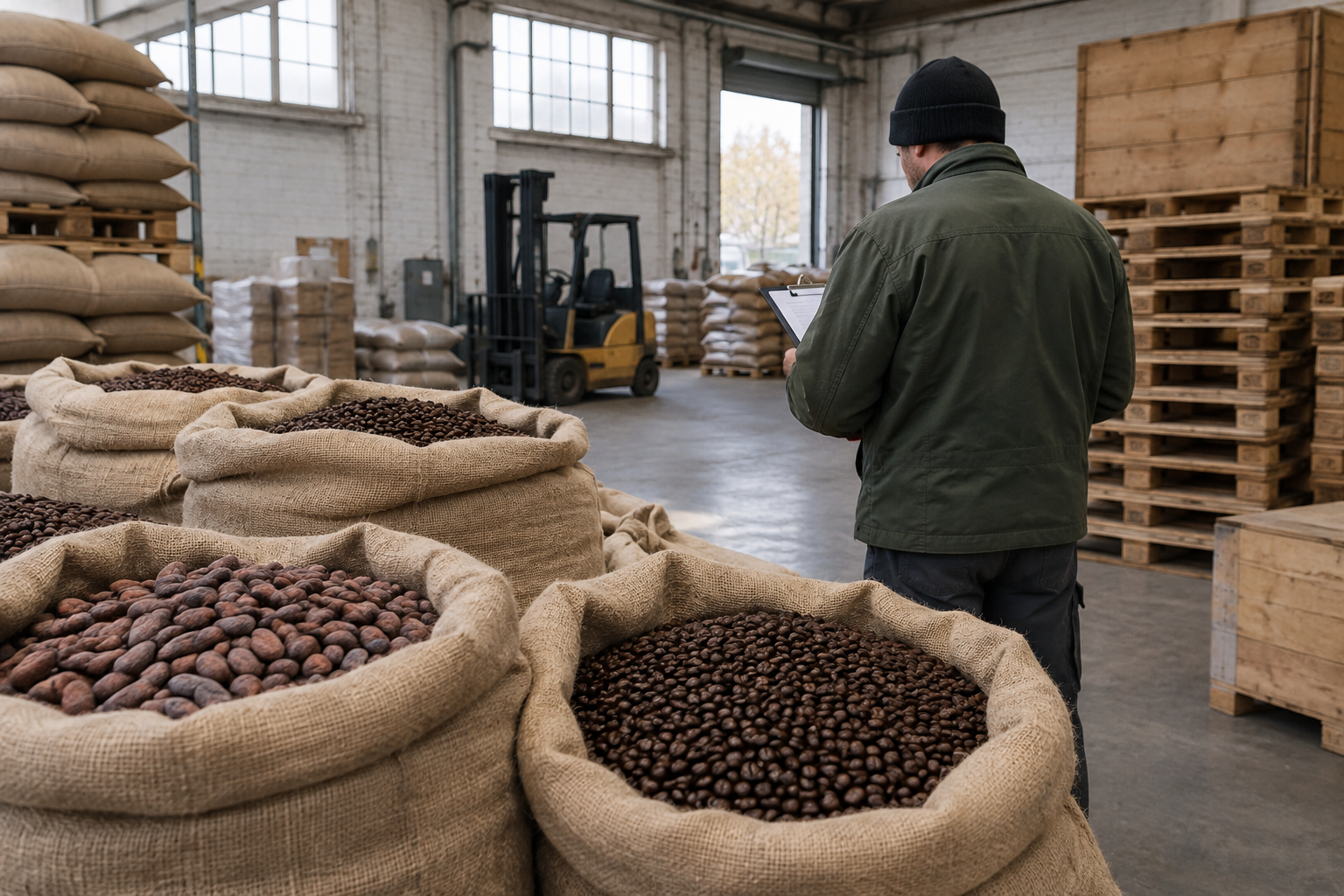
The UK government has opened a consultation on mandatory supply-chain checks for seven forest-risk commodities used in goods sold in Great Britain, aimed at preventing illegal deforestation overseas.
The proposals cover soy, palm oil, cattle, cocoa, timber, coffee and rubber. The consultation, announced by GOV.UK Business, seeks views from businesses, environmental organisations and international stakeholders on a regulatory framework that would go beyond voluntary company action.
What happened
Businesses handling commodities within the proposed regime would be required to assess their supply chains and ensure they are not contributing to illegal forest clearance abroad. The consultation includes mandatory due diligence obligations using existing legal powers, including those in the Environment Act 2021.
The government is also proposing to strengthen the UK Timber Regulation. Timber is included among the commodities identified in the announcement, alongside agricultural products used across food manufacturing, retail and consumer goods.
Soy and palm oil are ingredients in a wide range of everyday purchases. The government highlights chocolate, cooking oils, toiletries and cosmetics among the goods whose supply chains can carry a deforestation risk.
That risk arises where forested land is unlawfully taken or cleared to create space for production. The proposed checks therefore concern the origins of commodities used in finished goods, rather than simply the products consumers see on shelves.
The measures remain proposals under consultation. The stated objective at this stage is to tackle illegal deforestation, while a broader deforestation-free standard is described as a longer-term ambition.
The background
In 2023, UK consumption of goods associated with deforestation was linked to about 29,000 hectares of forest loss worldwide, according to the government. That area is roughly one and a half times the size of Manchester.
The same consumption was linked to 9.4 million tonnes of carbon emissions. The government also identifies forests as important to food security and community livelihoods, as well as climate stability and wildlife habitats.
The policy builds on a commitment made by the UK and 144 other countries at COP26 in Glasgow to halt and reverse forest loss and land degradation by 2030. The proposed supply-chain regime is intended to help deliver that commitment.
The announcement coincides with a Leaders’ Summit Event on Forests at the COP31 climate conference in Antalya. Senior politicians attending include the Foreign Secretary.
What people are saying
The government says the proposed requirements are intended to give shoppers greater confidence about the environmental impact of everyday goods. Consumers and campaigners have called for more certainty over whether their purchases contribute to forest loss.
Many UK businesses have already introduced voluntary measures to reduce deforestation risks in their sourcing. Major retailers have also called for a stronger regulatory framework, according to the announcement, although it does not identify individual companies.
For businesses operating across the UK, the government says it wants the Great Britain regime to work alongside the arrangements in Northern Ireland. Its stated aims are to limit unnecessary administration, protect the UK internal market and support export-led growth.
What happens next
The consultation will gather responses on the proposed due diligence duties and changes to timber regulation. Businesses, environmental organisations and international stakeholders are being asked to contribute to the design of the measures.
A separate timetable applies in Northern Ireland, where the EU Regulation on Deforestation-Free Products will begin taking effect in phases from 30 December 2026. The government links those arrangements to preserving Northern Ireland’s access to both the UK internal market and the EU single market.
Businesses affected by the Northern Ireland regime are being encouraged to prepare their supply chains before the regulation starts to apply. That preparation sits alongside, rather than replaces, the consultation on requirements for Great Britain.
Over the longer term, the government wants to move towards a deforestation-free standard, building on international efforts to remove forest loss from global supply chains. The announcement does not set a date for that wider change.
Timeline
2021
The Environment Act provides powers now identified for proposed mandatory deforestation due diligence.
2023
UK consumption is linked to about 29,000 hectares of deforestation worldwide.
30 December 2026
The EU Regulation on Deforestation-Free Products begins applying in Northern Ireland in phases.
2030
Target year for the UK and 144 other countries to halt and reverse forest loss and land degradation.
Why this matters
For UK businesses using the seven commodities, the proposals would turn supply-chain scrutiny from voluntary action into a regulatory obligation. Directors will need to distinguish the proposed Great Britain requirements from Northern Ireland’s phased EU timetable, which starts on 30 December 2026. The consultation gives affected firms an opportunity to address how checks should work, including the government’s stated aim of reducing unnecessary administration across the UK.
Frequently asked questions
- What are the proposed UK deforestation rules?
- The government is consulting on mandatory due diligence checks for forest-risk commodities in goods sold in Great Britain. Businesses would need to assess their supply chains and ensure they are not contributing to illegal deforestation overseas.
- Which commodities would the deforestation rules cover?
- The announcement identifies soy, palm oil, cattle, cocoa, timber, coffee and rubber. It also proposes strengthening the UK Timber Regulation.
- Are the new deforestation checks already law?
- The Great Britain measures are proposals under consultation. The government intends to use existing legal powers, including those in the Environment Act 2021, to introduce mandatory due diligence obligations.
- When does the EU deforestation regulation apply in Northern Ireland?
- The EU Regulation on Deforestation-Free Products will begin applying in Northern Ireland in phases from 30 December 2026. Businesses are being encouraged to prepare their supply chains before it takes effect.
- How much deforestation is linked to UK consumption?
- The government says UK consumption of goods associated with deforestation was linked to about 29,000 hectares of forest loss worldwide in 2023, alongside 9.4 million tonnes of carbon emissions.
- Will the proposed rules cover all deforestation?
- The proposed Great Britain regime targets illegal deforestation. The government says its longer-term ambition is to move towards a deforestation-free standard, but the announcement gives no date for that wider change.
- Who can respond to the deforestation consultation?
- The government is seeking views from businesses, environmental organisations and international stakeholders on mandatory due diligence obligations and measures to strengthen timber regulation.
In this story
Follow-up coverage
Topics: UK deforestation rules · deforestation supply chain checks · forest risk commodities consultation · UK Timber Regulation · EUDR Northern Ireland 2026 · Environment Act deforestation due diligence · All Business Regulation news →
Original reporting: GOV.UK Business. This article is an independent write-up by British Business Echo.
Latest from the newsdesk
- E-commerce
Meta launches Muse shopping agent with major UK retailers
- Funding & Business Finance
British Business Bank takes £43m Oxford Science Enterprises stake
- Business Mistakes / Lessons Learned
Next business data accessed in supplier cyberattack
- Business Growth
UK pork producers secure Vietnam access and Philippines deal
- SME / Owner-Managed Business
MoneySuperMarket: nearly 2m small firms skip Black Friday
Related stories

HSE tools help small firms check health and safety duties
Risk assessments, staff training and insurance form part of employers’ duties, with a paperwork exemption for firms employing fewer than five people.
TRA proposes higher duties on Chinese excavator imports
Proposed duties of 40.18% to 80.16% would apply to Chinese excavators, with Caterpillar Group exempt from the increase.

B&M sues Morrisons over staff moves and alleged product copying
The discounter alleges eight staff moves helped Morrisons copy seasonal and homeware products. The supermarket rejects the claim.
South Korea steel plate duties set at 7.04% to 23.07%
The UK has imposed anti-dumping duties on South Korean hot-rolled steel plate, limiting the measure to products up to 2,100mm wide.