Profitability
Small business energy costs top winter concerns for 92%
A survey of 1,000 owners finds widespread uncertainty about out-of-hours energy use, with unexpected bills catching firms without smart meters off guard.

By Eleanor Whitcombe, Editor ·
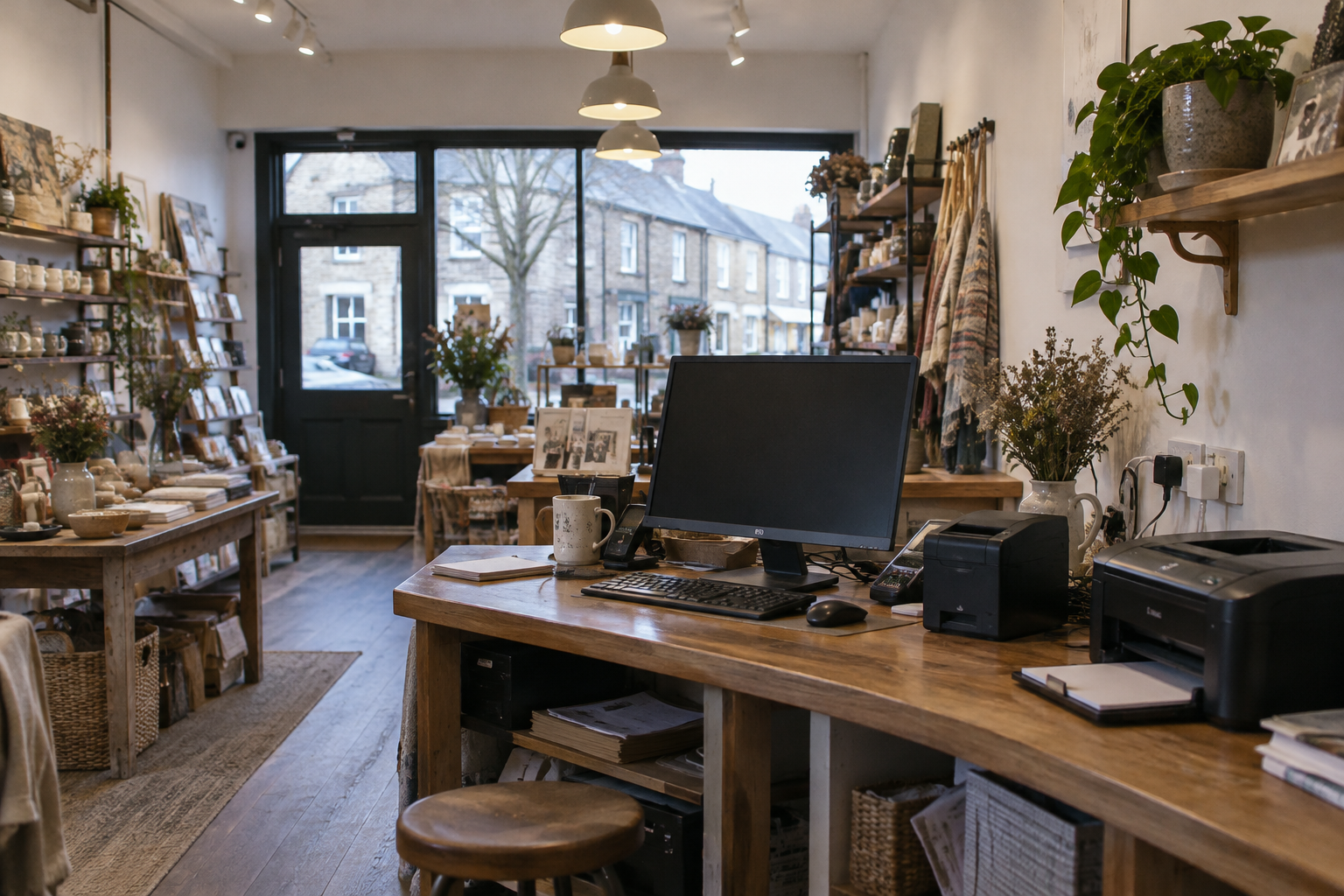
Energy costs are the leading winter priority for 92% of UK small business owners, according to research highlighting uncertainty over consumption when premises are closed. The survey of 1,000 owners found that 80% had arrived at work to discover lights, heating or equipment still switched on.
The findings, reported by SmallBusiness.co.uk on 23 November 2026, suggest that understanding when energy is being used remains a problem alongside the cost itself. Only 17% of owners said they knew precisely how much their premises continued to consume after closing.
What happened
Almost a third of respondents, 31%, had not considered how much energy their business might use outside opening hours. That leaves a gap in their understanding of running costs at a time when six in ten named energy bills among the issues most likely to disturb their sleep.
Office equipment featured prominently among items left connected to power when not being used. Desktop computers and monitors were cited by 43% of owners, followed by printers and photocopiers at 42%. Those figures describe equipment left plugged in, rather than a measurement of the electricity each device consumed.
Laptop chargers were identified by 37%, while microwaves and mobile phone chargers were each mentioned by 33%. The range of equipment covered both working areas and staff facilities, rather than a single appliance category that owners could isolate across all premises.
Heating and lighting were another source of potentially avoidable consumption. Some 42% reported them being left on in rooms, while 23% cited display lighting operating during daylight hours. These findings concern how premises are operated, not simply which devices a business owns.
One in ten owners reported running appliances more than a decade old. The research identified older equipment as another possible contributor to higher consumption compared with newer, more efficient models, although it did not quantify the cost of replacing or continuing to run those appliances.
The findings sit alongside separate reporting on higher annual energy bills facing high street retailers. This survey focuses on a different part of the bill: owners’ awareness of consumption within their own premises, including periods when they are not trading.
The background
OnePoll carried out the research between 25 September and 5 October 2026. Its sample comprised 500 small business owners with smart meters and 500 without them, allowing the findings to distinguish between those two groups. Several of the figures on unexpected bills apply specifically to respondents without a smart meter.
Among that group, 32% said it had taken at least three months to recognise the most recent occasion when their business used more energy than expected. The delay indicates that a change in consumption can remain unnoticed well beyond the period in which it first occurs.
Investigating the cause presents a separate obstacle. A third of owners without smart meters said they did not have time to look into their energy use, meaning that noticing an increase and establishing its source were not necessarily the same task.
Some 42% of owners without smart meters had received a bill during the previous year that surprised them and could not explain what had caused the increase. A further 25% did not know which appliances consumed the most energy or when that consumption occurred.
More than half of the same group, 54%, identified energy as the expense over which they felt they had least control. That concern adds to the broader cost pressures reflected in reporting on UK inflation and the outlook for interest rates, although this research did not calculate energy’s share of total business expenditure.
What people are saying
Among respondents who had a smart meter, 91% said it had helped them identify opportunities to save money on energy. That is a reported benefit in finding potential savings, rather than a measured reduction in bills: the findings supplied no average saving in pounds or percentage terms.
Paul Watts, owner of Bookshop on the Heath in London, described unexpected outgoings as a particular concern for his business. His experience also showed how seasonal demand can change the sources of energy consumption before winter begins.
Watts said the bookshop’s energy use had increased during the summer because fans were running through heatwaves. He expected heating to bring another increase in winter, with equipment left connected and lights operating overnight adding to those seasonal requirements.
He said his smart meter had made it easier to understand where energy was being consumed and to make changes to manage spending. Having initially delayed installation, he described the process as straightforward and said he would have preferred to act earlier.
For customer-facing businesses, that focus on controlling outgoings comes alongside concerns about trading conditions, including weaker consumer confidence and pressure on younger shoppers’ finances. Watts’ account concerns the bookshop’s energy management; it does not provide figures for its sales, profits or resulting savings.
What happens next
Energy suppliers are replacing some older smart-meter hardware with updated equipment. The stated purpose is to preserve accurate billing, automatic meter readings and access to information about consumption and costs, rather than to promise a particular reduction in energy use.
Businesses contacted by their supplier about that work are being asked to respond. Eligibility can vary and customer action is required, so an existing installation does not necessarily mean there is nothing further for the owner to arrange.
No universal replacement deadline or business-specific installation timetable was provided. The immediate next step described is therefore supplier-led contact, with affected firms needing to establish what action applies to their own meter.
Why this matters
For owners and directors managing winter budgets, the research identifies a gap between concern about energy spending and knowledge of what drives it. Only 17% know their premises’ consumption after closing, while some owners without smart meters take months to detect increases. Better visibility could help firms identify avoidable usage, but the survey does not establish the savings available. Suppliers’ replacement of older smart-meter hardware also creates a practical requirement for affected businesses to respond when contacted.
Frequently asked questions
- How many small business owners are worried about winter energy costs?
- Energy costs were the leading winter priority for 92% of the 1,000 owners surveyed by OnePoll. Six in ten also named energy bills among the concerns most likely to keep them awake.
- What equipment do small businesses leave plugged in?
- Desktop computers and monitors were cited by 43% of owners, printers and photocopiers by 42%, and laptop chargers by 37%. Microwaves and mobile phone chargers were each mentioned by 33%.
- Do businesses know how much energy they use after closing?
- Only 17% of owners said they knew exactly how much energy their premises used after closing. Some 31% had not considered their business’s out-of-hours consumption.
- Why are unexpected energy bills a problem for small businesses?
- Among owners without smart meters, 42% had received a surprising bill in the previous year without knowing what caused the increase. A third said they lacked time to investigate energy use.
- Can smart meters help small businesses save money?
- Of the surveyed owners with smart meters, 91% said the devices helped them find ways to save money on energy. The research did not provide an average financial saving or measured reduction in consumption.
- Are older business smart meters being replaced?
- Energy suppliers are replacing some older smart-meter hardware to maintain accurate bills, automatic readings and consumption information. Businesses are asked to respond when contacted by their supplier; eligibility varies and customer action is required.
- Who carried out the small business energy survey?
- OnePoll surveyed 1,000 small business owners between 25 September and 5 October 2026. The sample included 500 owners with smart meters and 500 without them.
In this story
Follow-up coverage
Topics: small business energy costs · business energy use after closing · unexpected business energy bills · smart meters for small businesses · winter energy bills for businesses · small business electricity savings · All Profitability news →
Original reporting: SmallBusiness.co.uk. This article is an independent write-up by British Business Echo.
Latest from the newsdesk
- E-commerce
Meta launches Muse shopping agent with major UK retailers
- Funding & Business Finance
British Business Bank takes £43m Oxford Science Enterprises stake
- Business Mistakes / Lessons Learned
Next business data accessed in supplier cyberattack
- Business Growth
UK pork producers secure Vietnam access and Philippines deal
- Business Regulation
HSE tools help small firms check health and safety duties
Related stories
High street retailers face £1,000 annual energy bill rise
Cornwall Insight forecasts higher electricity costs despite falling wholesale prices, with fixed charges leaving smaller shops particularly exposed.

Dr Martens UK sales fall 21.3% as festive trading looms
Half-year revenue falls to £290.4m, with Black Friday, Christmas and January trading set to determine Dr Martens’ full-year performance.
UK retailers face 70% of thefts from 10% of shoplifters
Research points to a small group of persistent offenders as retailers seek better evidence-sharing and stronger protection for shopworkers.
SAI data shows Halloween retail theft rose 163%
Partial payment accounted for most recorded incidents, while SAI forecasts a further rise in theft on the final Saturday before Christmas.