Business Regulation
Government extends under-18 sales ban to all vapes and nicotine
Restrictions cover nicotine pouches, promotional giveaways and vending machines, with £200 fixed penalties among new enforcement powers.

By Eleanor Whitcombe, Editor ·
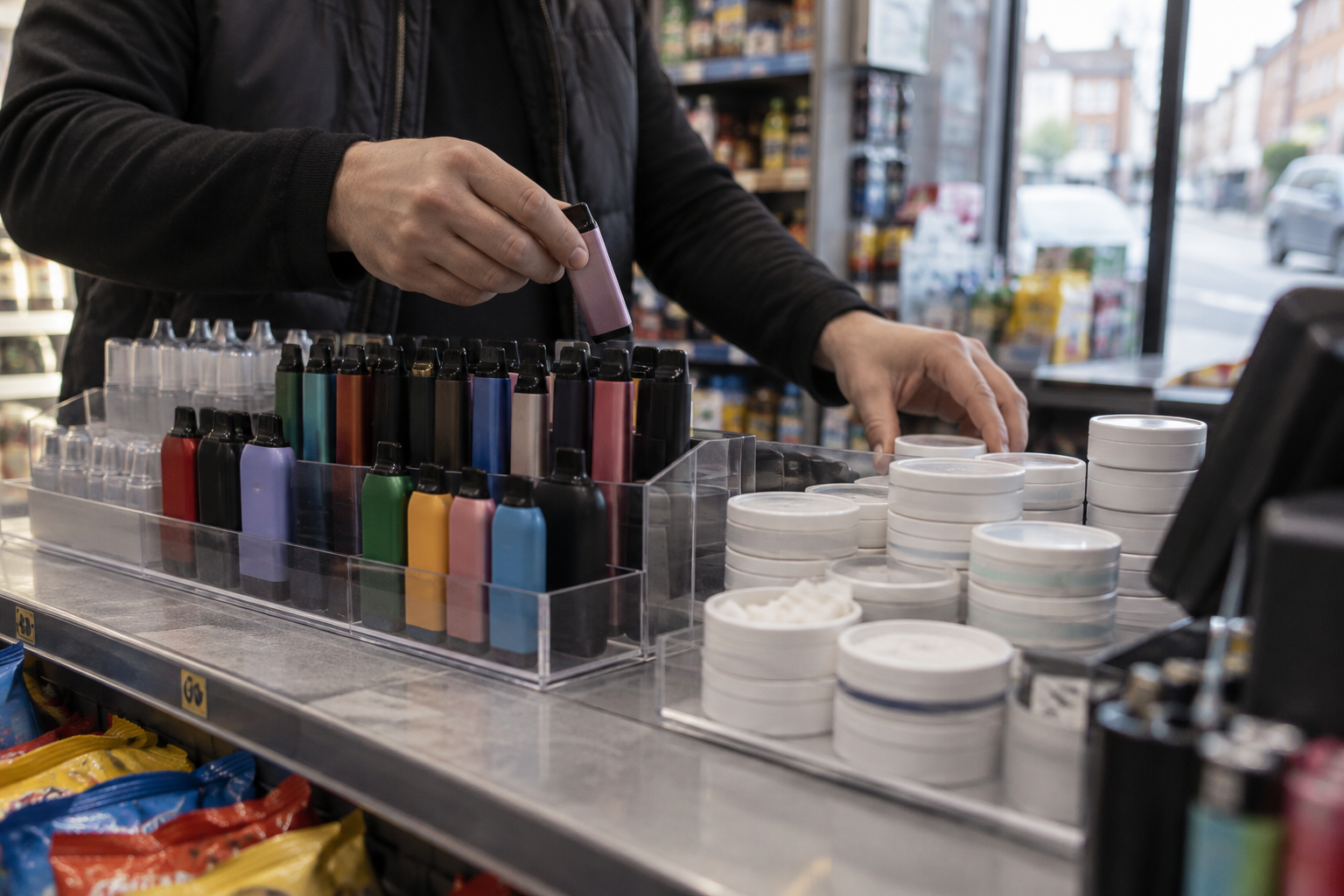
The UK Government has extended the ban on sales of vaping and nicotine products to under-18s from 29 October 2026, bringing nicotine-free vapes and nicotine pouches within the rules. The changes apply across the UK, with new enforcement powers including £200 fixed penalty notices.
Retailers also face restrictions on promotional giveaways, substantial promotional discounts and vending machines. The measures cover both shops and online sales, extending the changes beyond age checks at the point of purchase.
What happened
Nicotine-containing vapes were already subject to an under-18 sales ban. The new rules close gaps in the previous age restrictions by bringing nicotine-free vapes and nicotine products such as pouches, strips and pearls within their scope.
Adults aged 18 and over also commit an offence if they buy a vaping or nicotine product on behalf of someone under 18. Attempting to make such a purchase is covered too, meaning the offence does not depend on a completed transaction.
The vending-machine restriction applies to machines that dispense products as well as those that sell them. This sits alongside the prohibition on promotional giveaways, preventing businesses from using free distribution as an alternative to a sale.
Local authority stop smoking services retain an exception allowing them to supply products to help adult smokers quit. The restrictions therefore distinguish between commercial promotion and the provision of cessation support through those services.
Trading Standards will lead enforcement against retailers in England. Its new fixed penalty powers are intended to allow quicker action against traders breaking the rules, according to the announcement published by GOV.UK Business.
Enforcement agencies are receiving up to £30m a year until 2028/29. Within that funding, up to £10m annually is allocated to Trading Standards, alongside the recruitment of 120 specialist apprentices to strengthen work against illicit and underage tobacco and vape sales.
For retailers, the immediate compliance task covers several separate activities: which products require an age-restricted sale, whether a purchase is being made for a child, how products are promoted and whether they are supplied through vending machines. Removing nicotine from a vape no longer takes it outside the under-18 sales restriction.
The background
The government estimates that more than one million children have tried vaping and more than 370,000 vape regularly. It links that use to a greater risk of respiratory illness, while the restrictions on nicotine products also address concerns about addiction.
The changes form part of the phased introduction of the Tobacco and Vapes Act, which became law on 29 April 2026. This stage takes effect exactly six months after the legislation received legal force, rather than introducing every measure in the Act at once.
The government places the legislation within its ambition for a smoke-free UK. It also links the measures to the shift towards preventing illness set out in the 10 Year Health Plan for England.
Public health advice continues to distinguish vaping from smoking. Vaping is considered less harmful than smoking and can help adult smokers quit, but it is not risk-free; children and adults who do not smoke are advised not to vape.
The package is therefore not a general ban on adult access to vaping products. Its immediate sales restrictions focus on under-18s, while the rules governing promotions and vending machines change the ways businesses can market and distribute the products.
What people are saying
Dame Diana Johnson, Minister of State for Public Health and Patient Safety, described the Act as a major public health intervention. She said the six-month implementation milestone extended protection for young people and challenged businesses profiting at the expense of children’s health.
Chief Medical Officer Professor Chris Whitty warned that encouraging children to vape or become addicted to nicotine could expose them to serious health harms. He said the measures would help shield children from nicotine-product marketing and efforts to encourage vaping.
Scotland’s Public Health Minister Maree Todd highlighted nicotine pouches in particular, saying nicotine products were beginning to gain popularity among young people. She presented the under-18 sales restriction as a step by the Scottish Government to prevent addiction and improve long-term health.
In Wales, Deputy Minister for Public and Preventative Health Nerys Evans said marketing had drawn young people towards vapes and nicotine products. Her emphasis was on combining the wider sales ban with restrictions on promotional tactics, rather than relying on age restrictions alone.
Northern Ireland’s Health Minister Robbie Butler expressed concern about rising youth use of vapes and nicotine products. He linked the changes to the Act’s wider objective of creating a generation protected from smoking and nicotine addiction.
What happens next
A further sales restriction takes effect on 1 January 2027. From that date, tobacco products, herbal smoking products and cigarette papers cannot legally be sold to anyone born on or after 1 January 2009.
Unlike the under-18 restrictions now covering vaping and nicotine products, that tobacco rule follows a fixed birth-date threshold. People within the affected group will not become eligible to buy tobacco as they grow older, making it a different requirement for retailers to apply.
The government intends a comprehensive advertising and sponsorship ban to take effect from 1 June 2027. That remains a stated implementation target, separate from the promotional restrictions already introduced in October.
Further proposals concern product packaging, flavours and displays, as well as extending smoke-free places and introducing vape-free places. Consultations have taken place and responses are being considered; the announcement gives no implementation dates for those proposals, with further information to follow.
Timeline
29 April 2026
The Tobacco and Vapes Act becomes law.
29 October 2026
Wider under-18 sales restrictions and controls on promotions and vending machines take effect.
1 January 2027
Tobacco sales restrictions begin for anyone born on or after 1 January 2009.
1 June 2027
The government intends the comprehensive advertising and sponsorship ban to take effect.
Why this matters
Retailers and online sellers must account for a wider range of age-restricted products while removing prohibited promotions and vending-machine distribution. The changes affect nicotine-free vapes as well as nicotine products, and new fixed penalty powers increase the scope for swift enforcement in England. Directors also face a staged compliance timetable: the birth-date-based tobacco sales restriction begins in January 2027, while the government intends further advertising and sponsorship controls from June.
Frequently asked questions
- Can under-18s buy nicotine-free vapes in the UK?
- No. From 29 October 2026, the UK under-18 sales ban covers nicotine-free vapes. Sales of nicotine-containing vapes to under-18s were already illegal.
- Are nicotine pouches age restricted in the UK?
- Yes. From 29 October 2026, nicotine pouches, strips and pearls fall within the under-18 sales restrictions across the UK.
- Can an adult buy a vape for someone under 18?
- No. Adults aged 18 or over commit an offence if they buy, or attempt to buy, a vaping or nicotine product on behalf of someone under 18.
- Are vape giveaways and discounts banned?
- Promotional giveaways and substantial promotional discounts for vaping and nicotine products are prohibited in shops and online. Local authority stop smoking services can continue supplying products to help adult smokers quit.
- Who enforces the new vape sales rules?
- Trading Standards leads retail enforcement in England. New powers include £200 fixed penalty notices, while enforcement agencies are receiving up to £30m a year until 2028/29.
- When does the UK generational tobacco sales ban start?
- From 1 January 2027, tobacco products, herbal smoking products and cigarette papers cannot be sold to anyone born on or after 1 January 2009. That group will remain ineligible to buy tobacco as they grow older.
- When will vape advertising and packaging rules change?
- The government intends a comprehensive advertising and sponsorship ban from 1 June 2027. Consultation responses on packaging, flavours and displays are being considered, but the announcement gives no implementation dates for those proposals.
In this story
Follow-up coverage
Topics: UK vape sales ban · nicotine-free vapes age restriction · nicotine pouches under 18 UK · vape promotion restrictions · Tobacco and Vapes Act 2026 · Trading Standards vape penalties · UK tobacco sales ban 2027 · All Business Regulation news →
Original reporting: GOV.UK Business. This article is an independent write-up by British Business Echo.
Latest from the newsdesk
- E-commerce
Meta launches Muse shopping agent with major UK retailers
- Funding & Business Finance
British Business Bank takes £43m Oxford Science Enterprises stake
- Business Mistakes / Lessons Learned
Next business data accessed in supplier cyberattack
- Business Growth
UK pork producers secure Vietnam access and Philippines deal
- SME / Owner-Managed Business
MoneySuperMarket: nearly 2m small firms skip Black Friday
Related stories

HSE tools help small firms check health and safety duties
Risk assessments, staff training and insurance form part of employers’ duties, with a paperwork exemption for firms employing fewer than five people.

TRA proposes higher duties on Chinese excavator imports
Proposed duties of 40.18% to 80.16% would apply to Chinese excavators, with Caterpillar Group exempt from the increase.

B&M sues Morrisons over staff moves and alleged product copying
The discounter alleges eight staff moves helped Morrisons copy seasonal and homeware products. The supermarket rejects the claim.
South Korea steel plate duties set at 7.04% to 23.07%
The UK has imposed anti-dumping duties on South Korean hot-rolled steel plate, limiting the measure to products up to 2,100mm wide.