Business Mistakes / Lessons Learned
UK supermarkets disconnect fridges after cyber warning
Thousands of refrigeration controllers were taken offline after a security warning, with smaller food businesses potentially still exposed.

By Rebecca Lowe, Workplace Reporter ·
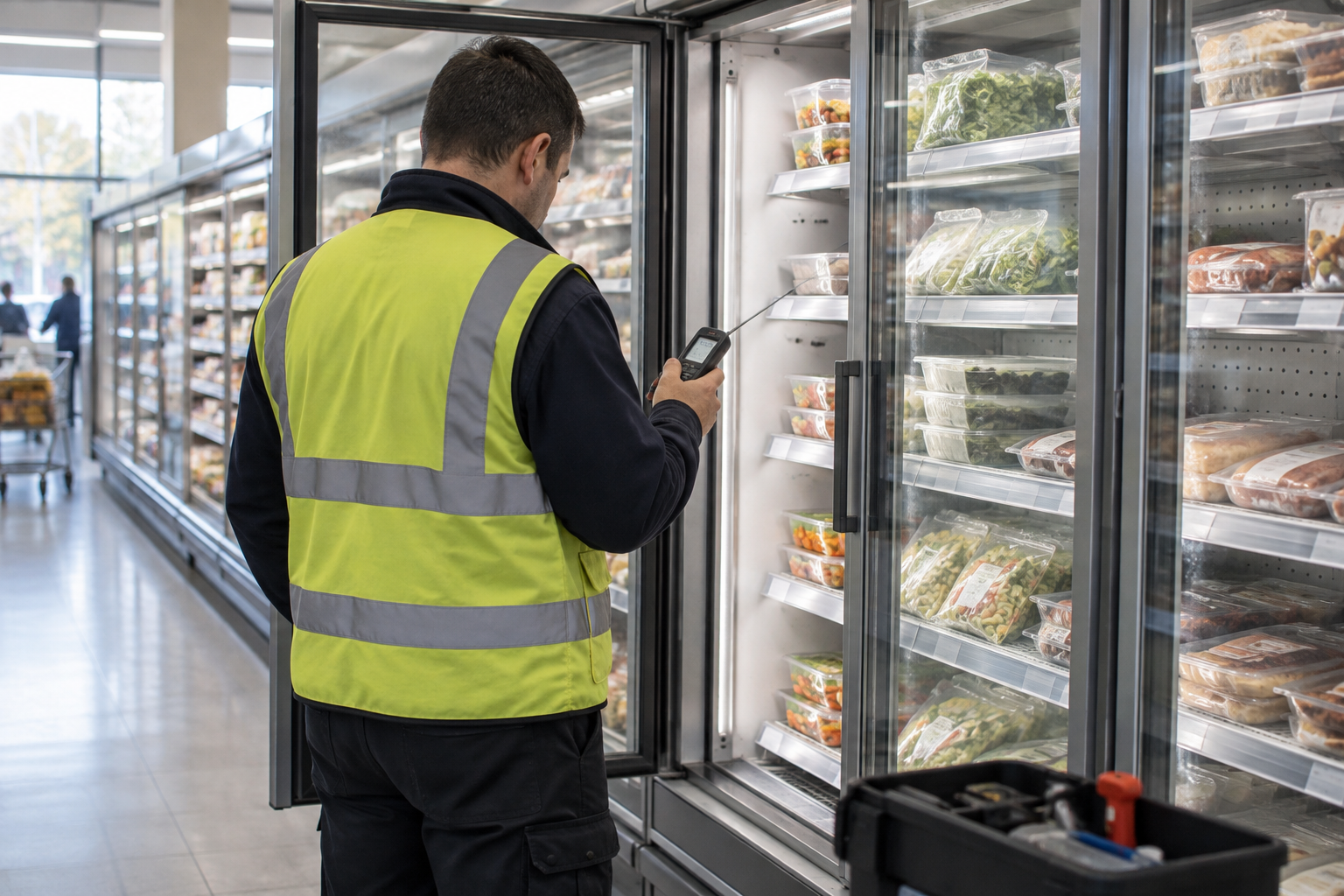
Britain’s major supermarkets have disconnected thousands of internet-connected refrigeration controllers in a nationwide security operation covering tens of thousands of fridges and freezers. The work began in late October 2026 after researchers identified a weakness that could allow hackers to alter temperatures.
The intervention follows attacks that ruined food stocks at European supermarkets and affected some British suppliers, Retail Gazette reported. However, the manufacturer of the controllers involved in the UK operation says there is no evidence that attackers have exploited the vulnerability identified in its equipment.
What happened
The National Cyber Security Centre, the Department for Environment, Food and Rural Affairs and the Food Standards Agency took part in the operation, working with cybersecurity specialists and supermarket IT teams.
Researchers at Omega Solutions discovered the flaw in refrigeration controllers made by British manufacturer Resource Data Management. Pen Test Partners subsequently investigated the findings. The equipment is widely used in the UK food industry.
Supermarket teams spent weeks removing controllers from internet connections. In some locations, staff were told to unplug network cables themselves and check temperatures manually, rather than rely on connected monitoring systems.
The scale of the response reflects the distinction between the controllers and the equipment they serve: thousands of control devices were disconnected to protect tens of thousands of individual refrigeration units.
The background
European attacks showed the potential consequences of interference with refrigeration systems. Hackers changed temperature settings remotely and activated defrost cycles, leaving retailers with large quantities of food that could no longer be sold.
Some affected units reached 50C. Reports earlier in November identified attacks on supermarkets in at least seven European countries, including stores run by Carrefour, SuperValu, ICA and Delhaize.
Those incidents followed an attack on French supermarket chain Intermarché in October, which affected hundreds of stores.
UK supermarkets largely avoided that wave of attacks, but British food suppliers did not escape entirely. London fruit and vegetable wholesaler Langridge Organic reported that six of its 10 refrigeration units had been compromised.
The Association of Independent Meat Suppliers also confirmed incidents involving several members, extending the reported disruption beyond grocery shops into the supply chain.
What people are saying
Resource Data Management disputes the researchers’ assessment of the vulnerability’s severity. It argues that their testing went beyond normal procedures and included taking its hardware apart.
Chief executive Ged Evans said the company responded promptly to the concerns by issuing initial security updates and contacting customers with guidance on securing their equipment.
The manufacturer’s position leaves an important distinction between the wider refrigeration attacks and the specific flaw investigated in its controllers. It says there is no evidence that hackers used that vulnerability.
Pen Test Partners said the immediate danger had largely been dealt with, but its assessment did not extend to every business using refrigeration equipment. The firm warned that smaller operators could remain exposed.
What happens next
The remaining concern is whether warnings reach businesses further along the food supply chain. Pen Test Partners identified food manufacturers, cold storage warehouses and other operators that may not yet have received the necessary alerts.
For those businesses, the outstanding issue is awareness of the security concerns and the manufacturer’s protection advice. The account provides no timetable for reconnecting supermarket controllers and no estimate of the financial losses caused by the attacks.
Timeline
October 2026
A refrigeration cyberattack affected hundreds of Intermarché stores in France.
Late October 2026
The UK operation to disconnect internet-connected refrigeration controllers began.
November 2026
Reports identified refrigeration attacks on supermarkets across at least seven European countries.
Why this matters
For food business owners and directors, the incidents show how interference with connected equipment can become a stock-loss and operational problem. European retailers discarded food, while some UK supermarket staff reverted to manual temperature checks during the protective operation. Smaller suppliers face a further concern: Pen Test Partners warns that security alerts may not have reached them, even as the immediate threat to larger operators has largely been addressed.
Frequently asked questions
- Why have UK supermarkets disconnected their fridges from the internet?
- Researchers identified a weakness in refrigeration controllers that could allow hackers to interfere with temperatures. Supermarkets disconnected thousands of controllers as a protective measure following attacks on refrigeration systems elsewhere in Europe.
- How many supermarket fridges are affected by the security operation?
- The UK operation covers tens of thousands of fridges and freezers controlled by thousands of devices. Exact totals and the names of participating supermarket chains were not provided.
- Which refrigeration controllers were investigated?
- Omega Solutions identified a vulnerability in controllers manufactured by Resource Data Management. Pen Test Partners investigated the findings. The manufacturer disputes the assessment of its severity and says there is no evidence of exploitation.
- Were any British food businesses attacked?
- Langridge Organic, a London fruit and vegetable wholesaler, reported that six of its 10 refrigeration units were compromised. The Association of Independent Meat Suppliers also confirmed incidents affecting several members.
- What happened to food during the European refrigeration attacks?
- Hackers altered temperatures and triggered defrost cycles, forcing businesses to discard food. Some refrigeration units reached 50C, making chilled and frozen products unsellable.
- Are smaller food businesses still at risk?
- Pen Test Partners said the immediate threat had largely been addressed but warned that smaller operators could remain exposed. Food manufacturers and cold storage warehouses may not yet have received the necessary alerts.
- Has Resource Data Management issued security updates?
- Chief executive Ged Evans said Resource Data Management had released initial security updates and contacted customers with protection advice. The company disputes the researchers’ assessment of the vulnerability’s severity.
In this story
Follow-up coverage
Topics: UK supermarket refrigeration · supermarket fridge cyberattacks · Resource Data Management security · refrigeration controller vulnerability · food supply chain cybersecurity · cold storage cyber risk · All Business Mistakes / Lessons Learned news →
Original reporting: Retail Gazette. This article is an independent write-up by British Business Echo.
Latest from the newsdesk
- E-commerce
Meta launches Muse shopping agent with major UK retailers
- Funding & Business Finance
British Business Bank takes £43m Oxford Science Enterprises stake
- Business Growth
UK pork producers secure Vietnam access and Philippines deal
- Business Regulation
HSE tools help small firms check health and safety duties
- SME / Owner-Managed Business
MoneySuperMarket: nearly 2m small firms skip Black Friday
Related stories

FOUNDRS survey exposes founders’ admin and tax blind spot
Two in five trading founders reported mistakes with records, tax or filing, while only 30% of aspiring entrepreneurs feared getting them wrong.
Pal Chopra banned for six years over £219,402 payments
The Reading off licence director failed to provide adequate records, leaving payments, cash withdrawals and stock unaccounted for.

The Handbag Clinic cuts marketing by two-thirds as profit returns
Co-founder Charlotte Staerck says sales held up after the cut, following three loss-making years and expansion that stretched the specialist business.

TFG cyber-attack disrupts Hobbs, Whistles and Phase Eight
The fashion group’s London operations face website and order disruption as H&M investigates separate claims and French grocers suffer food losses.