E-commerce
Singles' Day outstrips Black Friday and Prime Day in 2025
China's November shopping festival offers UK retailers a measure of online demand, payment capacity and delivery pressure.

By Sophie Callaghan, Retail & E-commerce Reporter ·
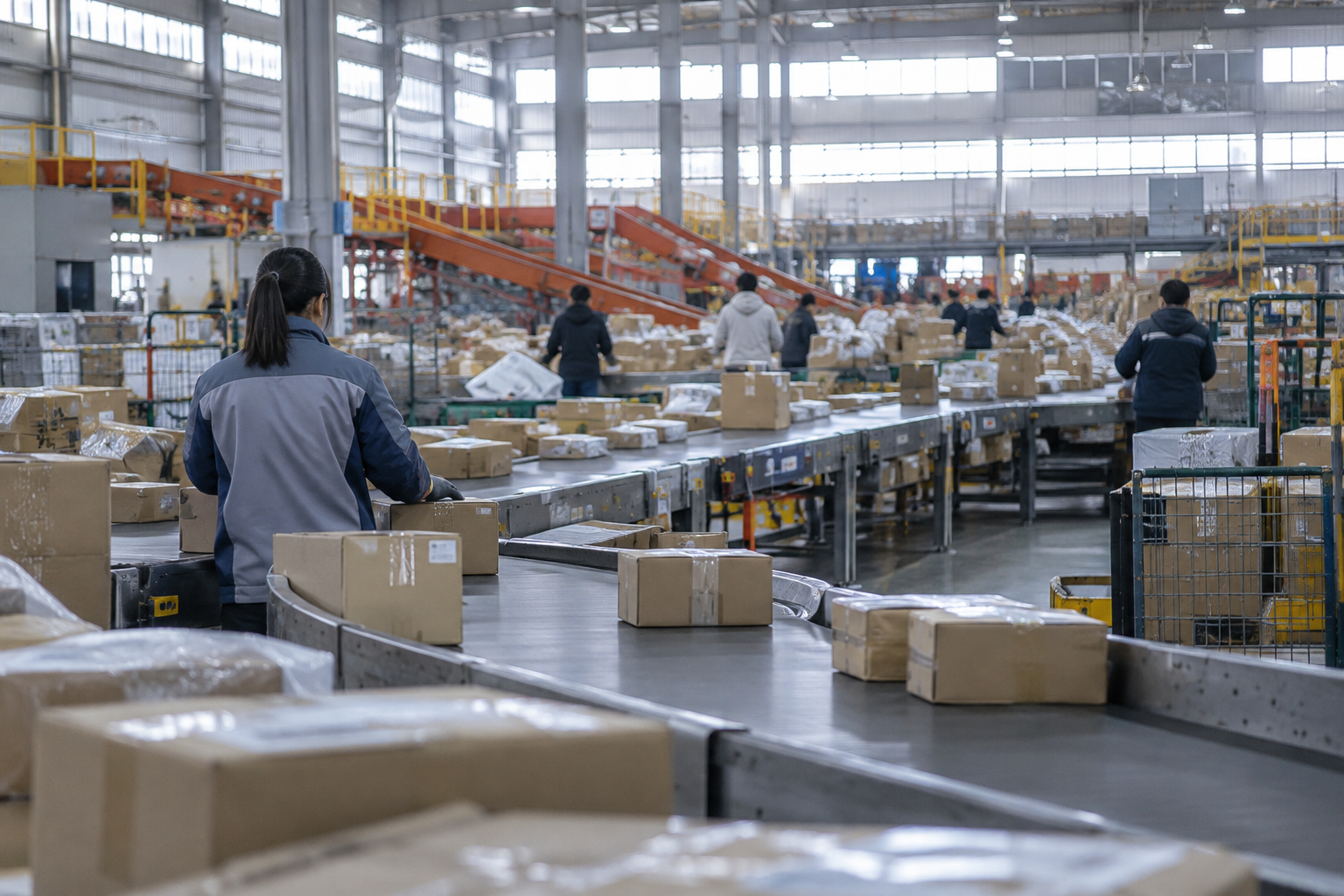
China's Singles' Day generated more sales in 2025 than Black Friday and Amazon Prime Day combined, giving UK retailers a measure of the scale of competition for spending around November's promotional events.
The comparison comes from Wikipedia's account of the Chinese shopping festival, which falls on 11 November and has expanded into Southeast Asia and European retail campaigns. Its international reach provides context for businesses assessing UK Black Friday spending forecasts, although the account supplies no UK Singles' Day sales figure.
What happened
Alibaba turned an existing celebration of single people into a commercial event in 2009, combining a day of online discounts with entertainment outside the shopping platforms. Rival JD.com subsequently developed its own Singles' Day festivals, making the occasion broader than a promotion run by one marketplace.
The event is also known as Double 11, reflecting its 11/11 date. It has become the world's largest shopping occasion across online and physical retail, despite having no status as an official Chinese public holiday.
Alibaba reported a 26% increase in gross merchandise volume for the 2019 event compared with the previous year. That measure records the value of goods traded through the event; the figure was presented as merchandise volume rather than company profit.
By 2021, Alibaba and JD.com had reached a combined Singles' Day sales record. The following year brought a break in the disclosure of headline figures, with neither business publishing a sales total amid China's economic difficulties and zero-Covid restrictions.
The operating demands have extended well beyond securing orders. During the 2017 festival, Alibaba's Alipay mobile wallet processed 256,000 payment transactions a second at its peak and handled 1.48 billion transactions across 24 hours.
Those figures give a different perspective on digital retail from measures such as online sales growth in the UK: they show the payment traffic concentrated into a promotional period. The delivery requirement was also substantial, with the 2020 event resulting in four billion parcels being sent.
The background
Singles' Day began at Nanjing University in 1993, rather than in a retailer's marketing department. Celebrations spread to other universities in the city during the 1990s before reaching a wider audience, with social media later helping the occasion gain recognition.
The date draws its meaning from the four instances of the numeral one in 11/11. The single upright digit resembles a bare stick, a Chinese slang reference to an unmarried man, and represents people who are not in a relationship.
Several accounts of its creation exist. A widely accepted explanation connects it with university dormitory life, including a story about four male students who agreed to organise activities celebrating their single status. That account is an origin story, rather than an established commercial founding record.
Initially associated with young men, the celebration subsequently broadened to include women. Parties and blind dates became part of the occasion, giving it a social purpose alongside the later emphasis on buying goods and seeking discounts.
The commercial audience has not been confined to sellers of physical products. Restaurants, karaoke businesses and online shopping centres have used the occasion to reach younger consumers, reflecting its continuing association with meeting people and entertainment.
Alibaba has also staged large celebrations on the evening before the shopping event, using international performers and livestreamed entertainment. This places the promotion within a wider programme of cultural activity rather than limiting it to prices displayed on shopping websites.
The date carried additional significance in 2011 because its shortened form contained six ones. Hong Kong and Beijing recorded an above-average number of wedding celebrations on 11 November that year, despite the occasion's origins as a celebration of being single.
What people are saying
Alibaba's position in 2022 was that the event's gross merchandise volume was broadly consistent with its 2021 performance. JD.com separately described its own event as record-breaking. Neither statement was accompanied by a disclosed sales total, limiting the numerical comparison available for that year.
The use of the date has drawn a different response in Belgium. Electronics retailer MediaMarkt participated there, but the promotion attracted negative reactions because 11 November marks the armistice that ended the First World War and is associated with remembrance of the war dead.
MediaMarkt has also promoted Singles' Day in Germany, where the date coincides with the opening of the Rhineland carnival season. The contrasting settings show that the same retail date carries different cultural associations across neighbouring European markets.
What happens next
The festival's recurring date is 11 November, but the account gives no timetable for a new Alibaba or JD.com campaign and no forecast for UK sales. Its established overseas activity nevertheless extends beyond China: customers ordered 6.5 million items through Lazada's Southeast Asian marketplaces during the 2017 event.
European adoption has also developed in stages. Swedish electronics retailer Elgiganten ran a Singles' Day campaign in Norway in 2016 before taking the promotion into other Nordic countries the following year. That history establishes participation outside Asia without providing a current European sales total.
For UK businesses planning promotions alongside Christmas online spending forecasts, the November shopping festival should not be confused with the UK's National Singles Day. That separate occasion falls on 11 March and was initiated by dating experts to support people who are single.
Naming is another distinction for businesses considering activity in China. Alibaba registered the Chinese term for Double 11 as a trademark on 28 December 2012. In October 2014, it threatened legal action against media outlets accepting competitors' advertising using that term; the account does not establish the present legal position for a proposed campaign.
Timeline
1993
Singles' Day originated at Nanjing University.
2009
Alibaba introduced online discounts and entertainment around Singles' Day.
28 December 2012
Alibaba registered the Chinese term for Double 11 as a trademark.
October 2014
Alibaba threatened legal action over competitors' advertising using the Double 11 term.
2016
Elgiganten promoted Singles' Day in Norway.
2017
Alipay handled 1.48 billion payment transactions during the 24-hour festival.
2019
Alibaba reported 26% annual growth in Singles' Day gross merchandise volume.
2020
Singles' Day resulted in four billion parcels being sent.
2021
Alibaba and JD.com reached a combined Singles' Day sales record.
2022
Alibaba and JD.com did not disclose Singles' Day sales totals.
2025
Singles' Day sales exceeded Black Friday and Amazon Prime Day combined.
Why this matters
For UK retailers and e-commerce directors, Singles' Day provides a practical reference for planning concentrated promotional demand. Its payment traffic and parcel volumes show that campaign capacity involves checkout systems and fulfilment as well as discounts. Expansion into Southeast Asia and European retail demonstrates its reach beyond China, while reactions in Belgium highlight the importance of local context. The absence of UK sales figures means its global scale should not be treated as a forecast of domestic demand.
Frequently asked questions
- What is Singles' Day?
- Singles' Day is an unofficial Chinese celebration of people who are not in a relationship. It has developed into the world's largest online and physical retail shopping occasion, with Alibaba and JD.com running major promotions.
- When is Singles' Day?
- China's Singles' Day falls on 11 November and is also called Double 11. The four ones in 11/11 symbolise single people. The UK's separate National Singles Day falls on 11 March.
- Is Singles' Day bigger than Black Friday?
- The source reports that Singles' Day generated more sales in 2025 than Black Friday and Amazon Prime Day combined. It does not provide a UK Singles' Day sales total.
- Who started Singles' Day shopping?
- Alibaba introduced its commercial Singles' Day event in 2009, combining online discounts with entertainment. The underlying celebration began at Nanjing University in 1993.
- Do retailers outside China take part in Singles' Day?
- Singles' Day has spread into Southeast Asia and European retail campaigns. Lazada has participated in Southeast Asia, while MediaMarkt and Elgiganten have run promotions in European markets.
- Did Alibaba publish Singles' Day sales in 2022?
- Alibaba did not disclose a sales total for the 2022 event, saying gross merchandise volume was broadly consistent with 2021. JD.com also withheld a total but described its event as record-breaking.
- Why does Singles' Day matter for delivery businesses?
- Singles' Day concentrates substantial demand into a promotional period. The 2020 event resulted in four billion parcels being sent, illustrating the delivery volumes associated with the festival.
In this story
Topics: Singles' Day · Singles' Day 2025 sales · Alibaba Singles' Day · Double 11 shopping festival · Singles' Day vs Black Friday · Singles' Day UK · JD.com Singles' Day · All E-commerce news →
Original reporting: Wikipedia. This article is an independent write-up by British Business Echo.
Latest from the newsdesk
- Funding & Business Finance
British Business Bank takes £43m Oxford Science Enterprises stake
- Business Mistakes / Lessons Learned
Next business data accessed in supplier cyberattack
- Business Growth
UK pork producers secure Vietnam access and Philippines deal
- Business Regulation
HSE tools help small firms check health and safety duties
- SME / Owner-Managed Business
MoneySuperMarket: nearly 2m small firms skip Black Friday
Related stories
Meta launches Muse shopping agent with major UK retailers
Sainsbury’s, Argos and Debenhams join the rollout as competition and data watchdogs scrutinise the AI assistant’s safeguards.
VoucherCodes forecasts £9.8bn Black Friday spending
UK spending is forecast to rise 3%, broadly matching inflation, as more shoppers plan Christmas purchases around Black Friday discounts.

Adobe forecasts record £28.52bn UK Christmas online spending
Adobe forecasts 6.2% growth in festive online sales, with Black Friday spending reaching £1.24bn and AI referrals rising sharply.

BDO: Online sales drive 4.6% October retail growth
Online discretionary sales rose 10.1% in October, but BDO warned that colder weather and promotions may explain the rebound.