Tax Changes
Marks & Spencer and John Lewis press for Budget tax relief
Retail leaders warn that higher business rates could hit hundreds of shops, not just warehouses, as pressure builds before the Budget.

By Priya Nair, Finance & Tax Reporter ·
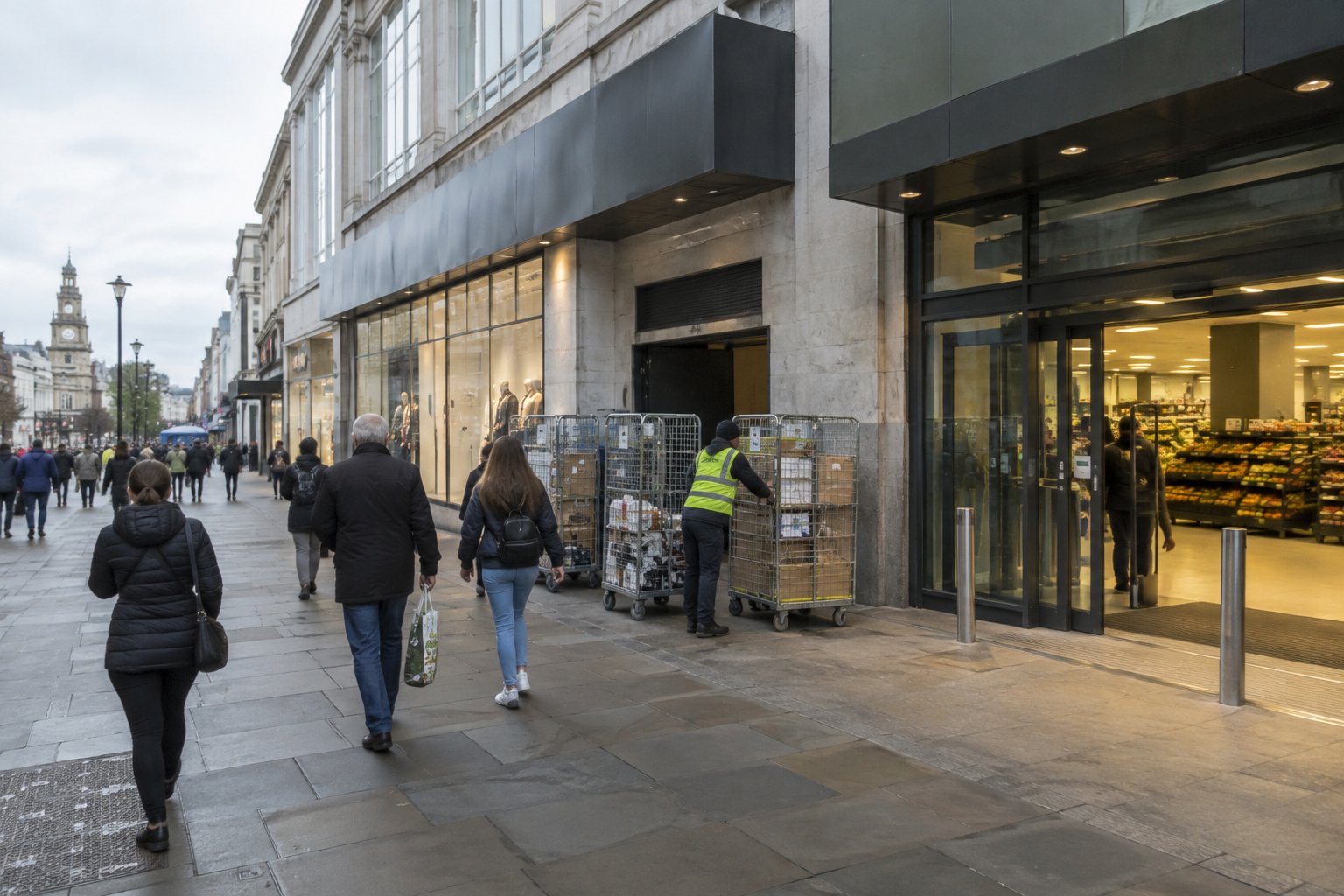
Marks & Spencer and John Lewis have urged the government to ease taxes on UK retailers ahead of the Budget, warning that higher property bills could undermine efforts to revive high streets and increase prices for shoppers.
The interventions come less than three weeks before the fiscal statement, as reported by City AM. British Retail Consortium analysis puts retailers’ tax payments at 72p for every pound they make.
What happened
M&S chief executive Stuart Machin and John Lewis Partnership chairman Jason Tarry are pressing Chancellor John Healey to avoid further costs for large retailers. Their demands extend beyond business rates to recycling requirements, employment rules and food trade with the European Union.
A central concern is that the government could finance business rates relief for pubs by increasing charges on warehouses. Retail leaders argue that the higher rate under discussion would also apply to shops, widening its impact beyond distribution operations.
The industry warns that additional property costs would ultimately feed through to consumer prices. Tarry’s intervention challenges the distinction between supporting town-centre businesses and imposing higher charges on the infrastructure and larger stores that serve them.
The background
The government’s high street agenda has focused on tax breaks for pubs and action against gambling shops. Retailers want that programme to recognise the role of major chains in supporting town centres, rather than concentrating relief on particular types of premises.
The BRC ranks retail as the second most heavily taxed sector, behind hospitality. The comparison follows separate findings that hospitality businesses pay 82p in tax for every £1 of profit.
Business taxation is also drawing scrutiny beyond the high street, with Hargreaves Lansdown warning against a rise in capital gains tax. For retailers, the immediate dispute concerns the recurring cost of occupying shops and distribution premises.
The sector’s lobbying comes against a wider backdrop of financial pressure: Weil has reported European retail distress at a post-crisis high.
What people are saying
Writing in the Daily Mail, Machin criticised Labour’s previous two budgets for adding taxes and regulation rather than providing the growth plan he believed businesses needed. He said the Chancellor could begin reversing those decisions without abandoning his fiscal rules.
His specific requests include overturning recycling requirements he considers unreasonable, ensuring employment reforms do not restrict Saturday jobs, and reaching a practical food trade agreement with the EU. He linked restoring business confidence with leaving consumers more money to spend.
Tarry, writing in The Telegraph, set out the potential reach of the higher property charge within his own business. He said it would apply to 18 distribution centres but more than 200 John Lewis and Waitrose stores, leaving the shop estate more widely exposed than the warehouse network.
Tesco chief executive Ken Murphy had raised the same issue earlier in the week. He said he had asked the government to exclude retailers from the highest business rates multiplier and argued that the sector pays, on average, four times its fair share of rates.
What happens next
The Budget is the next decision point for the rates dispute. Retailers are seeking an exemption from the highest multiplier, while Machin wants the Chancellor to start unwinding measures introduced in the previous two budgets.
The scope of any higher charge will determine which premises face increased bills. Tarry’s figures put the treatment of large stores, as well as distribution centres, at the centre of that decision.
Why this matters
For retail directors, the dispute concerns which properties carry the cost of targeted high street relief. John Lewis Partnership’s figures show why a charge described as a warehouse tax could have a much wider reach across shop estates. Businesses planning property expenditure, staffing and prices face a Budget decision that could alter their recurring costs. The BRC’s tax analysis also explains why retailers are pressing for relief alongside hospitality, rather than accepting higher bills to fund it.
Frequently asked questions
- Why is Marks & Spencer calling for tax cuts?
- Chief executive Stuart Machin argues that Labour’s previous two budgets added taxes and regulation rather than supporting growth. He wants the Chancellor to begin reversing those measures without abandoning fiscal rules.
- What is the proposed warehouse tax?
- Retailers use the term to describe a higher business rates charge they fear could help fund relief for pubs. They warn that it would affect large shops as well as warehouses.
- How many John Lewis and Waitrose stores could be affected?
- John Lewis Partnership chairman Jason Tarry says the higher charge would apply to more than 200 John Lewis and Waitrose stores, compared with 18 distribution centres.
- How much tax do UK retailers pay?
- British Retail Consortium analysis says retailers pay 72p in tax for every pound they make. It ranks retail as the second most heavily taxed sector, behind hospitality.
- What has Tesco asked the government to do?
- Tesco chief executive Ken Murphy has asked the government to exempt retailers from the highest business rates multiplier. He argues that retailers pay, on average, four times their fair share of rates.
- Could higher business rates increase shop prices?
- Retail bosses warn that higher property bills would increase their operating costs and ultimately push up prices for shoppers.
- What other changes does Stuart Machin want?
- Machin wants recycling requirements overturned, employment reforms that do not restrict Saturday jobs, and a practical food trade agreement with the European Union.
In this story
Topics: retail tax burden · Marks & Spencer tax cuts · John Lewis business rates · warehouse tax · Tesco business rates exemption · Budget retail tax relief · All Tax Changes news →
Original reporting: City AM. This article is an independent write-up by British Business Echo.
Latest from the newsdesk
- Business Regulation
FSA urges Ukrainian egg recall after Salmonella detection
- Funding & Business Finance
Manchester Angels reaches 22 investments with double deal
- Funding & Business Finance
Government sets out £1bn innovation plan and mayoral funding
- E-commerce
H&M SEO lead urges retailers to prepare for AI shoppers
- Business Regulation
ICO questions OpenAI, Meta and Anthropic over AI agents