Business Regulation
FSA urges Ukrainian egg recall after Salmonella detection
Caterers, manufacturers and wholesalers are urged to withdraw affected eggs after testing identifies a strain linked to 36 infections in England.

By Eleanor Whitcombe, Editor ·
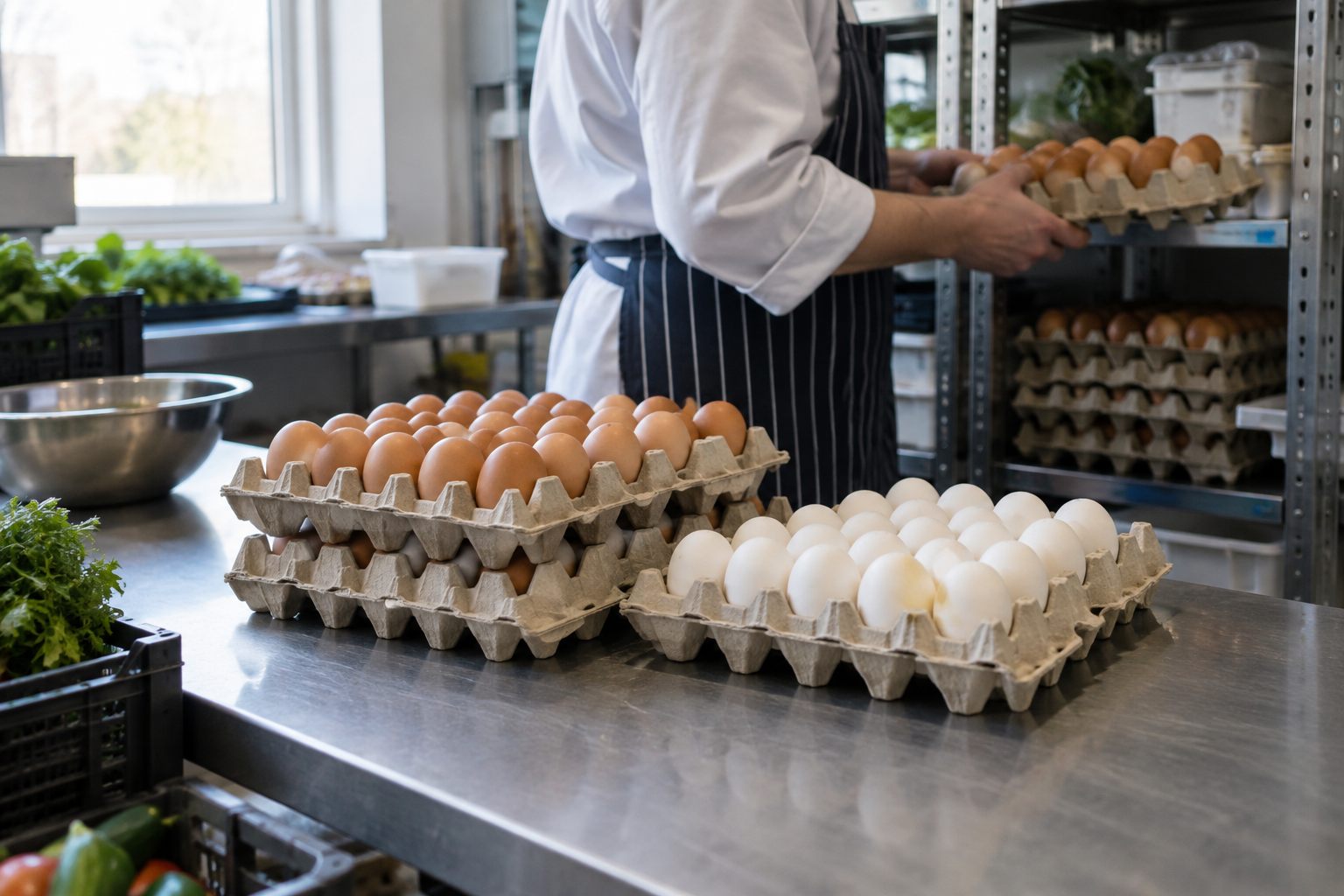
The Food Standards Agency (FSA) has called for the immediate withdrawal and recall of eggs supplied by one Ukrainian business after testing found Salmonella Enteritidis. The strain detected has been linked to 36 infections reported in England in 2026.
The action affects eggs distributed mainly through wholesalers and catering suppliers, with some reaching consumers through small shops. The announcement, reported by GOV.UK Business, says UK-produced eggs are outside the scope of the alert.
What happened
The FSA issued a Food Alert for Action aimed principally at businesses holding the affected eggs, including caterers, manufacturers and wholesalers. They are being told to remove the products from the supply chain immediately and recall them where retail sales have taken place.
The affected eggs are not sold by major supermarket chains. Small retailers are nevertheless included in the response because some of the stock may have been sold directly to the public rather than used in catering.
Consumers who have bought affected eggs are advised not to eat them and to dispose of them at home. The agency says the products may be unsafe.
The statement does not name the Ukrainian business or reproduce product identification details. It directs businesses and consumers to the Food Alert for Action for the advice covering the affected products.
The background
The contamination was discovered during egg sampling for an existing investigation into a Salmonella Enteritidis outbreak thought to be associated with imported eggs. The UK Health Security Agency (UKHSA) tested samples from the Ukrainian supplier and used whole genome sequencing to analyse the bacteria.
That analysis revealed an important distinction: the strain in the sampled eggs was genetically different from the strains being examined in the ongoing outbreak investigation. The finding therefore did not establish that these eggs were the source of the outbreak already under investigation.
Instead, the detected strain was associated with the separate group of 36 reported infections. The statement does not give dates for those individual cases beyond the year, or specify where in England they occurred.
Whole genome sequencing forms part of routine Salmonella surveillance in England. Samples from infections detected in patients seen in hospitals or primary care are analysed using the technique, helping public health teams identify potential outbreaks and investigate connections between cases.
What people are saying
Jacquelyn McCormick, the FSA’s head of incidents, said the agency had acted urgently following the contamination finding. She asked both businesses and consumers to follow the alert, distinguishing between withdrawing eggs still in commercial distribution and recalling products already sold at retail.
McCormick said the agency’s established guidance remained unchanged for eggs outside the alert. Thorough cooking and hygienic handling should prevent those eggs from presenting a food safety risk.
For infants, young children, pregnant people and older adults, the advice on raw or lightly cooked eggs remains more restrictive. McCormick said these groups should only eat them when they carry the British Lion mark or come under the Laid in Britain scheme.
Hannah Charles, lead epidemiologist at UKHSA, identified the strain found in the imported eggs as S. Enteritidis t5.8998. She said the testing results were passed immediately to the FSA so that it could take food safety action.
Charles said Salmonella commonly causes diarrhoea, stomach cramps, vomiting and fever. Most infections resolve after a few days without treatment, although some lead to more serious illness, including sepsis, and require hospital admission.
Young children, older adults, pregnant women and people with weakened immune systems are particularly vulnerable to severe illness, she said. UKHSA also urged the public to follow the FSA’s product-specific advice.
What happens next
The FSA is working with local authorities to secure prompt action on the alert. For businesses holding affected stock, the instruction is immediate withdrawal rather than waiting for the wider investigation to conclude.
The agency is also reviewing broader measures relating to the source of the outbreak under investigation and working with international partners. Its continuing work with UKHSA will follow the emerging evidence and inform any further public health action.
Why this matters
The alert places an immediate stock-control responsibility on caterers, manufacturers, wholesalers and small retailers holding the affected eggs. Businesses must distinguish between products still in the supply chain, which require withdrawal, and those sold at retail, which require recall. The limited scope also matters: this is action against eggs from one Ukrainian supplier, not UK production generally. Local authorities are working with the FSA to ensure businesses act promptly.
Frequently asked questions
- Why has the FSA issued an egg recall alert?
- Testing found Salmonella Enteritidis in eggs from one Ukrainian supplier. The FSA has urged businesses to withdraw affected eggs immediately and recall products sold at retail because they may be unsafe.
- Which shops sold the affected Ukrainian eggs?
- The FSA says some affected eggs may have been sold through small shops, but not major supermarkets. Most were distributed through wholesalers and catering suppliers. The statement does not identify individual retailers.
- Are UK-produced eggs affected by the recall?
- No. The FSA says UK-produced eggs are not affected. The alert concerns eggs imported from one Ukrainian business.
- What should consumers do with recalled eggs?
- Consumers who have bought affected eggs should not eat them and should dispose of them at home, according to the FSA.
- What should caterers and wholesalers do about the egg alert?
- Businesses holding affected eggs should withdraw them from the supply chain immediately. Where retail sales have occurred, the FSA says the products should also be recalled.
- How many Salmonella cases are linked to the eggs?
- The strain detected in the eggs is associated with 36 Salmonella infections reported in England in 2026. It differs genetically from the strains being examined in the ongoing outbreak investigation.
- What are the symptoms of Salmonella infection?
- Symptoms commonly include diarrhoea, stomach cramps, vomiting and fever. Most infections resolve after a few days without treatment, but severe illness, including sepsis, can require hospital admission.
In this story
Topics: FSA egg recall · Ukrainian eggs Salmonella · Salmonella Enteritidis eggs · Food Alert for Action eggs · egg recall catering suppliers · UKHSA Salmonella investigation · All Business Regulation news →
Original reporting: GOV.UK Business. This article is an independent write-up by British Business Echo.
Latest from the newsdesk
- Insolvency & Restructuring
Ellan NW shut down after arranging 226 company purchases
- Funding & Business Finance
Start Up Loans lending tops £40m in record summer
- Business Growth
Growth Company opens Hong Kong route for Manchester startups
- AI in Business
Photoroom AI image test highlights value of freelance judgement
Related stories

ICO questions OpenAI, Meta and Anthropic over AI agents
The UK data watchdog is examining autonomous AI systems and seeking evidence on how developers and users protect personal information.

Paymaster GDPR appeal puts distress claims before Supreme Court
A Supreme Court appeal over misdirected police pension statements could determine how businesses defend low-level data protection claims.

UKHospitality calls for licensing reform in high street blueprint
The trade body’s 33 recommendations cover licensing, planning and property costs as operators face delays before they can begin trading.

DMCCA review rules put firms at risk of turnover-based fines
Experts warn businesses against hiding genuine criticism, linking refunds to deleted reviews or rewarding customers only for positive ratings.