Funding & Business Finance
Feldspar seeks up to £6m for smart athletics track
The British sports technology company is seeking strategic investors as an 18-month trial tests its sensor-equipped track in Cardiff.

By Priya Nair, Finance & Tax Reporter ·
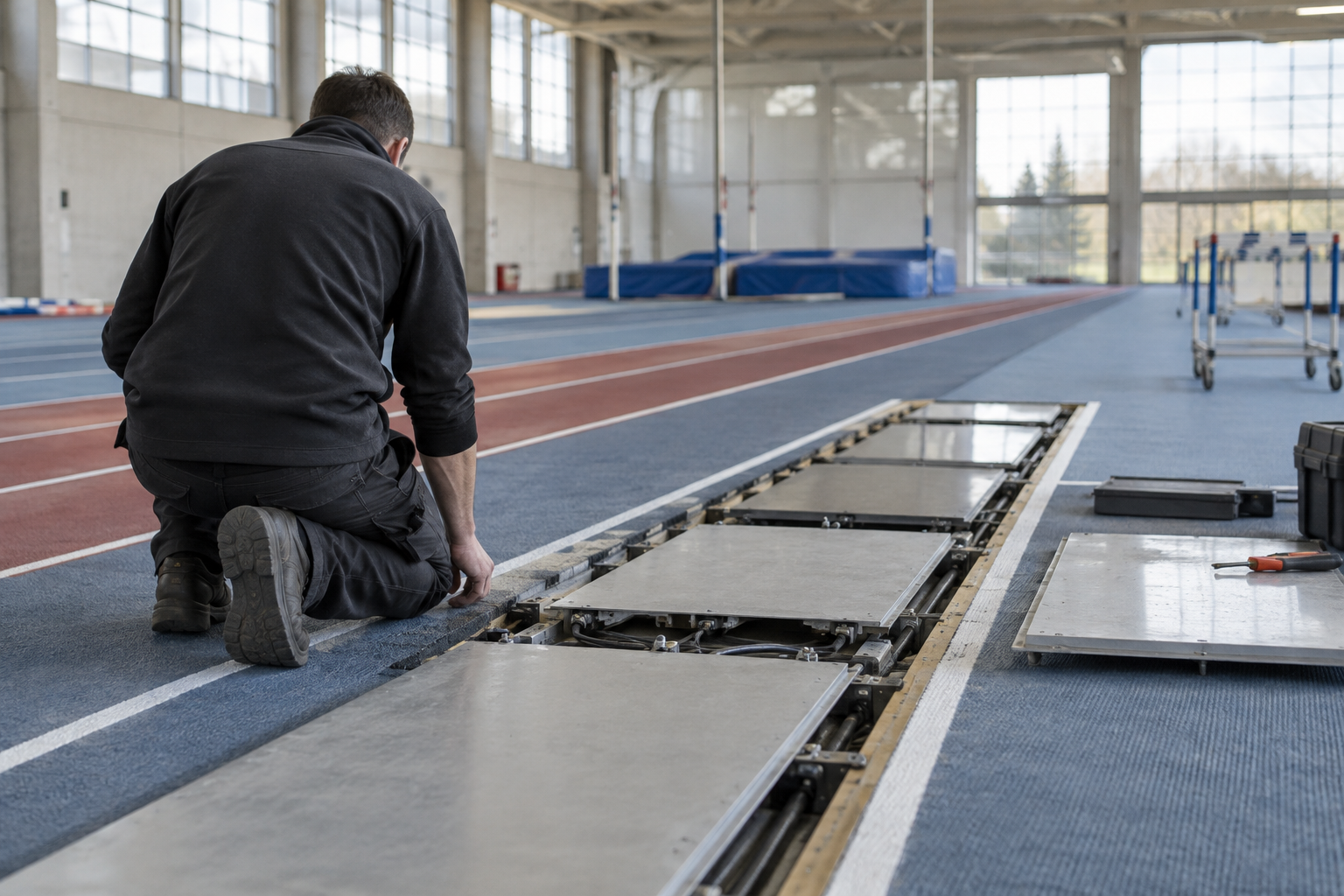
British sports technology company Feldspar is in talks to raise up to £6m from new investors while testing its sensor-equipped athletics track in Cardiff.
The business is targeting a seed round of £5.5m to £6m, with a preference for sports organisations that can help develop its products, as first reported by City AM. Founder Alvina Chen’s family has financed the company’s first three years.
What happened
Feldspar has installed 60 metres of track and 156 sensor plates at the National Indoor Athletics Centre in Cardiff. An 18-month pilot programme is under way at the venue.
The company has developed two products: a track layer intended to allow athletes to train or race harder, and a separate system of cloud-connected sensor plates that sits beneath the surface.
The smart track, created by the Cambridge Design Collective, measures forces in three directions — horizontal, vertical and lateral — alongside centre pressure. It delivers those readings in real time, giving coaches and athletes information about how a runner interacts with the surface.
Feldspar sees two uses for that information. Biomechanical data could inform training and efforts to prevent injury, while the same measurements could be turned into more detailed content for spectators.
The business describes its sensor system as a modular platform capable of continuously measuring force across a sports surface. The connected technology also offers a potential route to recurring subscription revenue, rather than relying solely on sales of physical track equipment.
The background
Chen is a former athlete who moved into entrepreneurship. Her starting point is the contrast between advances in running shoes and training methods and the more limited changes to the surfaces on which athletes compete.
Feldspar’s team includes former Great Britain sprinter Darren Campbell, alongside senior figures from football and marathon running. Executive director Tim Godfrey brings experience from sailing, electric motorsport and triathlon organisations.
The technical distinction, according to Godfrey, is the scale of the measurements. Individual force plates already provide biomechanical information, but Feldspar is seeking to collect that data across a much larger area rather than at a single point.
That ambition creates a manufacturing challenge as well as a technology opportunity. Equipping a short section for a pilot is different from supplying enough plates for an entire athletics stadium, and the company says current costs remain an obstacle to a full-track installation.
What people are saying
Chen wants the products to serve both participants and audiences. She sees the surface as a way to improve the information available to athletes and coaches while giving fans additional digital material to follow.
Godfrey said the preferred seed investors would understand how the technology could be used in sport. The company is seeking partners able to contribute to the products’ development, not simply provide capital.
He also reported interest from institutional investors, although he suggested their involvement might be more appropriate at a later Series A or Series B round. Neither was presented as a confirmed fundraising plan.
Beyond athletics, Godfrey said court-based sports had already expressed interest. Although the sensors were designed for running tracks, the company believes the underlying system could be adapted to other playing surfaces.
He cited the possibility of placing sensors beneath an entire football pitch, using Manchester United’s proposed new stadium as an example of the scale Feldspar could eventually address. That was a potential application, rather than an announced installation or agreement with the club.
What happens next
The Cardiff pilot provides the current test setting as investor discussions continue. The seed round remains a fundraising target, rather than a completed investment.
For wider deployment, Godfrey identified further development of manufacturing, production and the supply chain as necessary steps. He said installing sensors across all eight lanes of a 400-metre track would not currently be a project the company would pursue at today’s price.
Feldspar’s longer-term ambition is to make that scale of installation affordable for a stadium or event owner by 2036. Adoption at the Olympic Games is also a company goal, but neither that ambition nor the full-stadium target represents a confirmed customer commitment.
Why this matters
Feldspar’s fundraising puts the value of strategic investors alongside the need for capital. Sports organisations could help shape the products, while subscriptions offer a potential recurring income stream beyond equipment sales. For venue owners, however, the immediate opportunity remains a pilot rather than an affordable full-stadium installation. The company’s manufacturing and supply-chain requirements show the gap still to be closed between demonstrating the technology and supplying it across an entire athletics track.
Frequently asked questions
- How much funding is Feldspar raising?
- Feldspar is seeking £5.5m to £6m in a seed round. Talks with investors are under way, but the company has not announced a completed raise.
- What does Feldspar’s smart athletics track measure?
- Feldspar’s sensor plates measure horizontal, vertical and lateral force, alongside centre pressure. The cloud-connected system supplies real-time data for potential use in training, injury prevention and spectator content.
- Where is Feldspar testing its smart track?
- Feldspar has installed 60 metres of track and 156 sensor plates at the National Indoor Athletics Centre in Cardiff for an 18-month pilot programme.
- Who has funded Feldspar so far?
- The family of founder Alvina Chen has funded Feldspar’s first three years. The business is now seeking new investors, particularly sports organisations able to contribute to product development.
- Could Feldspar’s sensors be used on football pitches?
- Executive director Tim Godfrey believes the technology could eventually cover a full-size football pitch. He cited Manchester United’s proposed new stadium as a possible application, not an agreed project.
- Will Feldspar’s smart track be used at the Olympics?
- Olympic adoption is an ambition, not a confirmed agreement. Feldspar aims to make a sensor installation covering an eight-lane, 400-metre track affordable for stadium or event owners by 2036.
- How could Feldspar earn recurring revenue?
- Feldspar says its cloud-connected sensor technology could support subscription revenue. Its products include both a track layer and the sensor plates installed beneath it.
In this story
Follow-up coverage
Topics: Feldspar smart athletics track · Feldspar funding · Feldspar seed round · sports technology investment · athletics track sensors · Alvina Chen Feldspar · All Funding & Business Finance news →
Original reporting: City AM. This article is an independent write-up by British Business Echo.
Latest from the newsdesk
- E-commerce
Meta launches Muse shopping agent with major UK retailers
- Business Mistakes / Lessons Learned
Next business data accessed in supplier cyberattack
- Business Growth
UK pork producers secure Vietnam access and Philippines deal
- Business Regulation
HSE tools help small firms check health and safety duties
- SME / Owner-Managed Business
MoneySuperMarket: nearly 2m small firms skip Black Friday
Related stories
British Business Bank takes £43m Oxford Science Enterprises stake
The state-owned bank becomes an Oxford Science Enterprises shareholder after years of backing companies alongside the university venture builder.

Maven's Midlands Engine fund lending tops £20m
Manufacturers, technology firms and specialist education providers secure backing from Maven's £46m regional debt finance fund.

Gotmoves raises £2m to expand Warwick car delivery platform
The Warwick business will expand its driver network and develop its technology after reaching more than 1,000 vehicle deliveries a month.

Martin Spiller urges founders to look beyond venture capital
The Oxford Brookes academic says founders should match finance to their cash needs and ambitions rather than treat investment as proof of success.