Automation & Productivity
£40m backs eight UK Robotics Adoption Hubs
Eight regional and sector hubs will help businesses assess and deploy robotics, alongside funding for training and national co-ordination.

By Daniel Okafor, Technology Reporter ·
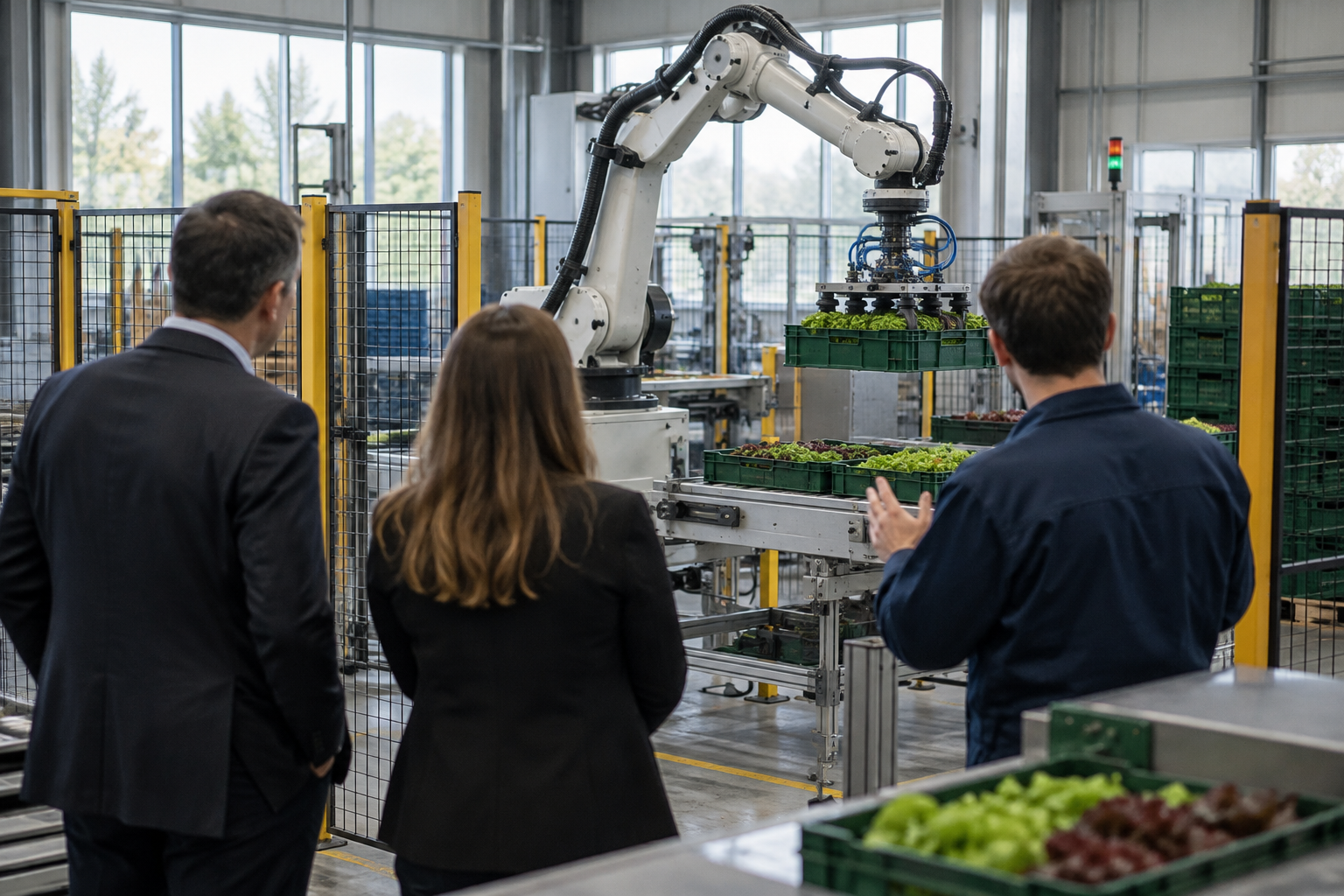
The government is rolling out eight Robotics Adoption Hubs across the UK with £40m of backing to help businesses and public services put automation into use, with the programme launching on 9 October.
The network covers healthcare, agriculture, manufacturing, waste management and transport. Partnerships between universities, research institutes, councils and businesses will provide access to specialist knowledge, with support intended to move proven technology into operational settings.
What happened
Organisations will be able to obtain impartial assessments of robotics costs, potential benefits and implementation requirements. The package, announced by GOV.UK Business, includes tailored advice, demonstrations and introductions to technology suppliers, systems integrators and finance providers.
The support is designed to address uncertainty among companies and entrepreneurs about which systems suit their operations and how to introduce them. Demonstrations will give prospective users practical experience before they make decisions about deployment.
In healthcare, SHARP — the National Surgical Robotic Adoption Hub — will support the safe introduction of surgical robotics using evidence-based implementation. Robotic assistance can enable less invasive procedures, potentially shortening patients’ recovery and allowing them to leave hospital sooner.
Lincoln’s HARVEST hub will work across the agri-food sector, with test facilities covering arable crops, fruit, vegetables and food manufacturing. Applications include automated fruit picking, which could shorten harvesting times and allow agricultural workers to concentrate on other tasks that support production.
The Greater Southwest Robotic Adoption Hub will combine expert advice with industry introductions and practical demonstrations. Its remit is to help businesses across the region build the confidence and capability needed to introduce robotics.
Milton Keynes will focus on robots operating in public spaces. Its hub will support large-scale adoption across several sectors, including service robots, drones and driverless vehicles, with approaches developed locally intended to have applications internationally.
A dedicated waste and recycling hub in the South East will help sites test robotic systems before adopting them. The intended outcomes include recovering more materials, reducing the volume sent to landfill and creating skilled employment.
Welsh manufacturers will receive practical guidance, investment-readiness assistance and finance support through Hwb Llwybr Roboteg Cymru, also known as the Robotics Pathway Hub. Its work is intended to strengthen productivity, business resilience and job security.
The separate South Wales Robotics Adoption Hub will bring together partners offering independent advice, feasibility work and opportunities to test equipment before investing. Businesses will also be able to access brokerage, skills support and help with deployment.
Yorkshire’s hub will offer supplier-neutral assistance to manufacturers considering established robotic technologies. Services will include feasibility studies, business cases suitable for investment decisions, live demonstrations, workforce training and implementation support.
The background
The government cited estimates that robotics and autonomous systems could contribute £150bn to the UK economy by 2035 if adoption is maximised. At existing adoption levels, the estimated contribution is £6.4bn, making the pace at which organisations introduce the technology central to the programme’s rationale.
The hubs will complement facilities already operating in the UK rather than replace them. These include Edinburgh’s National Robotarium, the RAICo nuclear robotics collaboration in Whitehaven and Catapult facilities such as the Manufacturing Technology Centre in the West Midlands.
The investment forms part of the government’s wider effort to encourage technologies that improve productivity and safety while supporting business growth. It comes alongside the broader policy agenda set out in its £1bn innovation plan and mayoral funding proposals.
A separate workforce strand addresses shortages of people able to specify, purchase, integrate, operate and maintain robotic systems. The programme links technology adoption with training rather than treating equipment selection as the only barrier facing employers.
What people are saying
AI minister Kanishka Narayan visited HARVEST in Lincoln for the announcement. He said a lack of clarity about where to begin was holding some businesses back, and argued that access to specialist advice could help robotics play a wider role in UK reindustrialisation.
Bruce Adderley, director of advanced manufacturing at Innovate UK, said the network would connect emerging technologies with organisations capable of benefiting from them. He emphasised the use of regional expertise and said broader adoption could support investment, stronger local economies and employment.
Professor Simon Pearson, founding director of LIAT and executive director of HARVEST, said the funding would help agri-food businesses tackle technical, commercial, regulatory and workforce obstacles. He said the work would draw on the LIAT team and industry representatives to support the sector’s use of robotics.
What happens next
National co-ordination will be provided through the £1.7m Accelerating UK Robotics Adoption initiative, known as AURA. The Welding Institute will deliver the convening body with Anglia Ruskin University, bringing the hubs together to exchange knowledge and improve the impact of investment.
The programme is also allocating £2.5m to 12 projects covering practical training, continuing professional development, apprenticeship routes and workforce outreach. These range from industrial inspection and maritime operations to business leadership and school-based learning.
Robotics Training Centre Scotland will give engineers, technicians and other workers practical experience intended to support safer industrial use. In inspection and maintenance, Teesside University and DarbyTech are developing hands-on training through RAPID-INSPECT so workers can use robots in those activities.
Ports will receive industry-focused training through PORTaL, helping operators assess opportunities, manage adoption risks and develop internal capability. Project TAMAR will establish training for the deployment and operation of uncrewed surface vessels and their robotic payloads.
In Northern Ireland, FP McCann will build a learning factory equipped with robots for its employees and local students. The project is intended to establish the skills and safety foundations needed for larger-scale automation.
Business and operational leaders are another target group. Under the PPMA Ltd project, Automate UK and Cranfield University will develop senior-level training on understanding and overcoming barriers to robotics and automation.
Engineers will be able to access free online and practical learning through COMPOSE, which focuses on configuring robot arms to pick up and handle goods. The Ready Robotics Workforce programme will combine hands-on learning with AI tools to help manufacturing engineers and technicians operate and integrate industrial robots.
Canterbury Christ Church University is leading RAISE-SE with local industrial and further education partners. The project has secured more than £200,000 from Innovate UK to broaden robotics skills across the South East.
School outreach includes More Than Robots, which will pair pupils at 48 schools in Somerset, Devon and Cornwall with industry mentors to build robots. XRP in Schools will train teachers, including non-specialists, to deliver robotics learning aligned with GCSE and A-level Computer Science.
The National Robotarium will also work with employers on an apprenticeship framework for robotics technicians. That study is intended to develop a route into skilled work while helping businesses obtain suitably trained staff.
Why this matters
For business owners and directors considering automation, the hubs offer help with the decisions that precede equipment purchases: feasibility, costs, supplier selection and workforce requirements. Regional and sector-specific support could make it easier to test whether robotics suits an operation before committing investment. The accompanying training projects address a separate constraint — finding people able to integrate and maintain the systems — while finance introductions and investment-ready business cases could help firms prepare for deployment.
Frequently asked questions
- What are the UK Robotics Adoption Hubs?
- The eight Robotics Adoption Hubs are government-backed partnerships helping businesses and public services assess and deploy robotics. They offer expert advice, demonstrations and practical implementation support across sectors including healthcare, farming, manufacturing and transport.
- How much funding is backing the Robotics Adoption Hubs?
- The government announced £40m of backing for the eight hubs. The programme also includes a £1.7m national co-ordination initiative and £2.5m for 12 training and workforce projects.
- What support can businesses get from the robotics hubs?
- Businesses can obtain impartial advice on costs, benefits and implementation requirements, alongside demonstrations and introductions to suppliers, integrators and finance providers. Individual hubs also offer feasibility studies, workforce training and deployment support.
- How will the robotics programme help farmers?
- HARVEST in Lincoln will provide test facilities covering arable farming, fruit, vegetables and food manufacturing. Automated fruit picking is among the applications, with potential to speed up harvesting and release workers for other agricultural tasks.
- Which robotics hubs will support manufacturers?
- Yorkshire’s hub will provide supplier-neutral support for manufacturers. Hwb Llwybr Roboteg Cymru will help Welsh manufacturers with practical guidance, investment readiness and finance support, while the South Wales hub offers feasibility, testing, skills and deployment assistance.
- Will the programme fund robotics training?
- The programme allocates £2.5m to 12 projects covering practical training, continuing professional development, apprenticeship pathways and outreach. Projects include industrial inspection, port operations, maritime autonomy, robot-arm programming and training for business leaders.
- Who will co-ordinate the Robotics Adoption Hubs?
- The Welding Institute will deliver the £1.7m Accelerating UK Robotics Adoption initiative, known as AURA, with Anglia Ruskin University. The body will connect the hubs and support knowledge sharing.
In this story
Topics: Robotics Adoption Hubs · UK robotics funding · robotics support for businesses · HARVEST robotics hub Lincoln · manufacturing automation support · robotics training UK · £40m robotics programme · All Automation & Productivity news →
Original reporting: GOV.UK Business. This article is an independent write-up by British Business Echo.
Latest from the newsdesk
- Business Regulation
FSA urges Ukrainian egg recall after Salmonella detection
- Funding & Business Finance
Manchester Angels reaches 22 investments with double deal
- Funding & Business Finance
Government sets out £1bn innovation plan and mayoral funding
- E-commerce
H&M SEO lead urges retailers to prepare for AI shoppers
- Business Regulation
ICO questions OpenAI, Meta and Anthropic over AI agents