E-commerce
John Lewis and department stores gain fashion search share
John Lewis, Harrods and Selfridges gain consumer attention as Shein, Very and ASOS lose search share ahead of the festive trading period.

By Sophie Callaghan, Retail & E-commerce Reporter ·
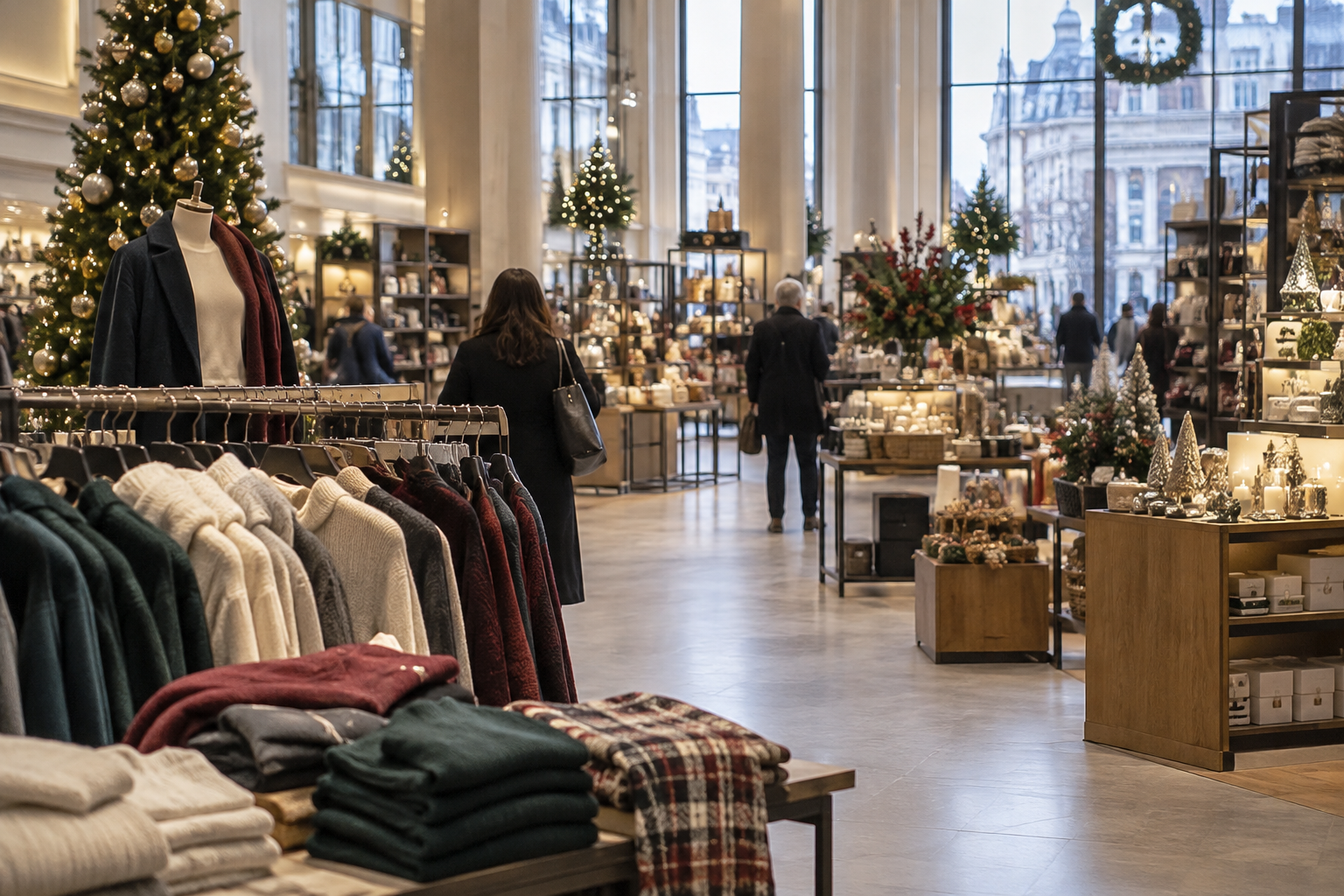
John Lewis, Harrods and Selfridges have each gained consumer search interest over the past year, together taking 8.43% of UK fashion and retail searches ahead of Christmas 2026, according to ecommerce agency MediaVision.
The agency examined searches between July and September 2026 using its Metis technology. The findings, reported by InternetRetailing, measure attention towards retail brands rather than purchases or revenue.
What happened
Next led the fashion brand search rankings with a 7.16% share. Primark followed at 5.82%, ahead of Sports Direct on 4.17%, TK Maxx on 3.82% and second-hand marketplace Vinted on 3.54%.
All five recorded year-on-year growth, despite a reduction in overall brand search demand during the quarter. The results therefore distinguish retailers gaining a larger portion of attention from growth in the market as a whole.
Shein suffered the largest year-on-year loss of search share, falling 0.37 percentage points. Very lost 0.35 percentage points and ASOS declined by 0.24 percentage points, putting several online-first fashion businesses on the weaker side of the comparison.
Those changes are expressed in percentage points, not percentage falls in search volumes. The figures reported for these three businesses do not include their remaining shares of searches.
The background
The prominence of Primark, TK Maxx and Vinted points to continued interest in lower-priced and second-hand shopping. MediaVision interprets the rankings as evidence that consumers remain sensitive to price, rather than favouring full-price premium fashion.
Next’s leading search position also follows the strong second-quarter performance highlighted in the report. Its broad product range provides a different proposition from retailers competing primarily within a single category.
Search interest is a separate measure from household expenditure. For the spending side of that picture, Barclays has reported a 2% rise in September spending as fuel costs climbed; the MediaVision analysis does not establish how much of the attention captured by individual brands became sales.
What people are saying
MediaVision chief executive Louis Venter said the department stores’ gains brought renewed attention to businesses serving several shopping needs. Fashion, beauty, homeware and gifts give those retailers more routes to customers as competition builds before Christmas, he said.
Molly Goffin, digital PR manager at the agency, argued that department stores’ position was not simply a reflection of their traditional association with festive shopping. Bringing different brands, categories and price levels together allows them to serve consumers on more occasions, she said.
Goffin also cautioned against treating the results as evidence of shoppers moving back to shops from websites. Her assessment concerned the continuing appeal of established retail names, rather than a demonstrated change in purchasing channel.
She cited Primark’s summer campaigns and Next’s product breadth as examples of retailers actively developing consumer interest. The wider competition for visibility also extends to paid channels, with IAB UK reporting growth in retail media spending.
What happens next
Black Friday and Christmas are the next trading tests identified by MediaVision. Goffin said retailers would need to preserve the attention they had built and respond quickly as customer needs changed through the festive period.
The question of how retailers reach those customers is also developing beyond conventional search, as reflected in H&M’s SEO lead urging businesses to prepare for AI shoppers. MediaVision’s findings concern the July-to-September search period; they do not provide a forecast of festive sales or show whether the current ranking will hold through the Golden Quarter.
Why this matters
For UK retail directors, the findings distinguish winning consumer attention from relying on a growing market: several brands increased their share while overall search demand softened. The gains for department stores, value retailers and Vinted suggest that product breadth and price remain important ahead of Christmas. Businesses planning festive campaigns have evidence of where interest is moving, but the figures do not establish sales growth, conversion rates or a shift towards physical shops.
Frequently asked questions
- Which department stores are gaining fashion search interest?
- John Lewis, Harrods and Selfridges each gained consumer search interest over the past year. Together, they account for 8.43% of UK fashion and retail searches in MediaVision’s analysis.
- Which retailer has the biggest share of fashion searches?
- Next leads with 7.16% of fashion brand searches. Primark follows at 5.82%, Sports Direct at 4.17%, TK Maxx at 3.82% and Vinted at 3.54%.
- Are Shein and ASOS losing search share?
- Shein’s search share fell 0.37 percentage points year on year, while ASOS lost 0.24 percentage points. Very also declined, losing 0.35 percentage points.
- What period does the MediaVision research cover?
- MediaVision used its Metis technology to analyse UK consumer search behaviour between July and September 2026, ahead of Black Friday and Christmas.
- Does higher search share mean higher retail sales?
- The research measures consumer search interest, not sales. It does not establish how much of that interest converted into purchases or provide a forecast of Christmas revenue.
- Are shoppers returning to department stores instead of buying online?
- MediaVision’s Molly Goffin cautioned that the data does not establish a return to physical shopping over online. She said it instead demonstrates the relevance of established retail brands.
- Why are multi-category retailers gaining attention?
- MediaVision says retailers combining fashion, beauty, homeware and gifts can reach customers across different shopping occasions. It also points to product breadth, varied price levels and campaigns that actively build interest.
In this story
Topics: John Lewis fashion search share · UK fashion search trends 2026 · department store Christmas shopping · Next fashion search share · Shein ASOS search decline · MediaVision retail search data · Golden Quarter retail trends · All E-commerce news →
Original reporting: InternetRetailing. This article is an independent write-up by British Business Echo.
Latest from the newsdesk
- Banking & Lending
Purbeck guarantee insurance applications rise 62%
- Business Wealth
Treasury reportedly drops £1.5m mansion tax threshold
- Economic Changes Affecting SMEs
Barclays: September spending rises 2% as fuel costs climb
- Profitability
Companeo guide sets out ways to cut business overhead costs
- Commercial Property
HMV to close Oxford Street flagship after rent doubling proposal
Related stories

House of Communication urges FMCG brands to prioritise social
Social discovery is influencing food and drink purchases, with Little Moons’ £27m revenue cited as evidence of its commercial potential.
H&M SEO lead urges retailers to prepare for AI shoppers
Ian Macfarlane says retailers need to prepare for AI-led buying without assuming shoppers are ready to hand over payment decisions.

ASOS warns customer data may have been accessed in cyberattack
ASOS shares fell as much as 15% after customers received an unauthorised notification threatening to release their data.
IAB UK: retail media spending reaches £2bn after 32% rise
Retail media leads UK digital advertising growth, while connected TV spending rises 22% to £1.7bn in the first half of 2026.