HMRC
HMRC plans 30,000 high street checks as tax rules tighten
Proposed correction notices and tougher treatment of known errors could extend the impact of HMRC’s high street crackdown beyond criminal businesses.

By Priya Nair, Finance & Tax Reporter ·
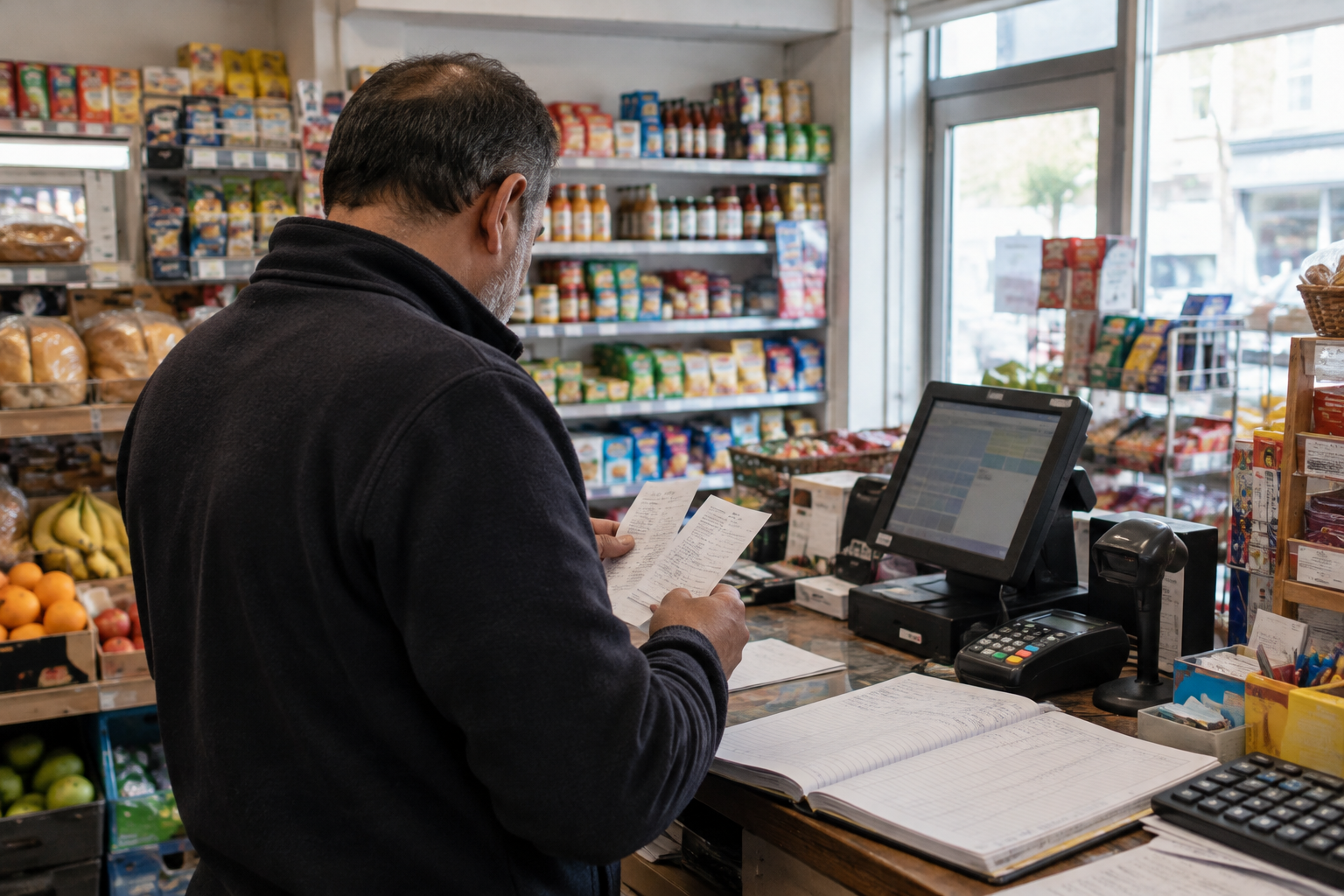
HMRC plans more than 30,000 interventions across UK high streets in 2026-27, targeting businesses linked to organised crime as proposed tax compliance changes raise the stakes for legitimate traders with inaccurate records.
The programme, announced on 12 June, includes inspections without advance warning, seizures and warning letters. Separate Budget proposals would require taxpayers to correct inaccuracies they know about, introduce standards for till software and add 670 compliance officers, as reported by Startups.co.uk.
What happened
The enforcement campaign centres on sectors where cash transactions can provide cover for criminal networks. HMRC has identified vape retailers, barbers, souvenir sellers, confectionery shops and convenience stores among those in scope, although most businesses in these trades operate legitimately.
The intervention total covers several types of enforcement activity, rather than representing 30,000 raids. A warning letter and an unannounced visit both fall within the programme, which is directed at criminal fronts rather than independent retailers generally.
For businesses outside that criminal activity, the more significant development may be the proposed duty to correct tax inaccuracies. Draft legislation would require a taxpayer who becomes aware of an error to put it right.
Failing to do so would mean the inaccuracy was treated as deliberate when penalties were considered. That would change the treatment of an initially innocent mistake if the taxpayer subsequently knew about it but left it unresolved.
The distinction matters because HMRC’s existing assessment windows depend on the circumstances. It can normally look back four years where reasonable care was taken, six years where an error was careless and up to 20 years where it was deliberate.
These proposals are separate from HMRC’s bank recovery powers and the concerns surrounding debt checks. The correction measures concern whether reported tax information is accurate and how taxpayers respond when a possible problem is identified.
The background
HMRC’s figures put the difference between tax owed and tax collected at £59.2bn for 2024-25. Small businesses account for 62% of that total, making their records and returns a substantial part of the compliance challenge.
The breakdown also shows why a programme presented around criminal shopfronts has implications for ordinary businesses. Failure to take reasonable care accounts for 35% of the tax gap, while errors contribute another 16%; together, those categories exceed half the total. Tax evasion represents 12%.
Public concern about the condition of town centres provides another part of the backdrop. The ACS Community Barometer 2026 found that 31% of respondents blamed suspect shops for deterioration on their high street. That finding concerns public perceptions, rather than establishing wrongdoing by any particular retailer.
Small traders are not the only businesses facing scrutiny. The separate HMRC inquiry into partners’ tax status at BCG concerns a different compliance issue at a major advisory firm.
What people are saying
HMRC describes the high street programme as a response to criminal networks operating through cash-heavy businesses. Its stated sector focus does not mean every shop in those categories is suspected of wrongdoing.
The government’s proposed point-of-sale software standards have a specific objective: tackling the suppression of recorded sales. Shops, cafés and salons would eventually need to establish whether their systems meet the requirements once those are settled.
Advisers cited in the source expect a substantial share of the additional compliance staff to concentrate on small and medium-sized businesses. That is an expectation about deployment, rather than a confirmed allocation of all 670 posts.
What happens next
The correction proposals are expected to appear in the 2026-27 Finance Bill and are not yet law. Owners therefore need to distinguish between the proposed obligations and the rules currently in force.
Under the plans, HMRC could issue a Customer Correction Notice where it suspects an inaccuracy. The recipient would be asked to review the relevant figures and either amend them or explain why a change was unnecessary; receiving a notice would not itself establish that the return was wrong.
A safeguard would apply where the notice was the taxpayer’s first in six years and reasonable steps were taken to resolve the issue. In those circumstances, errors falling short of deliberate conduct would not attract a penalty.
The practical preparation described in the source starts with prompt attention to HMRC correspondence. Where a business already knows its figures are wrong, voluntary disclosure is generally treated more favourably than leaving HMRC to uncover the problem.
For retailers, regular reconciliation of sales takings, till records and bank deposits can help expose discrepancies before they become a compliance issue. Keeping those records consistent is distinct from simply buying new software: the underlying transactions still need to match.
A technical consultation on mandatory point-of-sale software standards is planned for summer 2027. That is a consultation timetable, not a stated deadline for businesses to replace their tills.
A separate digital reporting change arrives in April 2027, when sole traders and landlords earning more than £30,000 must keep digital records and submit quarterly updates under Making Tax Digital. The shortfall in MTD filings ahead of the 7 November deadline highlights the reporting workload already facing eligible taxpayers.
HMRC’s staffing expansion has a longer timetable. The additional 670 compliance roles take its recruitment target from 5,500 to 6,170 by 2029-30.
Timeline
12 June
HMRC announces more than 30,000 high street interventions for 2026-27.
2026-27
Proposed correction duties and notices are expected in the Finance Bill.
April 2027
Making Tax Digital expands to sole traders and landlords earning more than £30,000.
Summer 2027
Technical consultation on mandatory point-of-sale software standards is planned.
2029-30
HMRC targets 6,170 new compliance recruits, including 670 additional posts.
Why this matters
For UK owners and directors, the practical exposure extends beyond the criminal businesses targeted by the high street campaign. Small firms account for 62% of the tax gap, while carelessness and errors together represent 51% of the total. The proposed duty to correct would make the response to a discovered mistake particularly important. Reliable transaction records, timely attention to correspondence and preparation for digital reporting could help legitimate businesses address discrepancies before their tax position becomes more costly.
Frequently asked questions
- Which businesses are targeted by HMRC’s high street checks?
- HMRC is targeting criminal networks operating through cash-heavy businesses, including vape shops, barbers, souvenir shops, confectionery retailers and convenience stores. Most businesses in those sectors are legitimate.
- Does HMRC plan 30,000 raids on shops?
- No. HMRC plans more than 30,000 interventions in 2026-27. The total includes warning letters, unannounced visits and seizures, rather than raids alone.
- What is HMRC’s proposed duty to correct?
- The proposal would require taxpayers to correct an inaccuracy once they know about it. Leaving a known error unresolved would make it deliberate for penalty purposes, even if the original mistake was innocent. It is not yet law.
- What would a Customer Correction Notice mean?
- HMRC would use a Customer Correction Notice to ask a taxpayer to examine a suspected mistake. The taxpayer would either correct the figures or explain why no amendment was needed.
- Would a first HMRC correction notice trigger a penalty?
- Under the proposal, a taxpayer receiving their first notice in six years who took reasonable corrective steps would avoid penalties for errors short of deliberate conduct.
- When will new rules for till software start?
- The source gives no implementation date. A technical consultation on mandatory point-of-sale software standards is planned for summer 2027, with the measures intended to tackle sales suppression.
- How can small businesses prepare for HMRC checks?
- Businesses can reconcile takings, till records and bank deposits, respond promptly to HMRC letters and disclose known errors early. Sole traders and landlords earning more than £30,000 must also prepare for digital records and quarterly updates from April 2027.
In this story
Follow-up coverage
Topics: HMRC high street checks · HMRC 30000 interventions · HMRC duty to correct · Customer Correction Notice · small business tax errors · till software standards · Making Tax Digital April 2027 · All HMRC news →
Original reporting: Startups.co.uk. This article is an independent write-up by British Business Echo.
Latest from the newsdesk
- E-commerce
Meta launches Muse shopping agent with major UK retailers
- Funding & Business Finance
British Business Bank takes £43m Oxford Science Enterprises stake
- Business Mistakes / Lessons Learned
Next business data accessed in supplier cyberattack
- Business Growth
UK pork producers secure Vietnam access and Philippines deal
- Business Regulation
HSE tools help small firms check health and safety duties
Related stories

HMRC opens payroll adviser registration with February deadline
Payroll providers without an agent services account have until 17 February 2027 to register, with penalties possible for firms that fail to comply.

HMRC could access AI tax chats under wider records powers
Finance Bill proposals could bring AI tax conversations within HMRC’s reach, although the authority says requests must have a lawful basis.

HMRC bank recovery powers raise concerns over debt checks
Advisers question how HMRC will establish debts and affordability before new bank account recovery powers take effect in July 2029.

HMRC MTD filings fall short ahead of 7 November deadline
Only 436,000 eligible sole traders and landlords filed their first quarterly update, ahead of a second deadline on 7 November.