SME / Owner-Managed Business
HMRC digital tax rules reshape small business bookkeeping
Digital tax requirements are widening, with sole traders facing income thresholds of £30,000 from April 2027 and £20,000 from April 2028.
By Eleanor Whitcombe, Editor ·
HMRC’s Making Tax Digital regime requires UK sole traders and landlords with combined qualifying income above £50,000 to maintain digital records and use compatible software, following its introduction for Income Tax on 6 April 2026. The threshold covers income from self-employment and property before expenses, rather than profit.
A bookkeeping guide by Ryan Grundy, published by SmallBusiness.co.uk on 8 October 2026, sets out the practical requirements for smaller firms, from retaining receipts to checking bank transactions. It also distinguishes between the obligations applying to limited companies and those facing sole traders.
What happened
Businesses within Making Tax Digital for Income Tax must submit quarterly updates and complete their annual tax return through compatible software. Digitising receipts alone does not meet that full set of requirements.
VAT-registered businesses have been required to maintain digital records and file through compatible software under Making Tax Digital rules since 2022. VAT also has separate cash accounting rules: the method used for Income Tax or Corporation Tax does not necessarily determine how VAT is accounted for.
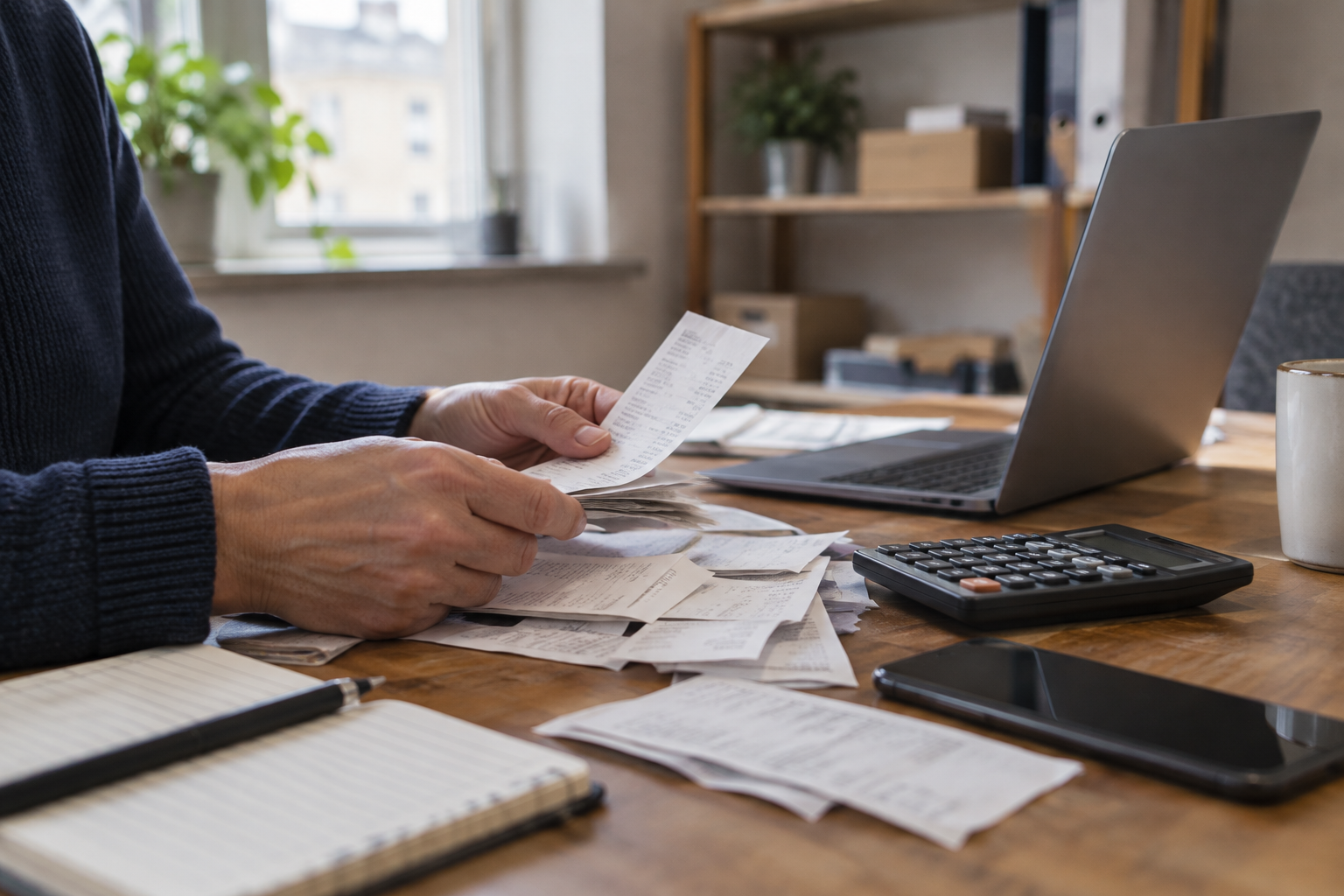
The underlying bookkeeping obligation is to record money entering and leaving the business, retaining transaction details and amounts. Receipts, invoices and bank statements provide the supporting information used to prepare tax returns.
Limited companies must generally retain accounting records for six years from the end of the last financial year to which they relate. Sole traders normally need to keep business records for at least five years after the relevant tax year’s 31 January Self Assessment filing deadline; some circumstances require longer retention.
Bank reconciliation provides a separate check on accuracy. Matching each debit and credit on a statement against the business’s records can expose duplicate payments, repeated entries, unexplained expenditure or charges requiring investigation.
Cash-flow monitoring extends beyond the account balance. Owners need to consider outstanding debts, customer invoices, expected payment dates and VAT liabilities alongside commitments such as wages, rent, utilities and supplier bills.
Overdue invoices can restrict purchases and reduce financial flexibility. That practical exposure also underlies the proposal for a 60-day payment limit for large firms, although chasing unpaid invoices remains part of a business’s own bookkeeping work.
The background
Bookkeeping and accounting perform different functions. Bookkeeping creates the transaction record; accounting uses that information to assess performance and produce reports and forecasts. Incomplete records therefore undermine the reliability of any subsequent financial analysis.
Cash accounting recognises income and expenditure when payment changes hands. Accrual accounting instead records income when it is earned and expenses when they are incurred, so work completed or a bill received can appear before settlement.
Cash basis is now the default for calculating taxable profits for most sole traders and partnerships, although they can opt for traditional accrual accounting. Limited companies generally need to use accrual accounting.
The distinction between business structures also affects banking arrangements. Limited companies must separate company finances from personal finances, while sole traders are not legally obliged to hold a dedicated business account.
For sole traders, a separate account can nevertheless make business transactions easier to identify. Depending on the account, benefits can include an initial period of free banking, accounting software or easier access to borrowing. Finance options remain a separate consideration, with Start Up Loans lending exceeding £40m in a record summer.
Transaction categorisation adds another layer of information. Grouping expenditure by its nature, purpose or type allows owners to examine where money is being spent and identify areas where costs could be reduced.
Categories can be assigned manually for greater control or applied automatically through rules and keywords in transaction descriptions. Systems using machine learning can also organise larger volumes of transactions.
What people are saying
Grundy recommends putting reliable bookkeeping ahead of more sophisticated accounting work when a business is small. His reasoning is both legal and practical: accurate records reduce compliance risks and provide a sound basis for understanding the finances.
He advocates allocating short, regular sessions to individual tasks rather than allowing work to accumulate. Daily, weekly or monthly diary slots can be matched to the task, reducing the backlog that makes mistakes more likely.
For invoicing, his advice is to issue bills promptly once work has been completed and accepted. Larger projects can be divided into billing stages, while templates and recurring invoices can reduce administration for repeat customers.
When payments fall overdue, Grundy recommends setting a clear expected payment date while remaining professional. Offering another payment method or smaller instalments may help customers settle. The operational challenge is also reflected in calls for small firms to trial AI for late-payment management.
On digital records, the guide identifies smartphone cameras, receipt-capture applications and scanners as alternatives to storing paper receipts. Searchable files are easier to retrieve and share, while backups reduce reliance on documents that can be lost or damaged.
Software selection should reflect the work being handled. Digital capture tools can extract information from documents, while bank integrations can match transactions against stored records; exceptions still need checking and reconciliation.
Mobile access allows bookkeeping to continue away from the office. Cloud storage and regular backups can preserve access to financial information if a business encounters problems at its premises.
Reporting and forecasting serve different management needs. Real-time reports show the latest financial position, while budgeting and forecasting tools allow owners to track progress against financial goals and adjust their plans.
Links with ecommerce, point-of-sale and banking systems can bring bookkeeping into the wider operation. Grundy also identifies accessible software support as an important consideration for owners who are unfamiliar with maintaining accounts.
What happens next
Making Tax Digital for Income Tax extends to qualifying income above £30,000 from April 2027, followed by income above £20,000 from April 2028. Those thresholds broaden the group required to operate within the digital reporting regime.
For businesses approaching those limits, software needs to support the required submissions as well as everyday record-keeping. Tax automation can calculate liabilities in line with legislation, but responsibility for checking records and returns remains with the taxpayer.
Owners can continue doing their own bookkeeping, but increasing transaction volumes or more complex requirements may justify appointing a bookkeeper or accountant. Professional support is also an option where an owner is unsure which taxes apply or how and when returns must be submitted.
Timeline
2022
Making Tax Digital requires VAT-registered businesses to keep digital records and file using compatible software.
6 April 2026
Making Tax Digital for Income Tax begins for qualifying income above £50,000.
April 2027
The Making Tax Digital for Income Tax threshold falls to qualifying income above £30,000.
April 2028
The Making Tax Digital for Income Tax threshold falls to qualifying income above £20,000.
Why this matters
For owners and directors, bookkeeping connects tax compliance with the ability to meet wages, supplier bills and other commitments. The lower Making Tax Digital thresholds bring more sole traders and landlords into digital reporting, while limited companies already face distinct accounting and record-retention obligations. Software can reduce manual work, but it does not transfer responsibility for accuracy. Choosing suitable systems and allowing time to check transactions therefore remain practical management decisions, not simply administrative purchases.
Frequently asked questions
- Can I do my own small business bookkeeping?
- Owners can maintain their own books by recording transactions, reconciling bank statements, monitoring cash flow, chasing invoices and meeting tax obligations. A bookkeeper or accountant may become useful as transaction volumes and requirements grow.
- What is the difference between bookkeeping and accounting?
- Bookkeeping records the money entering and leaving a business and retains supporting documents. Accounting interprets those records to assess financial performance and produce reports and forecasts.
- Who needs Making Tax Digital for Income Tax?
- From 6 April 2026, it covers sole traders and landlords with combined qualifying self-employment and property income above £50,000 before expenses. The threshold falls to above £30,000 in April 2027 and above £20,000 in April 2028.
- How long should a small business keep accounting records?
- Limited companies generally retain records for six years from the relevant financial year-end. Sole traders normally keep them for at least five years after the relevant 31 January Self Assessment deadline. Longer periods can apply in some circumstances.
- Does a sole trader need a business bank account?
- Sole traders are not legally required to have a dedicated business bank account, although separating transactions can simplify record-keeping. Limited companies must keep company and personal finances separate.
- Should a small business use cash or accrual accounting?
- Cash basis is the default for calculating taxable profits for most sole traders and partnerships, with an option to use accrual accounting. Limited companies generally use accrual accounting. VAT has separate cash accounting rules.
- Does bookkeeping software remove responsibility for tax errors?
- Software can automate calculations, capture receipts and reconcile transactions, but taxpayers remain responsible for checking the accuracy of records and submissions. Some transactions still require manual review.
In this story
Topics: small business bookkeeping · Making Tax Digital income thresholds · sole trader bookkeeping rules · how long to keep business records · cash basis vs accrual accounting · bookkeeping software for small business · Making Tax Digital 2027 · All SME / Owner-Managed Business news →
Original reporting: SmallBusiness.co.uk. This article is an independent write-up by British Business Echo.
Latest from the newsdesk
- Business Regulation
ICO questions OpenAI, Meta and Anthropic over AI agents
- Insolvency & Restructuring
Ellan NW shut down after arranging 226 company purchases
- Funding & Business Finance
Start Up Loans lending tops £40m in record summer
- Business Regulation
Paymaster GDPR appeal puts distress claims before Supreme Court
- AI in Business
Photoroom AI image test highlights value of freelance judgement